
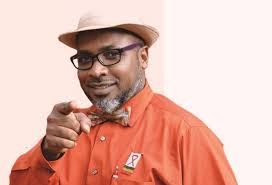
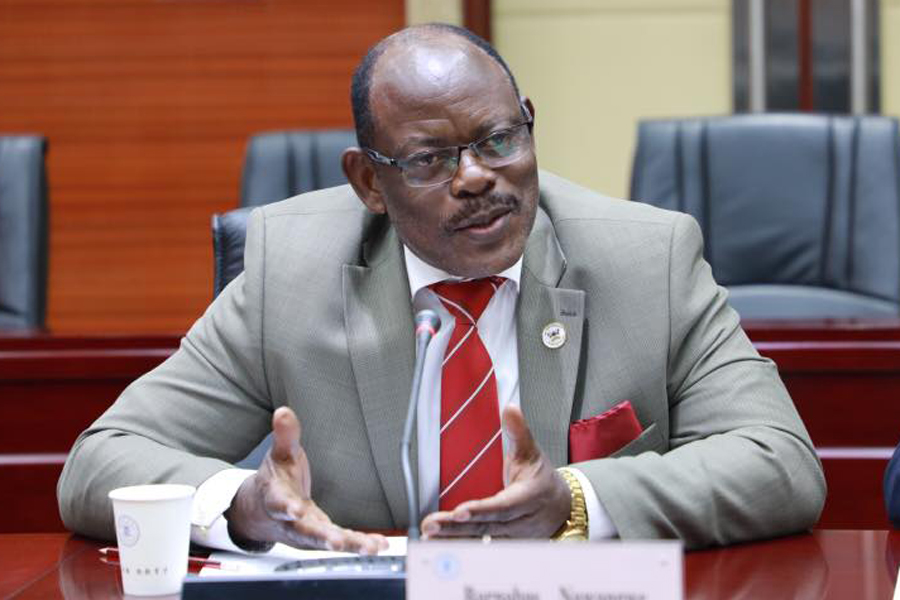
Makerere University Vice Chancellor Barnabas Nawangwe has said Martin Ssempa is an 'expired pastor' on 'evil mission', refuting claims about the closure of Makerere Community Church and religious freedom being suppressed on the campus.
The church was run by Pastor Ssempa from university's School of Veterinary Medicine.
"I have seen some members of the Makerere community, especially those who I or the Appointments Board have disciplined for various offences, joining the pastor on his misguided mission," Prof Nawangwe said in his New Year message
"Through this expired pastor, these indisciplined individuals are trying to question my credentials, particularly my publications."
What had been whispers about Nawangwe's academic qualification has recently been gaining currency but the details of the same are still scanty.
The Vice Chancellor's central argument was that Pastor Ssempa's church was outcompeted by other pastors, not shut down by the university.
"I have not closed any church on campus or anywhere else. The information I have is that the good pastor’s church died a natural death when other born-again pastors infiltrated his congregation, accusing him of preaching a false gospel. His congregation simply disappeared, leaving him alone," he said.
However, the Nile Post understands the church was closed during the Covid-19 pandemic lockdown but it was never reopened thereafter.
Pastor Ssempa, who has gained attention on social media by claiming his church was shut down by the university and that religious freedom is being suppressed, has also called for the establishment of a chaplaincy for his ministry.
According to Prof Nawangwe, these claims are "unfounded" and a form of "blackmail," attributing the pastor's struggles to maintaining his church, rather than any interference from the university.
Nawangwe further mentioned observing support for the pastor from certain individuals within the Makerere community, particularly some who had faced disciplinary action.
Petitions
On February 18, 2022, Pastor Ssempa formally petitioned Makerere University to designate and establish a chaplaincy for Born-Again Christians, citing decades of informal worship arrangements and the increasing need for inclusion.
In his letter to the Dean of Students, Ssempa highlighted his two decades of voluntary ministry at Makerere, emphasizing its positive impact on students.
"My wife and I have been offering voluntary and informal chaplaincy and youth development services to university students, which have protected them from HIV/AIDS, drug abuse, and academic failures, while promoting sexual purity and lifelong faithful marriages," he wrote.
Despite these contributions, Ssempa noted that the Born-Again Christian community lacks a designated place of worship at Uganda's oldest university.
While Catholics, Anglicans, and Muslims have established places of worship, Born-Again Christians are left to gather in lecture rooms and under tree shades.
"This has left them in a state of quagmire, with many ending up in cultic groups that exploit them," Dr. Ssempa explained.
According to the 2014 National Population Census, Born-Again Christians make up 11% of Uganda’s population, positioning them as the fourth-largest religious group in the country.
Pastor Ssempa argued that Makerere should reflect this demographic shift, which is mirrored in the student body.
"It is time for the university to seriously consider and grant students and staff of the Born-Again Christian faith a full-fledged chaplaincy, with gazetted land where they can conduct worship and provide pastoral services," he stated.
Dr Ssempa further pointed to legal frameworks such as Article 21 of the Constitution, which prohibits discrimination based on creed or religion, and Article 29, which guarantees freedom of worship.
He also referenced the recent establishment of a parliamentary chaplaincy for Born-Again Christians as an example of inclusivity.
"Makerere University has committed to addressing imbalances through inclusivity and affirmative action as part of its Strategic Plan 2020–2030," he wrote, urging the administration to honor this commitment during the university's centenary celebrations.
In a letter dated March 1, 2022, addressed to Pastor Ssempa, the Dean of Students, Wilfred Kabumbuli, informed him that the university’s council had earlier decided against creating chaplaincies for individual Christian denominations.
The council had instead directed that all Christian denominations use the already designated facilities available for religious activities.
"Central management received and discussed your letter on February 28th, 2022, and decided to uphold the council’s earlier decision. This matter will be reconsidered only when it is presented again before the council," Kabumbuli wrote.
Pastor Ssempa's request was aimed at providing a designated space for Born-Again Christians at the university, but the university’s stance has been consistent in preventing further denominational separation within religious spaces on campus.
Sources reveal that after the Covid-19 lockdown, Pastor Ssempa was told to stop operating from the School of Veterinary Medicine and seek permission from the Vice-Chancellor and Dean.
When the permission was not granted, Pastor Ssempa sued Makerere in the Equal Opportunities Commission, accusing the university of discriminating against a religious minority, in violation of the 1995 Constitution.
“The Commission advised both parties to resolve their differences through mediation. In response, Council tasked the Deputy Vice-Chancellor in charge of Administration to urgently find a place for interdenominational prayers,” the source said.
Rather than providing the space, Ssempa received a letter stating that the provision of any space was pending a new law from Parliament. This suggests that Ssempa's church was indeed stopped, contrary to the Vice-Chancellor’s claim.
Dr Jude Ssempebwa, an associate professor at the East African School of Higher Education Studies and Development, noted whatever his attack on Pastor Ssempa, the more concerning issue is that the Vice-Chancellor’s publications are nowhere to be found.
Ssempebwa urged people not to be diverted from it.
"Pastor Ssempa's exposé offers the Vice-Chancellor and the university an opportunity to prove that Prof. Nawangwe is adequately qualified for his job," he said.
Last year, Pastor Ssempa, renewed his calls for Makerere University to establish a chaplaincy and designated worship space for Born-Again Christians, citing decades of neglect and discrimination against the community.
In a letter to the Dean of Students, Ssempa emphasized his 20 years of voluntary ministry at the university, which has positively impacted students through initiatives addressing HIV/AIDS, drug abuse, academic excellence, and moral values.
"For the last 20 years, my wife and I have been offering voluntary and informal chaplaincy and youth development services to university students,” he wrote.
Currently, Makerere University recognizes places of worship for Catholics, Anglicans, and Muslims, but no designated facility exists for Born-Again Christians.
"This has left them in a state of confusion, with many ending up in cultic groups that exploit them," Ssempa noted.
Born-Again Christians make up 11% of Uganda’s population, according to the 2014 National Population Census, but their presence at Makerere University remains unsupported.
Ssempa urged the university to address these imbalances, referencing Uganda's Equal Opportunities Commission and the recent establishment of a parliamentary chaplaincy for Born-Again Christians as an example of inclusivity.
"This leadership should be emulated by Makerere University, which has committed to addressing these imbalances through inclusivity and affirmative action,” he said.
He also proposed the allocation of land for a chapel or student center for the Born-Again community, assuring that funds for construction could be raised.
"For many years, Evangelical students have used lecture rooms and tree shades to gather for corporate worship and fellowship. However, this has been inconvenient and a source of acrimony,” he said
