

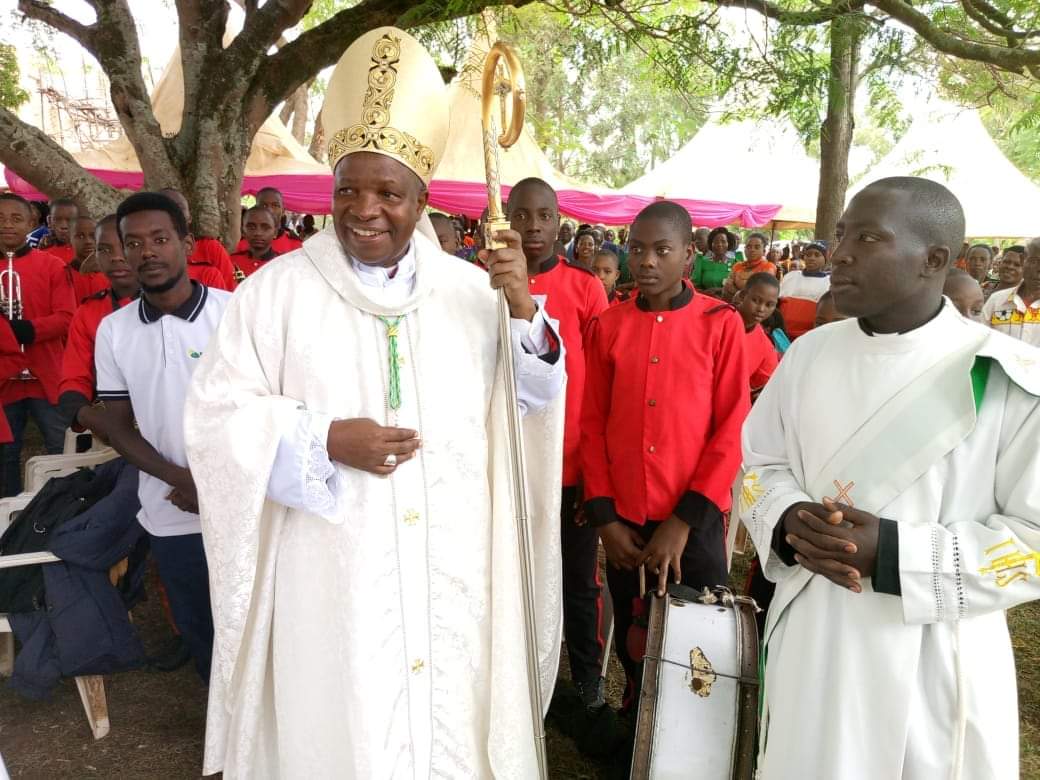
Bishop Serverus Jumba of Masaka Diocese has called on the Ugandan government to shift its focus from funding parliamentary regional sessions to addressing the urgent needs of the people, particularly in healthcare.
Speaking at the Masaka Diocesan Health Annual General Meeting, the bishop stressed the importance of prioritizing healthcare services and personnel in underserved regions.
Bishop Jumba highlighted the need for more specialised healthcare workers in rural facilities, criticizing the government's current financial priorities, which he believes are misaligned with the basic needs of the population.
“We have raised this issue at almost every level of government. It’s a serious matter,” Bishop Jumba remarked.
In his speech, he drew a stark comparison between the significant allowances given to Members of Parliament and the inadequate resources allocated to healthcare facilities and workers.
He argued that despite the high costs of running parliamentary sessions, there has been little improvement in critical sectors such as healthcare.
“I’ve seen the daily budget for MPs, and when they first took office, they seemed unsure of their responsibilities. But look at the lack of impact on healthcare – the government is offering no real relief to its people,” he said.
Bishop Jumba proposed reducing taxes on the incomes of healthcare workers, particularly senior personnel like hospital CEOs, as a way to ease financial pressures on health institutions and improve service delivery.
He also expressed concern about the growing population and the limited capacity of healthcare institutions to meet the rising demand.
Citing Villa Maria Nursing School as an example, he praised the institution for its ongoing efforts to train healthcare workers but stressed the need for further expansion to address the region’s healthcare challenges.
“We appreciate the services offered so far, but we must ask for more,” he urged, pointing out that Kitovu Hospital is the only facility in the region with a functioning mortuary.
“Masaka’s main hospital lacks this essential service, leaving Kitovu as the only option in the entire region. We should truly appreciate that.”
Bishop Jumba also called on hospital administrators to ensure that healthcare services remain accessible to all, especially for those unable to pay upfront for treatment.
He noted that many patients accumulate large medical bills, which makes it difficult for them to receive the care they need.
“Some patients spend millions on treatment. We must find ways to help those who cannot pay immediately. This is why institutions like churches and hospitals must work together to provide solutions,” he said.
Hon. Francis Katabazi, Member of Parliament for Kalungu East, echoed Bishop Jumba's concerns, particularly regarding the financial struggles faced by healthcare workers.
Katabazi suggested that the government restructure healthcare workers’ salaries to clearly differentiate between basic salaries and allowances.
“The basic salary for most healthcare workers is very small. When combined with allowances, they end up losing a significant portion of their income to taxes,” Katabazi stated.
Bishop Jumba agreed, emphasizing that healthcare workers operate under difficult conditions and should be compensated accordingly.
He urged the government to offer financial relief to healthcare professionals, arguing that such support would lead to a more motivated and stable workforce.
“We must stand together to ensure that our healthcare workers are fairly compensated and work in better conditions. It is the government’s responsibility to step up,” the bishop concluded.
With this call to action, local leaders and healthcare stakeholders vowed to continue advocating for improvements in the sector, aiming to build a more robust healthcare system capable of serving the region’s growing population.