
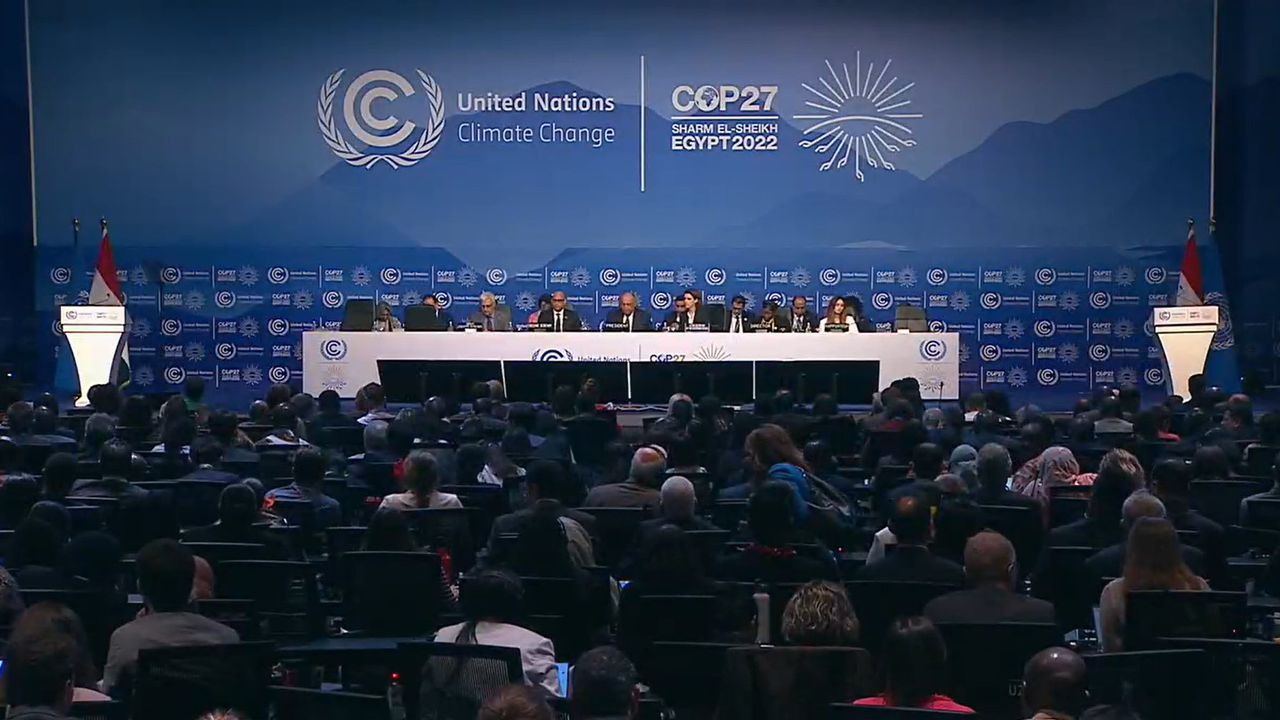
The 27th United Nations Climate Change Conference, or COP27, began on Sunday in the Egyptian resort town of Sharm El Sheikh, amid warnings that the consequences of climate inaction are higher than ever.
Over the weekend, heads of state, government officials, civil society groups, and youth climate activists descended on Sharm to begin what is projected to be a two-week process of outlining routes to attain net zero carbon emission targets.
Uganda, like many other countries in the global south, insists that polluters pay for the loss and damage caused to African countries by climate-related calamities.
Margaret Athieno Mwebesa, Uganda's Commissioner for Climate Change, told this website in July that all East African and Horn of Africa countries will try to speak with one voice.
Representatives from the Intergovernmental Authority on Development (IGAD), the East African Community, and the States of the East and Horn of Africa issued a Kampala ministerial declaration in July 2022 outlining their primary goals for COP27.
According to the proclamation seen by Nile Post, adaptation, mitigation, loss and damage, and climate financing would be at the top of the agenda.
According to a new UN assessment, negotiators must make progress on addressing the climate problem since the consequences of inaction can no longer be ignored.
COP27 takes place at a time when many countries throughout the world are experiencing severe consequences of climate change.
In Uganda, nearly 900 people were declared dead in July 2022 as a result of a food crisis that struck Karamoja following a drought season linked to climate change.
When a river burst its banks in Eastern Uganda, it killed around 30 people. Although these are mostly natural catastrophes, the severity with which they are occurring has been connected to climate change, and there are fears that they will worsen as the world's temperature rises due to rising global emissions.
In December 2015, over 190 countries signed the Paris Agreement, pledging to restrict the world’s temperature to 1.5 degrees Celsius above pre-industrial levels.
According to a recent analysis, this may not be viable right now because existing promises are expected to result in a temperature rise of 2.8 degrees Celsius by the end of the century.
Over 80 percent of climate-damaging emissions are created by wealthier countries in the global north, whereas Africa is only responsible for less than 4 percent, although suffering the most due to its frail institutions.
Rich nations committed to contribute $100 billion annually to developing nations in the Global South to adapt to climate change by 2020, but this has never been met, and this will be a significant source of contention when the world meets in Sharm el Sheikh, Egypt.
