

According to history, Uganda's war for independence began in 1946, following the end of World War II.
Ugandans who had fought in the war returned home determined to enjoy more freedoms at home including economic independence that would begin with Ugandans being allowed to join trade.
At the time, Ugandans were treated as strangers in their own country, with Indian and British nationals enjoying more rights.
Emmanuel Kulabatyo Kiwanuka, 83, born in 1939, claims that Ugandans were barred from accessing certain areas of Kampala Central.
"Kampala was only for Indians.You'd bring your corn, get a little money, and hand it to the Indians," he explained.
Kulabatyo went on to say that the restrictions were so severe that the majority landlords, Indians, turned down Ugandan tenants.
If that wasn't enough, laws such as the Cotton Ordinance of 1933 banned Ugandans from managing or owning a cotton farm, and only Indians and British were permitted to export cotton.
The same thing happened with coffee.
Domestic workers' low salary and lack of employment opportunities were all discriminatory in nature.
Uganda Transport Commission (UTC), a British business founded in 1938, had a monopoly on the best transport routes such as Jinja, Fort Portal, Kabale, Kasese, and Busoga, as well as Soroti.
Ugandans were only permitted to plough limited paths because they were afraid they would outcompete the British and Indians.
"Ugandans complained, but they were never taken seriously," Kulabatyo told this publication.
According to Peter Mulira, an established lawyer whose father EMK Mulira played a prominent role in the fight for Uganda's independence, it is here that politicians like Augustine Kamya gained prominent for campaigning for economic fairness.
"Due to economic disturbances, Augustine Kamya established the Uganda national movement trade boycott," Mulira explained.
"I recall Augustine Kamya striking, and people started becoming aware," Kulabatyo adds.
Mulira claims that this was short-lived because the British crushed the rebellions, which they called riots, and partly because there was a lack of a compelling leader.
Mulira adds that the British had begun to groom a new generation of leaders.
It wasn't long before Ugandans demanded economic justice, and the first genuine revolution erupted in 1949.
While Ignatious Musazi remained in Uganda, the Bataka party, a political movement headquartered in Buganda, sent and supported political activist Francis Ssemakula Mulumba to the United Kingdom, reinforcing the necessity for Ugandans' economic and political independence.
In reality, Ssemakula, who had been exposed to international politics and democracy, is the first person to be quoted calling for Uganda's political independence.
According to Richard Lubwama Mukubyasi, active political organizations began there.
He claims that the actors would coordinate through various channels, including religious gatherings.
"They'd speak Luganda so the British wouldn't understand."
Even so, political ties, attitudes, and interests emerged.
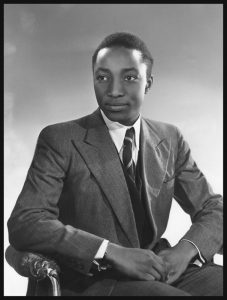
The expulsion and exile of Kabaka Muteesa, as well as his involvement in Uganda's independence, increased pressure on the British.
"The 1900 accord stated that Buganda was a separate state (province of equal status), but the kabaka rejected a merger."
While in exile, Kabaka Muteesa gained popularity, and everyone was talking about Uganda's freedom."
Mulira continues, "My father was one of four persons who negotiated for Kabaka Muteesa's return."
Back at Lancaster House in the autumn of 1961, the Lancaster conference was called to discuss the report of the Uganda relationship commission, which had been tasked with considering the best future form of government for Uganda as well as the question of the relationship between the Central Government and the other authorities in Uganda.
After two years, a new Buganda accord was signed, allowing Kabaka Muteesa II to return from exile.
Back home, ex-politician Joyce Mpanga, a university student, believes the Kabakas' comeback has enthralled Ugandans.
A year later, the Uganda Independence Conference, also known as the Marlborough House Conference, was held, primarily to verify and implement the proposals made at the Lancaster conference in 1961.
The Uganda Independence Conference convened at Marlborough House in London on Tuesday, June 12, 1962, and completed on Friday, June 29, 1962.
"I remember that day because I didn't have a car, so we rode in Miria Obote's car, and when they lowered the Union Jack, there were jubilation everywhere," Mpanga recalled.
The Uganda People's Congress (UPC) was in power, and Milton Obote became the first prime minister of an independent Uganda on October 9, 1962.
