
Because of COVID-19, Uganda, just like many other countries has gone into lockdown in a bid to curb the spread of the infectious disease. For Uganda, the current lockdown is the second one.
Many sectors have been negatively affected, education inclusive. Learners are uncertain when they'll be resuming school. Their futures are at stake. Some girls have actually been impregnated and others given birth. Because it takes two to procreate, some boys are now parents too.
Even with all the challenges posed by COVID-19 lockdowns against education, I still see a silver lining for a specific group of learners -- the genius.
It's almost a universal truth that towering genius craves for solitude, which lockdowns have provided in plenty. In solitude, geniuses tend to thrive because during that time of loneliness and silence, the genius concetrate and discover themselves through engaging things or content of choice, under self-compulsion.
History has quite many examples littered in it, justifying that genius thrives in solitude and by engaging content under self-compulsion.
In 1665, when The Great Plague of London erupted, Sir Isaac Newton had just joined college. Due to the epidemic, Britain went into lockdown for two years to curb its spread. During the hiatus, Newton never took a break from studying. He decided to read books from then modern philosophers and physicists. From the books he read, his thought got provoked to write some of his most popular works -- Optics and Gravitation. Newton wrote many things in his break from formal school which were later adopted on the curriculum.
Abraham Lincoln, who almost never went to formal school completely, was an American lawyer and statesman who served as the 16th president of the United States from 1861 until his assassination in 1865. Lincoln led the nation through the American Civil War -- the country's greatest moral, cultural, constitutional, and political crisis. He succeeded in preserving the Union, abolishing slavery, bolstering the federal government, and modernizing the U.S. economy. Lincoln became a lawyer and a great leader he was through reading the law and other books on his own. Abraham Lincoln is rated as one of the greatest presidents in USA's history.
Albert Einstein, whose fame largely rests on his equation: E = MC², admits that school didn't interest him. Indeed, after school, Einstein discovered himself and revealed the great theoretical physicist he was. Einstein has been quoted: "School failed me, and I failed the school. It bored me. The teachers behaved like Feldwebel (sergeants). I wanted to learn what I wanted to know, but they wanted me to learn for the exam. What I hated most was the competitive system there, and especially sports. Because of this, I wasn't worth anything, and several times they suggested I leave."
Nikola Tesla, one of the other geniuses to have graced this planet made all his achievements after dropping out of college. After dropping out of college for reasons uncertain to me, Tesla invented electric oscillators, meters, improved lights and the high-voltage transformer known as the Tesla coil. Tesla was an electric genius and he is one of the reasons why every gadget in your confined space works to fulfill your comfort and solace. He is also one of the reasons why you are reading this piece on your device.
Education is an admirable thing and everyone with an opportunity should passionately pursue it but, intriguingly, geniuses are sometimes better off outside formal school. School as a society is full of distractions and strictness yet geniuses work better in free environments and in solitude.
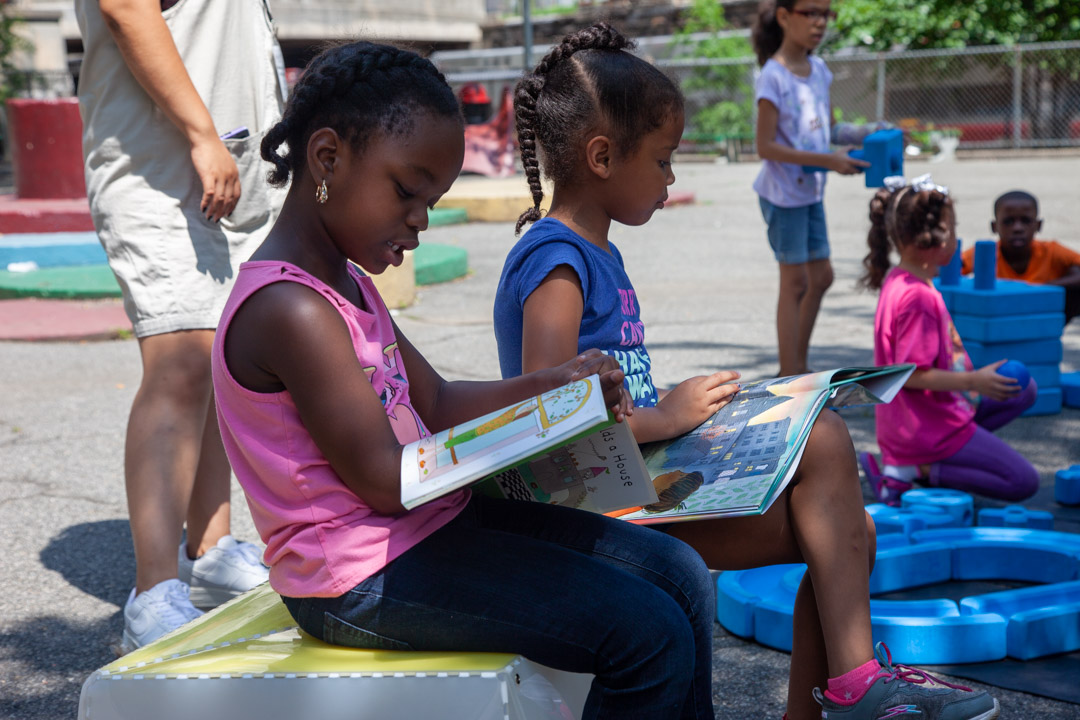
In this lockdown, therefore, parents should provide books to their children to study. Books shouldn't necessarily be academic. Exposure to non-academic books might improve children's cognitive abilities, creativity, writing prowess and verbal articulation.
Parents should teach children simple things such as relationship management, bargaining, creating and nurturing deliberate friendships, basic politics and also seek to improve their financial genius through simple stories and illustrations. Such things are very important in practical life, though not taught at school.
