
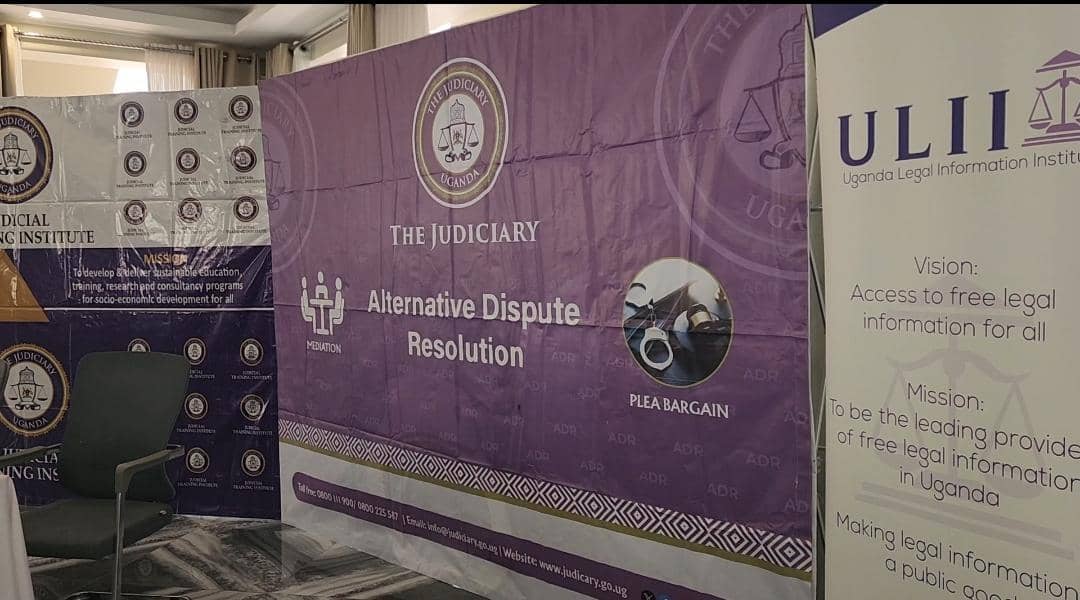
Judicial officers from the Ankole and Kigezi sub-regions have been urged to embrace mediation as a central tool in resolving disputes and reducing the backlog of cases in the judicial system.
This call was made during a five-day training session held in Mbarara on Monday, which brought together more than 84 participants, including judges, registrars, magistrates, senior counsels, and other legal professionals.
The training focused on equipping officers with the skills to handle cases through mediation—a key element of Alternative Dispute Resolution (ADR)—as a complement to traditional court proceedings.
Former Deputy Chief Justice Richard Buteera, who addressed the officers, emphasized the importance of Article 28 of the Constitution, which guarantees the right to a fair and speedy public hearing.
He reminded mediators that justice must be administered lawfully and impartially, regardless of the social or economic status of the parties involved.
“As we carry out mediation, we need to consider Article 28 of our Constitution. All decisions you reach as mediators must be lawful and fair, with respect to both parties,” said Justice Buteera.
He clarified that the training targeted court-accredited mediators who would be handling active cases. While litigation remains the formal pathway for many, mediation offers a faster and less adversarial alternative—one deeply rooted in African tradition.
“Even cases that haven’t reached court can be resolved through mediation. A report shows that only 10 percent of cases are resolved in court while 90 percent are settled outside court. ADR is not new to Ugandans,” Buteera said.
He underscored the need for thorough preparation before entering mediation. “It’s not your decision to impose.
The parties should be empowered to reach their own resolution. As a mediator, you must prepare—understand the case, read the relevant laws. If it’s a forest reserve dispute, for example, know the law that governs it.”
Acting Principal Judge Jane Okuo Kajuga praised the growing success of mediation and plea bargaining in the judiciary.
She revealed that 43 out of 80 cases earmarked for mediation in Mbarara last financial year were resolved successfully.
“Alternative Dispute Resolution is already being used in our courts, and the numbers show it works. After this training, we are encouraging judges and magistrates to identify days on their court calendars specifically for handling mediation,” said Justice Okuo.
The training is part of broader efforts by the judiciary to promote faster and more amicable settlements, relieve congestion in courts, and ensure timely access to justice for all.
