

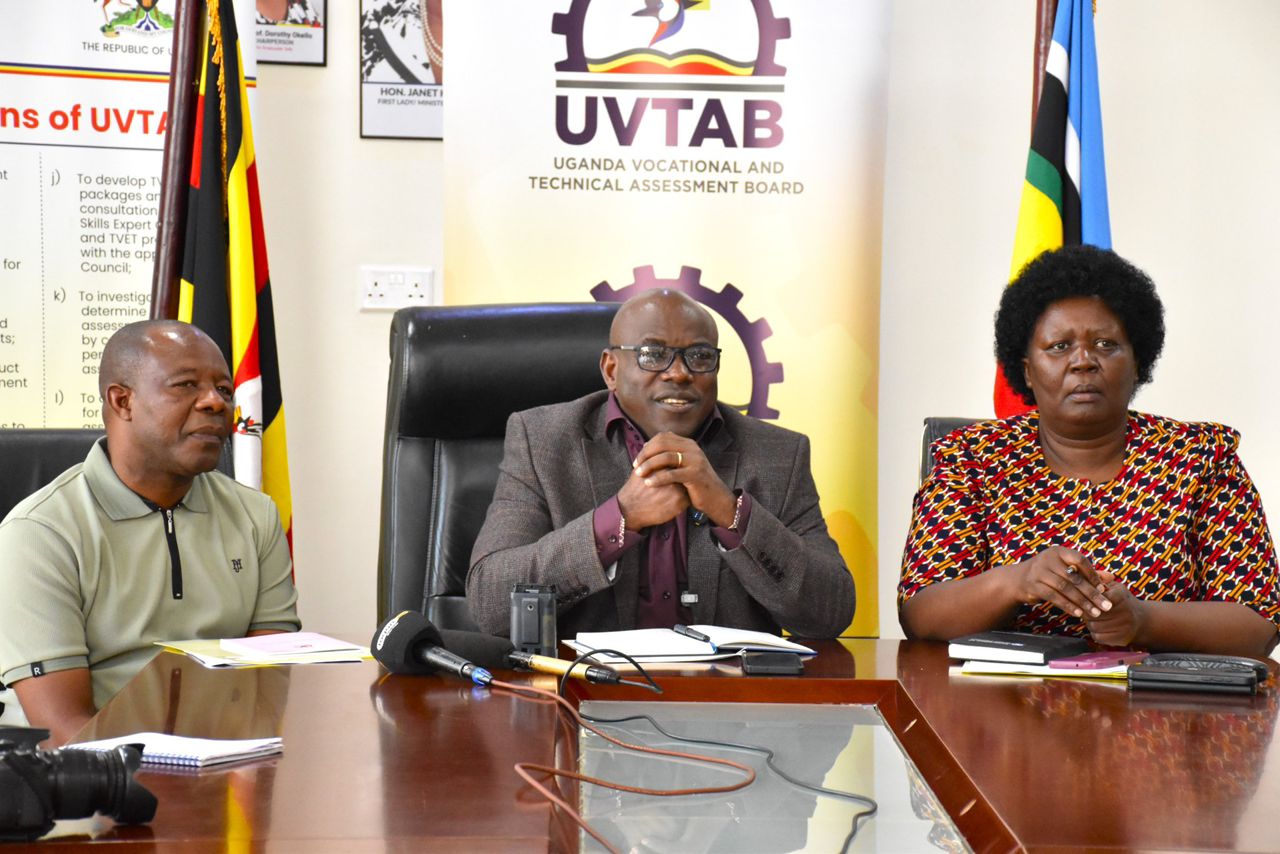
The Uganda Business and Technical Examinations Board (UBTEB) has unveiled significant reforms to Uganda’s technical and vocational education assessment framework, aiming to streamline certification, ensure quality, and accelerate skills recognition.
Executive Secretary Onesmus Oyesigye said the Board is overseeing a transition that requires all assessment centres to secure full accreditation from the Technical, Vocational, Education and Training (TVET) Council before presenting candidates.
“We are still handling a transition, but for any assessment centre to operate, it must first go through the accreditation process as required by the TVET Council,” Oyesigye said.
He added that UBTEB will no longer accept candidates seeking direct assessment.
“As an assessment board, we are not going to be dealing with individuals. We shall be dealing only with accredited training providers,” he explained.
The Board also announced that assessments will now be conducted every three months, down from the previous six-month cycle, to speed up certification for learners and skilled workers who have gained competencies informally.
Mechanics, artisans, and other practitioners outside formal institutions will be required to register through accredited training providers in their communities.
Oyesigye urged centres to maintain affordability during this transition.
“These processes should not become expensive for people seeking to be assessed,” he said.
The reforms form part of broader national efforts to strengthen Uganda’s skills certification framework under the mandate of the TVET Council and enhance the credibility of vocational training.
UBTEB has registered 137,546 candidates for the November/December 2025 assessments—the highest enrollment in TVET history.
Of these, 80,654 are male, 56,892 are female, and 22,212 will sit for modular and full occupation Levels I and II, including the Worker’s Pass.
The Board also registered 338 candidates with special needs, including physical disabilities, visual and hearing impairments, chronic illnesses, intellectual difficulties, and contractures.
Over 150 support personnel, including sign language interpreters, transcribers, and guides, will assist these candidates.
Preparations have included briefings for Area Coordinators and Centre Supervisors at regional centres in Mbale, Bushenyi, Lira, and Kampala on November 14 to ensure regulatory compliance.
A total of 920 scouts will monitor the assessments, in line with the TVET Act, which provides penalties for malpractice.
UBTEB will deploy over 2,500 practical assessors for formal TVET programmes and an additional 1,000 for informal TVET to conduct on-the-spot assessments.
Examination materials are being delivered to secure storage facilities with support from the Uganda Police Force.
