


By Henry Magala
As Hon. Nobert Mao advocates for a national dialogue on political transition, every caring Ugandan should also demand for a national dialogue on contextualising Comprehensive Sexuality Education (CSE) for the young people in Uganda.
According to the United Nations Population Fund (UNFPA), CSE enables young people to protect and advocate for their health, well-being, and dignity by providing them with a necessary toolkit of knowledge, attitudes, and skills. The joint policy brief by the UNFPA, WHO and German Federal Centre for Health Education notes that sexuality education does not encourage children and young people to have sex, rather it contributes to delaying sexual debut and promotes better health outcomes. Furthermore, studies within and outside Africa demonstrate that CSE also strengthens young people on issues such as rights, sexual and reproductive health, gender equality, and making informed decisions in a meaningful way.
We live in a digital age where unfettered access to information is only a click away. This has inadvertently exposed children and young people to sex-related materials, content, and information. Unfortunately, the informal sources are not filtered nor age appropriate. Likewise, culturally, discussions around sexual and reproductive health as it concerns young people are often confidential or frowned upon. This closes off the opportunity to equip young people with the appropriate tools and information to cultivate positive values about their sexual and reproductive rights and health, leading to grave implications that threaten their lives and futures.
The high rates of teenage pregnancy, which sparked an outcry in the country, is an indication of this gap. The Uganda Bureau of Statistics states that one-in-four Ugandan women have given birth by the age of eighteen, and the Ministry of Health reports that 25% of pregnancies in Uganda are among teenage mothers. Further reinforcing that the absence of age-appropriate CSE leads to risky behaviours with regrettable outcomes—a 2021 Uganda AIDS Commission report revealed that young people aged 15-24 years accounted for 36% of all new HIV infections.
But hope is not lost, as access to CSE empowers young people to make safer sex decisions and has also been shown to decrease sexual exploitation, teenage pregnancies, and Gender-Based Violence.
Cultural norms have, unfortunately, not been helpful in delivering sexuality education in homes by parents, evident by the little-or-no parental facilitation or involvement in these discussions with adolescents and young people. In the central region, only adolescent girls were sent to the paternal auntie (Senga) to be instructed about managing puberty. The boy children were left on their own to discover how to manage sexuality. Parents did not play a direct role, and not much has changed.
The above scenarios require a package of sexuality education to address the needs of young people. The fast pace of information flow on sex materials requires readiness and vigilance to sieve out what is acceptable. While there are many stakeholders for CSE who hold varying views—young people, parents, opinion and religious leaders, legislators, policy makers, and civil society are critical to defining a CSE solution that works for Uganda.
The task ahead and gist of the dialogue on CSE must harmonize the different views—and collectively, with young people at the centre—explore ways to safeguard the rights of Adolescents and Young People towards promoting their dignity, health, and well-being.
We give high tribute to the Centre for Human Rights and Development (CEHURD) for the successful legal intervention providing CSE as a right to young people both in and out of school. The court ruling of 16th November 2021 demands that the Ministry of Education develop a policy for CSE implementation. There is urgency to do this, and the dialogue would enrich the policy. The delay to act on this matter of national importance will compound the socio-economic hardship already experienced by the young people who account for 70% of Uganda’s population.
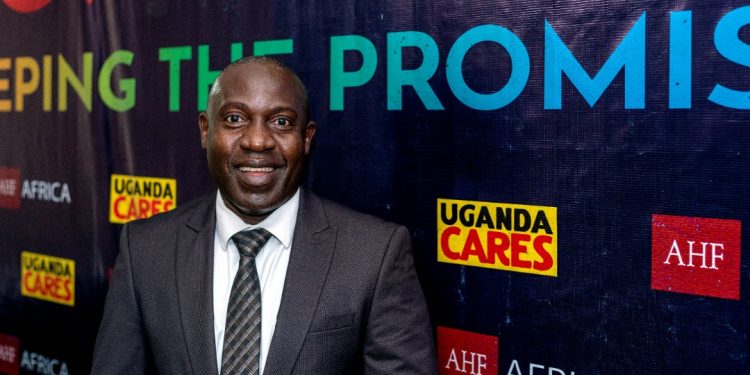
Henry Magala – Country Program Director – AHF Uganda Cares – [email protected]
