
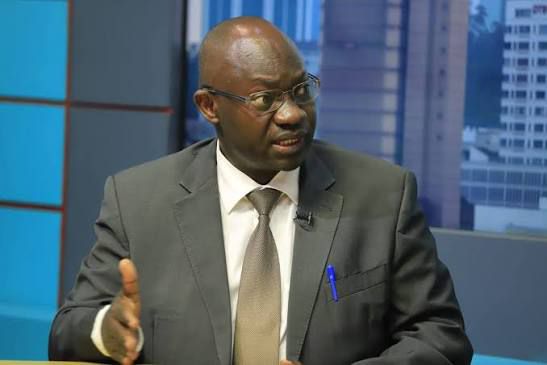
Human rights defender Dr. Livingstone Ssewanyana has urged Ugandans and the government to take decisive action following serious observations made by former National Unity Platform (NUP) presidential candidate, Robert Kyagulanyi Ssentamu popularly known as Bobi Wine, during the Geneva Summit for Human Rights and Democracy.
Speaking during an exclusive interview with NBS Television on Thursday, Ssewanyana emphasised that the issues raised by Kyagulanyi demand urgent introspection and practical solutions.
Kyagulanyi addressed the summit via video message while in hiding since January 16th, following the disputed January 15, 2026 general presidential and parliamentary elections in Uganda.
He described what he calls a “violent military dictatorship” and alleged that President Museveni and the Chief of Defence Forces, General Muhoozi Kainerugaba, orchestrated widespread election rigging and violence.
“The Geneva Human Rights Summit is an important platform where the human rights architecture is examined at a global level. Kyagulanyi’s speech highlights many challenges we faced during the elections—issues such as internet shutdowns, deployment of security forces, manipulation of results, and the treatment of opposition supporters.
These are not new concerns; they were raised previously during the Supreme Court hearing in the Amama Mbabazi vs. President Museveni and the Electoral Commission case following the 2016 elections. Yet they remain unresolved and require urgent action,” he said.
Responding to questions as to whether or not it was the right move to petition an international body, Ssewanyana emphasised the universality of human rights.
“Issues of human rights have no boundaries. They are relevant nationally, regionally, and internationally. While international dialogue is critical, solutions must ultimately be implemented at the national level, as global mechanisms often prioritise state or individual interests over real change for citizens,” he said.
“Targeted sanctions and global pressure sometimes fail to yield the desired impact because leadership figures responsible for violations are rarely affected, while ordinary citizens bear the brunt. More viable approaches are needed to effect meaningful change,” he added, nothing the limitations of the international body.
During his address to the summit, Kyagulanyi detailed the events of the presidential campaign, recounting arrests, abductions, and internet shutdowns.
He alleged that the election was so manipulated that even at the polling station where Museveni voted, the number of votes cast exceeded the number of registered voters.
Despite this, the National Unity Platform (NUP) did not challenge the outcome in court citing a lack of confidence in the judiciary, and has instead called on his supporters to engage in peaceful street protests to express dissatisfaction with the electoral process.
Kyagulanyi also shared the personal human cost of the elections, revealing that his home was raided, his family members tortured, and his wife publicly humiliated.
“While I am in hiding, I don’t want to be. It was necessary to stay alive and be able to speak to you today,” he said.
Kyagulanyi called on the international community to impose sanctions on Museveni, his son, and other human rights violators, while emphasising that Ugandans remain committed to non-violent resistance.
“We are not seeking pity. We want accountability and sanctions against those who undermine our rights,” Kyagulanyi said.
Ssewanyana stressed that these issues must not remain confined to international forums.
“While Geneva and other global platforms provide the necessary audience, it is crucial for Ugandans and the government to take serious interest and implement practical solutions,” he said.
