

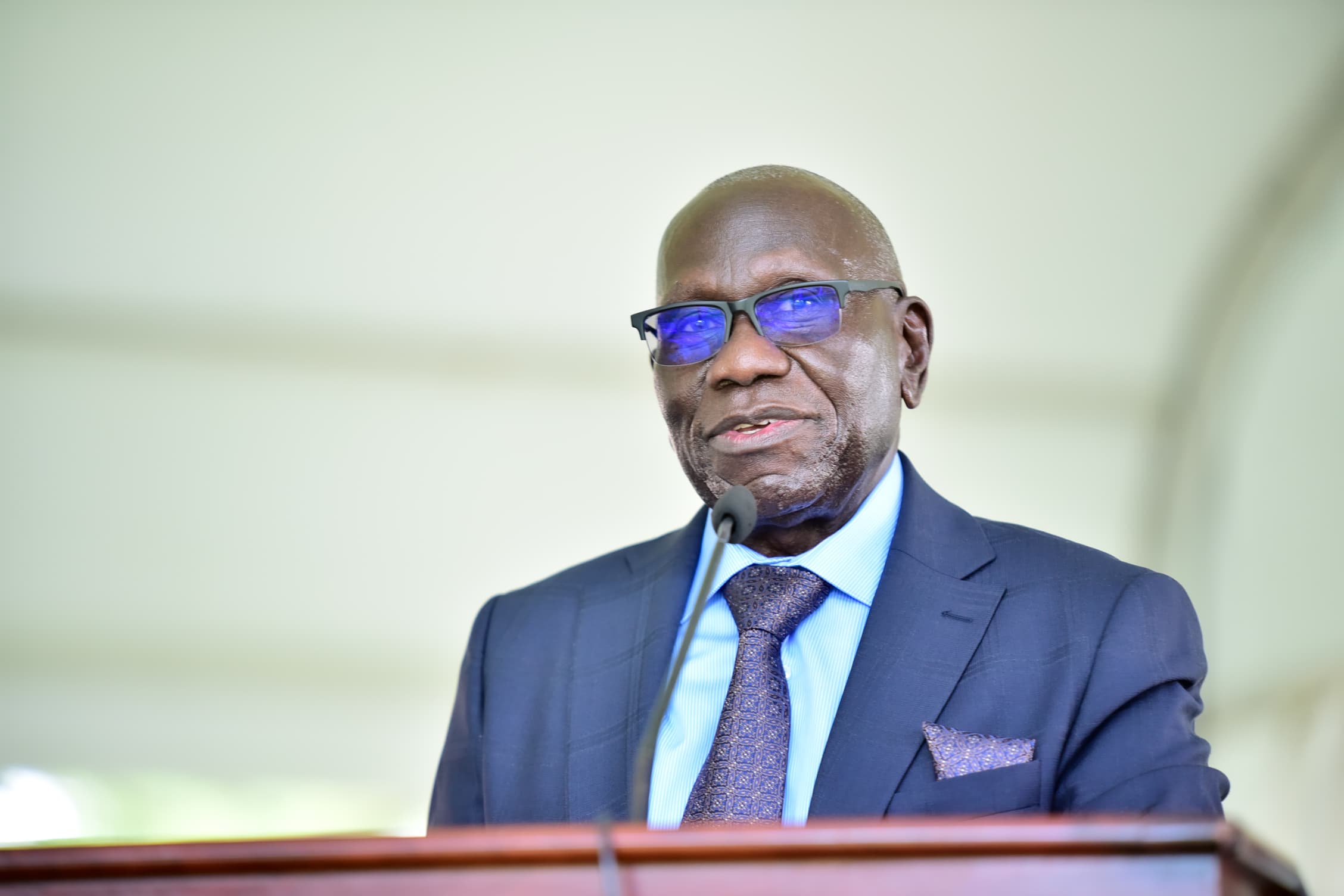
The Uganda National Examinations Board (UNEB) chairperson, Prof. Celestino Obua, has raised alarm over what he described as a growing wave of desperation among some school directors and headteachers, driving them into organised examination malpractice—especially during the Primary Leaving Examinations (PLE).
Speaking during the release of the UNEB PLE results, Prof. Obua said the Board has registered a worrying increase in incidents where headteachers allegedly tamper with examination materials immediately after they are delivered to centres.
According to him, the malpractice begins at the point of delivery when examination distributors hand over sealed question paper envelopes. Obua said investigations show that some headteachers, working with “already corrupted and compromised scouts,” cut open the envelopes to access the papers before the examination begins, in order to coach candidates in advance or during the examination.
He noted that UNEB has also gathered evidence indicating that some district education officials are becoming complicit in the vice—an emerging trend the Board considers extremely dangerous to the credibility of Uganda’s education system.
Kassanda school named as epicentre
Prof. Obua revealed that UNEB’s security investigations identified a private school in Kassanda district as the epicentre of a wider network.
He said several individuals were arrested, including the District Inspector of Schools, the school director, headteacher, invigilators, scouts, and other suspects linked to the scheme.
Notably, Obua disclosed that the invigilators involved had been appointed from Nansana, near Kampala, raising questions about the integrity of invigilation and supervision arrangements.
“The arrest led security to other collaborating schools which had received the exam material through WhatsApp groups created for the purpose,” Obua said, indicating the malpractice had been organised through digital platforms to distribute leaked content.
UNEB said the crackdown has already yielded results in court.
“So far eight persons have been convicted and sentenced by courts. Other suspects are out on bail while five are remanded,” Prof. Obua said.
He added that the Board’s security team is still pursuing additional suspects who remain at large, and warned that UNEB—working with security agencies—will continue tracking down perpetrators.
“The Board, with the support of Security Agencies, is determined to track down those persons and bring them to book,” he said, describing the actions of the suspects as “diabolical” and a serious threat to Uganda’s education system.
Prof. Obua also expressed hope that courts will issue deterrent sentences under the provisions of the UNEB Act, arguing that leniency could embolden more actors to engage in similar schemes.
The UNEB chairperson linked the spike in malpractice to pressure placed on schools to produce high numbers of candidates scoring Aggregate 4, which he described as the “gold standard” by which many parents rank schools.
He said the obsession with aggregates has created a toxic environment where some school administrators choose shortcuts rather than improving learning outcomes.
“The desperation arises from the desire for their schools to get many candidates passing with Aggregate 4,” he said.
UNEB renews push to scrap PLE aggregates
Prof. Obua used the platform to revive a long-standing proposal by UNEB to change how PLE results are reported, including eliminating aggregates—one of the reforms the Board believes could reduce unhealthy competition and curb cheating.
He reminded the Education minister that UNEB first presented the proposal in 2021, and that it was supported in principle, but delayed due to the disruption caused by the COVID-19 pandemic.
“You will recall… that in 2021 the Board presented to you a proposal to change the reporting of the results of PLE to get rid of the aggregates. You supported this proposal but observed… with COVID-19 ravaging the country, it was not a good time,” Obua said.
He now appealed for the proposal to be reintroduced for approval and implementation, arguing that it may help remove incentives that drive schools into malpractice.
