
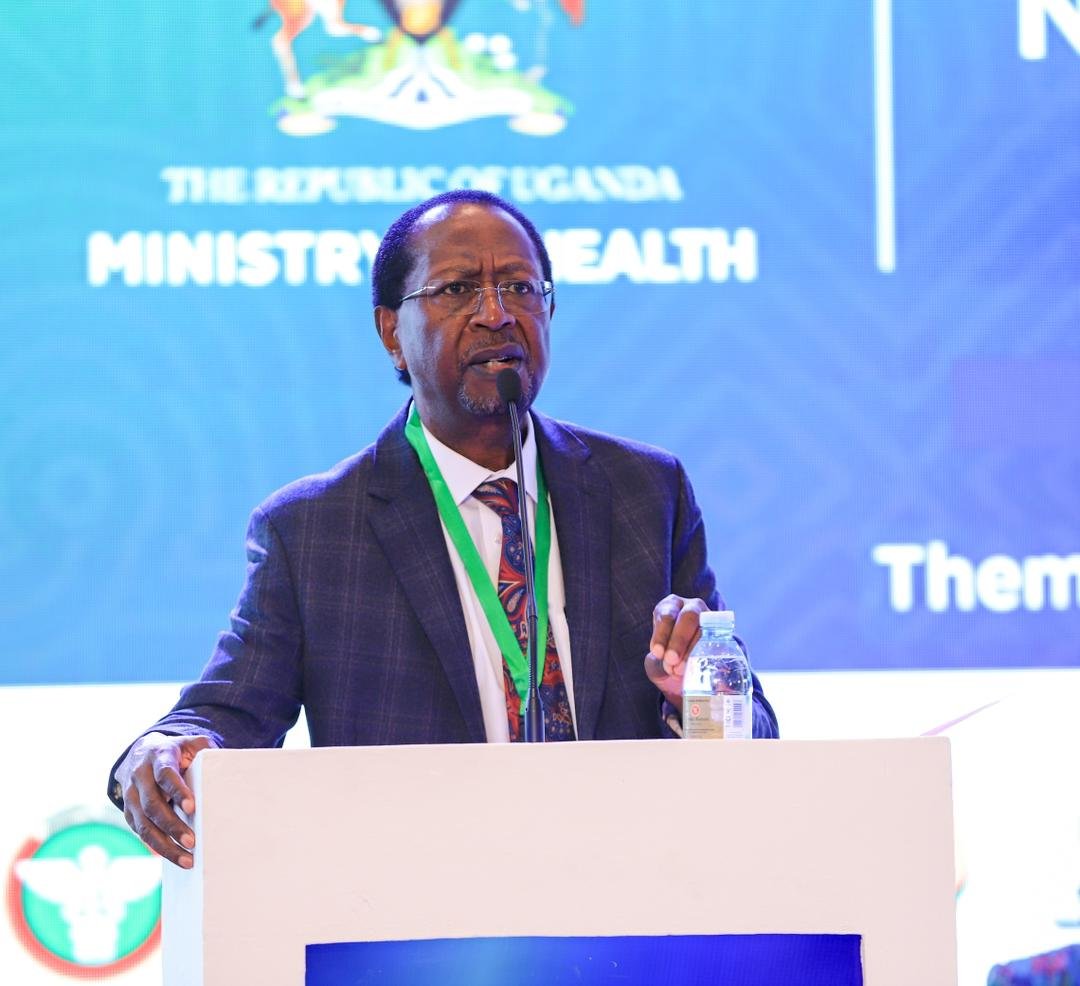
At a time when global health financing faces one of its steepest contractions in decades, Professor David Serwadda of Makerere University has called on African nations to strengthen their health systems through innovation, accountability, and domestic resource mobilisation.
Delivering a keynote address on “Health Systems Resilience Amidst Global Funding Cuts: What African Countries Must Do,” Prof. Serwadda painted a sobering picture of the financial storm ahead—while offering a blueprint for how Africa can navigate it.
Citing new data from the OECD and the Institute for Health Metrics and Evaluation (IHME), he revealed that global health funding could drop by 9–17% in 2025, with the United States alone expected to cut health aid by over US$9 billion.
For Africa, he warned, the impact would be immediate: shrinking budgets, reduced program coverage, and mounting pressure on already fragile health systems.
“Africa carries 16% of the world’s population and 26% of its disease burden, yet accounts for less than 2% of global health spending,” he said. “We cannot continue to rely on uncertain aid flows; our resilience must be homegrown.”
Prof. Serwadda urged governments to increase domestic health financing, drawing inspiration from Ghana’s VAT levy, which generates about US$400 million annually for the health sector.
He also emphasised the importance of meeting the Abuja Declaration target allocating 15% of national budgets to health—but cautioned that efficiency should precede expansion.
“We must spend better before spending more,” he stressed, recommending tools such as Health Technology Assessment (HTA) and strong Public Financial Management (PFM) systems to ensure every dollar delivers measurable impact.
Prof. Serwadda further proposed performance-based payments, capitation models, and regional pooled procurement, reforms that could cut costs by up to 25% while empowering health facilities to make independent decisions.
“We must reform how we purchase, how we pay, and how we plan,” he added. “Resilient systems are built not only on funding but also on innovation, accountability, and visionary leadership.”
Beyond financial strategies, he called for investment in digital health systems, including unified patient IDs and real-time data dashboards to enhance transparency and coordination.
He also encouraged African nations to build local manufacturing capacity, citing South Africa’s Biovac and Egypt’s vaccine partnerships as models of self-reliance.
In his closing message, Prof. Serwadda outlined a shared roadmap for resilience:
Governments: Protect primary healthcare and expand domestic financing.
Partners: Focus on long-term resilience, not short-term grants.
Academia: Innovate, evaluate, and nurture the next generation of public health leaders.
Communities: Demand transparency and accountability.
