

The Judicial Service Commission of Uganda (JSC) has called on politicians, cultural leaders, religious institutions, and community stakeholders to intensify public sensitisation against crime as a strategy to reduce the growing backlog of court cases in the country.
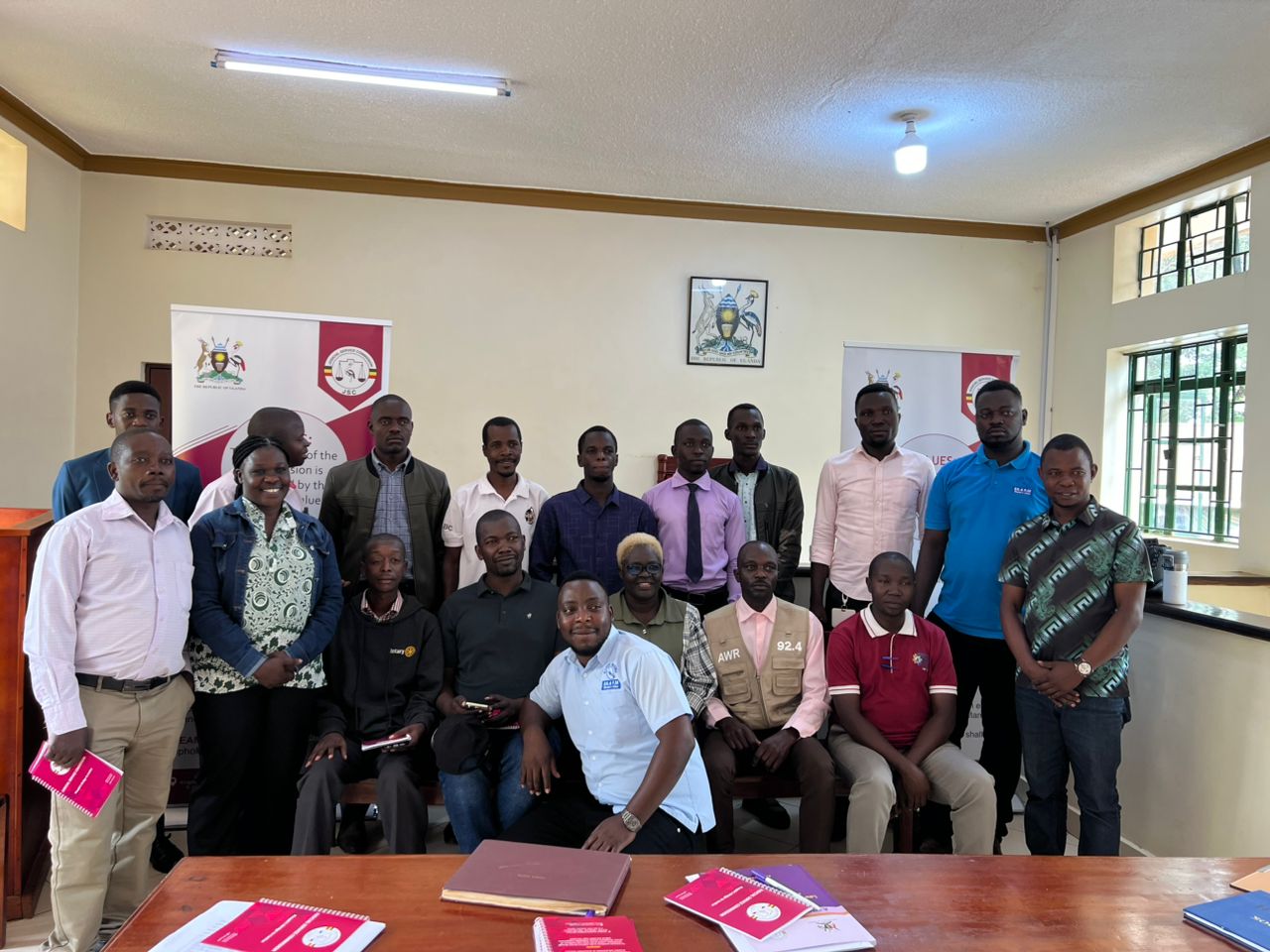
The appeal was made by Jane Margaret Akurut, Under Secretary of the Judicial Service Commission, during a meeting with court reporters from the Bunyoro sub-region at the Hoima Magistrates Court as part of a legal education engagement with journalists.
Akurut acknowledged that case backlog remains a significant challenge for the judiciary but noted that the situation is worsened by a rapidly growing population and a limited number of judges.
“Every day, new suspects are brought before court, yet the number of judges is limited. One of the most effective ways to reduce the backlog is through community sensitisation to discourage crime and encourage peaceful coexistence,” Akurut said.
She added that minor disputes should increasingly be resolved through community mechanisms at village level to reduce the number of cases reaching formal courts.
“If small cases can be settled at the village level, courts will be left with fewer matters to handle and judges will be able to deliver justice faster,” she explained.
Judge-to-Population Ratio a Major Challenge
According to Akurut, the recommended ratio is one judge for about 300 cases, which is already considered high. However, the current reality in Uganda is far more strained.
“At the moment, one judge is effectively serving about 14,000 people. That is far too many and contributes to delays in the delivery of justice,” she said.
Uganda currently has about 120 judges, and although the commission would like to see more recruited, expansion depends on the availability of funding for wages.
Akurut also noted that overcrowding in prisons reflects the broader pressure on the justice system.
“Our prisons are already full. Preventing crime will not only reduce the burden on courts but also ease congestion in correctional facilities,” she said.
Addressing Concerns About Judicial Conduct
Akurut acknowledged that some members of the public have raised concerns about fairness in judicial decisions. She encouraged citizens to formally report such complaints to the Judicial Service Commission, which is responsible for supervising judicial officers.
She also revealed that the commission is working with district leaders to establish local office spaces to make its services more accessible to the public.
“We are exploring partnerships with district leadership to provide office space because renting offices is costly,” she said.
Meanwhile, Juliana Kimono, Grade One Magistrate at the Hoima Magistrates Court, expressed concern over the increasing case backlog and the pressure on judicial officers.
Kimono said she handles more than 20 cases daily while also covering duties in other jurisdictions.
“Besides handling cases in Hoima, I also travel to Buseruka Sub-county where there is no prosecutor, and I am currently covering for the Grade One Magistrate in Buliisa District who is on leave,” she said.
She urged government authorities to recruit more judicial staff, including magistrates and prosecutors, to ensure timely delivery of justice.
Kimono attributed the growing number of cases partly to population growth and the absence of state prosecutors in some sub-counties.
Judiciary Seeks Improved Relations With Media
Officials from the judiciary also expressed willingness to strengthen cooperation with journalists but noted that concerns over privacy and personal security sometimes limit media access in courtrooms.
Kimono cited instances where judicial officers have been targeted on social media, including cases where images of judges were manipulated and circulated online following sensitive court decisions.
She referred to controversies surrounding the Masaka Woman MP Election Petition, where images of judges were allegedly misused on social media.
“These situations can be traumatising, especially when families and homes of judicial officers are exposed online,” she said.
However, Kimono emphasised that the judiciary is open to working with journalists under clear guidelines that protect both transparency and the safety of judicial officers.
“If we agree on proper working procedures, we have no problem allowing journalists to cover court proceedings,” she said.
