

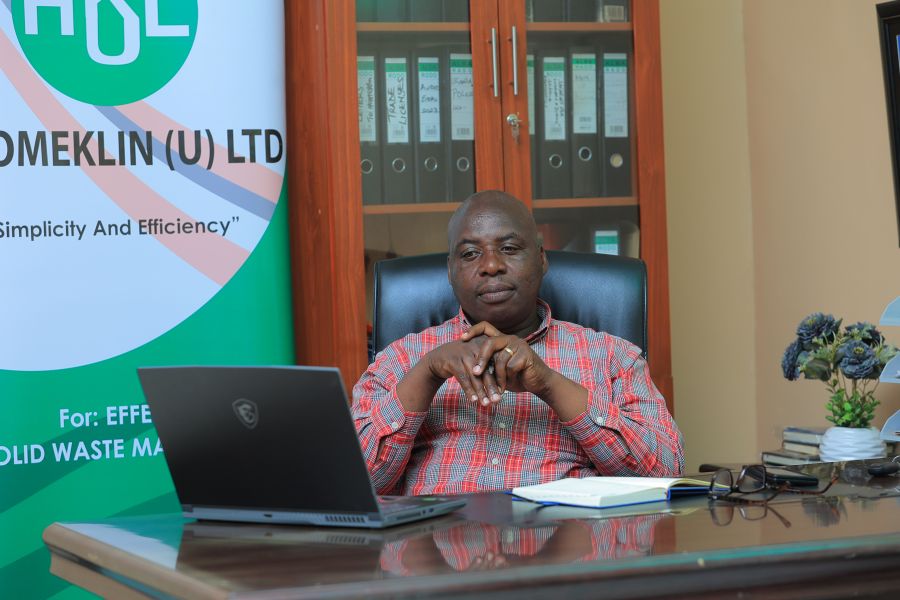
Homeklin (U) Ltd, a longstanding player in Uganda’s waste management sector, is set to transform Kampala’s perennial garbage crisis into a renewable energy opportunity with a new facility in the Makindye division.
The plant, slated for official launch on Wednesday, represents a strategic pivot for Homeklin from traditional waste collection to advanced resource recovery. In collaboration with American firm Cenergy Solutions, the company will convert the city’s organic waste into compressed biogas cylinders and liquid biofertilizer.
Kampala generates approximately 730,000 tonnes of waste annually, but data from the Kampala Capital City Authority (KCCA) indicates that nearly half of this volume is never formally collected.
The majority of this uncollected waste—about 70%—is organic material, much of which ends up in informal dumpsites or is burned in open-air fires, exacerbating environmental and public health concerns.
“Waste is only waste if wasted,” said Isaac Katureebe, founder and CEO of Homeklin.
He explained that the project is designed to capture organic refuse and provide a scalable alternative to charcoal, Uganda’s primary cooking fuel, which has historically driven deforestation.
The Kevina Nsambya facility embodies the principles of a circular economy.
By capturing methane from decomposing organic matter and packaging it into portable cylinders, the project aims to support the government’s clean cooking initiatives while reducing respiratory health risks associated with wood-fire smoke.
The launch, themed “Waste Transformation and Climate Resilience,” will attract senior KCCA officials and international experts, including Cenergy Solutions CEO Gary Warren Fanger.
Their participation highlights the growing role of public-private partnerships in addressing urban sanitation challenges that often exceed municipal budgets.
In addition to energy production, the facility will produce liquid biofertilizer, linking urban waste management directly to agricultural productivity.
As Uganda advances its National Development Plan goals, the success of the Nsambya plant could serve as a benchmark for private-sector-led solutions to the challenges of rapid urbanization.
For Kampala residents, frequently overwhelmed by uncollected refuse, Homeklin’s initiative offers a practical pathway forward. By treating organic waste as a valuable resource rather than a nuisance, the company is aiming to demonstrate that the solution to the city’s environmental and health crises may lie in its own trash.
