

The Uganda Law Society (ULS) has issued an executive order denouncing two state-appointed defence lawyers for what it describes as a “grave professional failure” in a high-profile murder trial currently being heard under a controversial mobile court arrangement in Ggaba, Kampala.
In Executive Order RNB No. 9 of 2026, signed by ULS President Isaac Ssemakadde and Acting Secretary Babu Ssali, the society condemned advocates Sarah Awero and Richard Kumbuga for remaining silent on what it considers a fundamental breach of fair trial standards—specifically, concerns over venue impartiality.
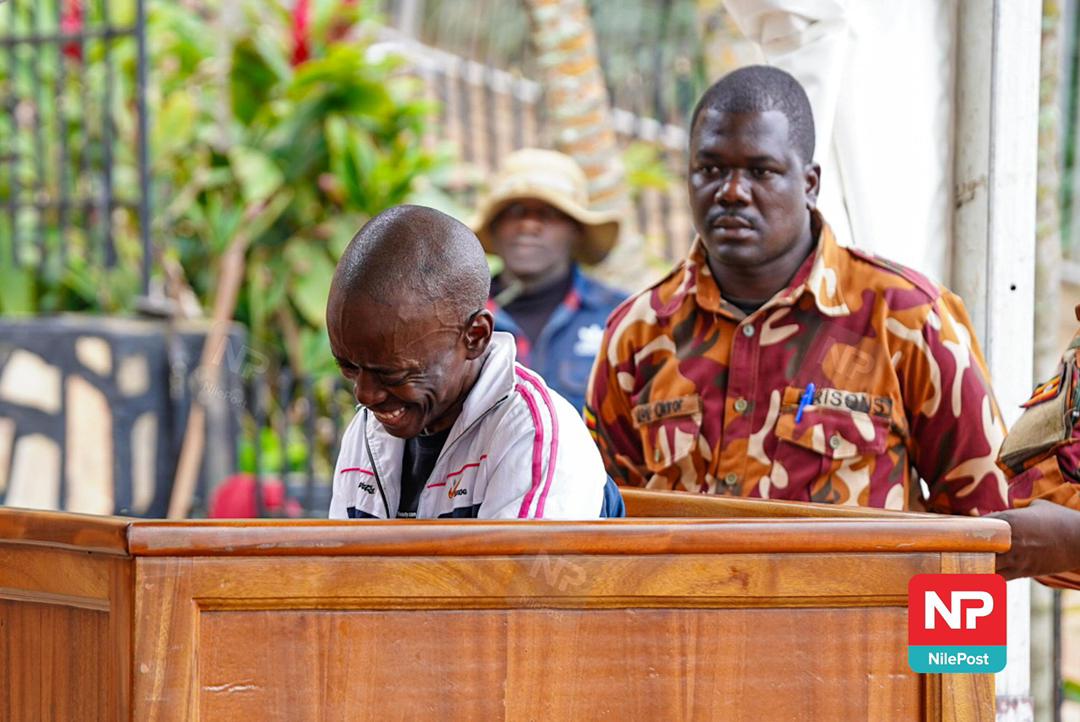
The dispute stems from a decision by the Judiciary to hold a Mobile High Court session at Ggaba Community Church grounds in Makindye Division. The session, presided over by Justice Alice Komuhangi Khaukha, is hearing the case of Christopher Okello Onyum, who is charged in connection with the alleged murder of four children under the age of three at Ggaba Early Childhood Development Centre.
The ULS argues that conducting proceedings within the same community directly affected by the alleged crimes creates a reasonable apprehension of bias. The Society maintains that such a setting undermines the constitutional requirement that justice must not only be done, but must also be seen to be done.
The executive order cites Uganda’s Constitution, the International Covenant on Civil and Political Rights, and the African Charter on Human and Peoples’ Rights, arguing that the venue compromises the accused’s right to a fair trial.
According to the ULS, Awero and Kumbuga, both appointed under the State Brief Scheme to represent the accused, failed in their duty by not objecting to the venue despite being aware of the Society’s formal protest and attempted intervention during court proceedings.
“Their silence constitutes a dereliction of the irreducible professional duty to act fearlessly and diligently to safeguard the accused’s right to an impartial tribunal,” the order states.
The Society further alleges that its representatives were obstructed and removed under police guard when attempting to access the court and address the presiding judge. ULS has since filed Human Rights Application No. 170 of 2026, challenging the legality of the mobile court arrangement.
In its directive, ULS publicly censured the two defence lawyers for professional misconduct and urged them to immediately place objections to the trial venue on record in open court. The Society also demanded that proceedings be relocated to a neutral and legally designated High Court venue. It warned that continued silence would be interpreted as complicity in undermining fair trial guarantees.
Beyond the individual case, the executive order highlights systemic weaknesses in Uganda’s State Brief Scheme, intended to provide legal representation for indigent defendants.
The law society describes the scheme as chronically deficient and unable to guarantee independent and effective legal defence.
ULS is calling for urgent reforms, including the establishment of an independent Legal Aid Authority, improved remuneration and training for state-appointed lawyers, stronger legal protections for counsel raising fair trial concerns, and transparent performance monitoring mechanisms. It also criticized the government’s continued delay in enacting the National Legal Aid Bill, 2022.
The executive order will be circulated to the Chief Justice, the Director of Public Prosecutions, and international bodies, including the UN Special Rapporteur on the Independence of Judges and Lawyers and the African Commission on Human and Peoples’ Rights.
During Friday’s proceedings, Deputy Director of Police Health Services Dr. Emmanuel Nuwamanya told court that Okello allegedly admitted his motive for the killings was “fortune hunting.” He also reportedly confessed to killing his stepbrother, an allegation that has previously circulated on social media.
Dr. Nuwamanya further testified that Okello disclosed a history of suicide attempts dating back to 2023 and long-standing mental health challenges.
Due to heavy rainfall, proceedings were later halted and adjourned to Monday, April 20, 2026.
The directive took immediate effect upon signing on April 17, 2026, at ULS House in Kololo, Kampala, marking a significant escalation in tensions between the legal profession and judicial authorities over the handling of the Ggaba trial.
The case continues to attract national and international attention, with legal experts warning that both its outcome and the manner in which it is conducted could have lasting implications for the rule of law and fair trial rights in Uganda.
