

The guns of Capt. Lugard at the battle of Mengo in 1982 led to the setting up of a power house, ruled over the Protestant mailo landed elite who jealously guarded their positions of privilege.
Other faiths were looked upon as intruders and tolerated there only for cosmetic effect. This power house was known as the Mengo Establishment, formalised as the British colonial indirect rule structure in the 1900 Agreement.
The structure worked smoothly for as long as all public offices remained appointive. However, the changes on the political scene which began with the 1945 and 1949 riots and continued with the constitutional developments in the 1950s and early 1960s changed all that as Uganda moved towards independence.
The challenge of the Mengo establishment was how the hegemony of the Protestant elite would be secured and ensured in a democratic elective system where they did not command a majority.
To the Mengo establishment, the answer was simple. The elective principle itself had to be undermined and if possible scrapped, at any cost.
The Mengo establishment realised the futility of attempting to scrap the electoral system and resorted to undermining the democratic principles on which that system itself was established. Consequently Mengo found the answer in founding something akin to a political party.
The entire policy and ideology of the so called party when founded was carried in its name-the Kabaka Yekka (KY) (King only)-it was a completely politically disarming name with the yellow and white of Buganda Kingdom as its colours.
The portrait of Kabaka Muteesa II was its symbol.
The election symbol was the chair indicating the Buganda throne. The fusion of Kabaka, culture, tradition and politics was used to undermine the essence of a democratic electoral process.
Mengo establishment in addition pushed for indirect elections of members of Parliament for Buganda.
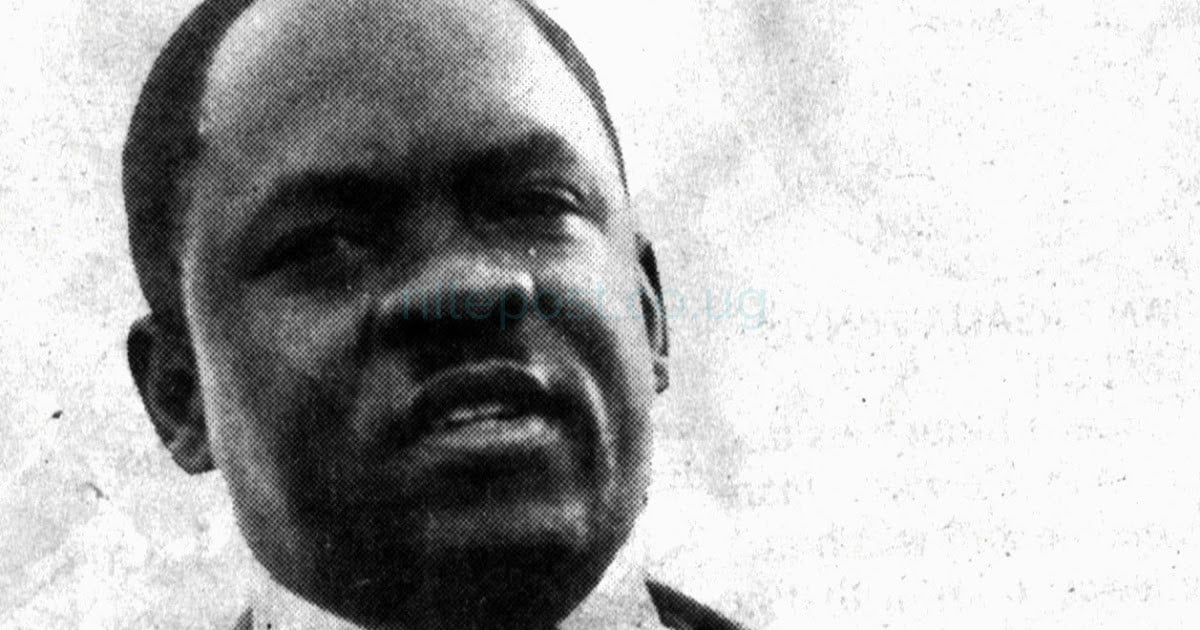
To Ben Kiwanuka, the election of Buganda’s representatives to Parliament was not an internal matter of Buganda but a national affair where, the Buganda population of two million was being disenfranchised. Ben Kiwanuka accordingly opposed this scheme.
Lord Fisher, the Anglican Archbishop of Lambeth rebuked Ben Kiwanuka and the DP for opposing indirect elections in Buganda.
Ben Kiwanuka did not mince his words. He told Archbishop Fisher that just as the Archbishop could not budge from Christian principles, at any price, the DP would not depart from the democratic principles of one man one vote which was a cardinal principle of democracy and rather accusingly told the Archbishop saying “…can you, Archbishop, support these wicked moves, knowing fully their implications, and still feel quite safe in your conscience”?
Despite the great show of moral authority, Ben Kiwanuka and the DP was unable to stop Britain, the Mengo Establishment and its new found ally the Uganda People’s Congress (UPC).
The Mengo establishment manoeuvres succeeded. Mengo Establishment was jubilant, but democracy was cut at its roots. Commenting on this betrayal of the nation by the Mengo Establishment, Ben Kiwanuka said, “the concession to Buganda of the right of indirect elections by the Lukiiko marked the highest degree of political chicanery so far known under imperialism”.
By allowing the Mengo establishment to have indirect elections in Buganda, democracy in Uganda was doomed to failure from the beginning. The Mengo establishment had successfully excluded DP from competitive politics in Buganda, a region in which the party had considerable support.
UPC was going to work with Mengo and such a combination was going to be extremely difficult to beat. Ben Kiwanuka had been sacrificed by the Mengo establishment on the altar of principles.
The Mengo Establishment regarded all this as proof that they had got “their things” i.e. indirect elections, a “high Court”, and a “police force”.
A falsehood because it was clearly stated that in Buganda, “high Court” was to operate under the wings of the Uganda High Court, and that the “police force” was to be under the jurisdiction of the Uganda Inspector General of Police.
This did not prevent the impressionable Mengo establishment from claiming that the constitutional arrangements had given them autonomy.
The UPC was overwhelmed by its good fortune and the sure path to power just a few months away for a party which had been founded less than two years before on the strength of anti-Baganda sentiments!
Ben Kiwanuka warned that the Mengo Establishment had taken advantage of the gullibility of Baganda using the name of Kabaka.
They made the poor people to believe that their leaders were fighting for the Kabaka when in fact were doing nothing of the kind. He further warned that this treasonable (obunanfusi) actions of Mengo establishment against the nation of Uganda, will result in nothing but desolation for Buganda.
The 1966 crisis proved Ben Kiwanuka to have been a prophet. Buganda was shoved from the centre of Uganda politics to the periphery.
It is important to put into perspective these historical events in order to take caution as a country, in view of the manoeuvres of the current regrouped Mengo Establishment.
The author is minister of State for Lands
