

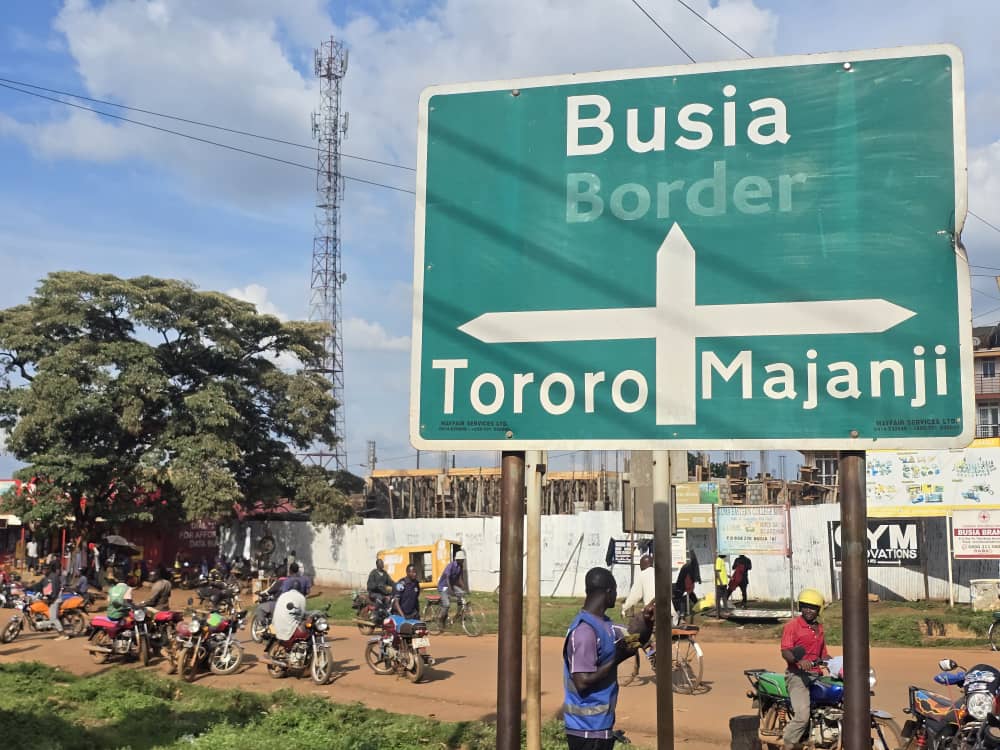
Comprising eighteen administrative units, Busia District at the befitting of 2025/26 passed a budget of Shs. 55.3 billion. Of this, 53 percent ( Shs.29.4 billion) was allocated to wages, while over shs.20 billion went to operational and development expenditures. So far, the district has received 75 percent of the total budget.
To ensure effective utilization, the district has undertaken several projects across key sectors. In the water sector, at least ten clean and safe water sources have been drilled. In education, eight classroom blocks have been constructed, each costing over shs. 90 million, improving infrastructure in schools that previously had limited facilities.
In the health sector, shs 400 million has been invested in the construction of a maternity ward at Buteba Health Centre III, which is nearing completion.
David Lubuuka, the Chief Administrative Officer (CAO) of Busia District, said,
"We now have clean and safe water sources beyond national standards. We have also worked on roads, though not one hundred percent. We have been challenged by constant breakdown of machines and heavy rains."
Patrick Wabwire, the District Planner, added,
"We provided infrastructure in four schools that previously did not have up to seven classrooms. We added two classrooms to each, making a total of eight classrooms, each costing about Shs 90 million, including desks."
Out of the district’s total road network of 526 kilometres, a significant portion has been made motorable. Stephen Wasike Mugeni, the District Chairperson, attributed this progress to strengthened monitoring and supervision of projects.
"There was a lot of confusion in service delivery. Funds for roads would be allocated, but the work was not done, yet accountability would still be made. We ensured strict supervision, and that is why you now see physical results on the ground," he said.
However, as the financial year draws to a close, challenges remain. Busia District is likely to return close to shs.2 billion to the national treasury after failing to recruit hundreds of workers. This follows the death of the District Service Commission Chairperson earlier this year and the expiry of contracts for other commission members.
"The replacement process is lengthy. It requires approval from the Ministry of Public Service, and time is not on our side. That is why we are most likely to return the funds." Explains, David Lubuuka
The staffing gaps are particularly acute in the health sector, where many staff have retired or passed away. Lubuuka noted.
"Currently, staffing levels are at just 30 percent, you can imagine the pressure."
With limited time to reverse the situation, district leaders say their focus is now shifting to better planning for the next financial year, with priority given to addressing staffing gaps, particularly through wage allocation. They have called on the residents of Busia to exercise patience and understanding as the district navigates these challenges.
