

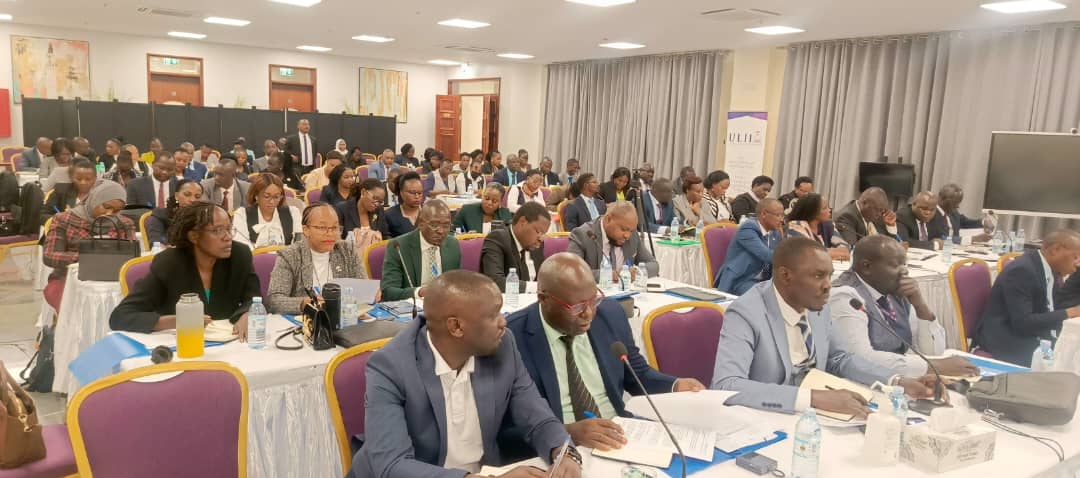
As Uganda’s 2026 general elections draw closer, Chief Magistrates from across the country have undergone intensive training on electoral dispute management to enhance their ability to handle election-related cases efficiently, fairly, and transparently.
The two-day training, which began on Tuesday at the Court of Appeal Conference Hall in Kampala, was organized by the Judicial Training Institute (JTI) to strengthen the competence, integrity, and readiness of magistrates who play a pivotal role in resolving electoral disputes that often arise during and after elections.
Delivering opening remarks on behalf of the Deputy Chief Justice, Dr. Flavian Zeija, Justice Geoffrey Kiryabwire, Court Administrator of the Court of Appeal, emphasized the crucial role magistrates play in protecting the will of the people through fair and timely adjudication.
“Chief Magistrates are the first line of defense in safeguarding electoral justice,” said Justice Kiryabwire. “They ensure that the will of the people is upheld through lawful and timely adjudication of post-election disputes, thereby reinforcing the legitimacy of electoral outcomes.”
Citing Articles 126 and 128 of the Constitution, he reminded judicial officers of their duty to administer justice “without undue regard to technicalities” and “in a fair and expeditious manner.”
He cautioned magistrates against compromising either speed or accuracy in delivering judgments, stressing that,
“Expediency without accuracy is chaos, while accuracy without expediency is a denial of justice.”
Justice Kiryabwire also highlighted challenges that magistrates face during election periods, including tight statutory timelines, political pressure, intimidation, and evolving election technologies, warning that failure to manage these effectively could undermine public trust in the Judiciary.
Representing the Chairperson of the JTI Governing Council, Justice Kibeedi Muzamiru Mutangula commended the initiative, noting that it reflects the Judiciary’s commitment to continuous capacity building.
“The Governing Council takes pride in ensuring that judicial officers receive practical and relevant training. I thank the Executive Director of JTI for responding to the Council’s guidance and the Chief Justice’s directive to strengthen hands-on judicial preparedness,” he said.
In his welcoming remarks, Justice Prof. Andrew Khaukha, the Executive Director of JTI, reaffirmed the Institute’s dedication to equipping judicial officers with both knowledge and digital tools.
“We remain committed to ensuring that every judicial officer is not only trained but also equipped with modern research tools. The Uganda Legal Information Institute (ULII) has now digitized all electoral dispute cases—from parliamentary to local council level—creating an accessible database to promote consistency in judgments,” said Justice Khaukha.
Acting Chief Registrar HW Pamela Lamunu Ocaya reminded magistrates that Uganda is already deep into the electoral cycle, with campaigns and related disputes emerging.
“As judicial officers, you must uphold the highest standards of integrity, impartiality, and composure, particularly in politically charged situations,” she advised.
The training featured an expert faculty that included Lady Justice Lillian Tibatemwa Ekirikubinza of the Supreme Court, Justices Boniface Wamala, Phillip Odoki, and Christine Kaahwa, as well as legal practitioners Caleb Alaka and Jude Byamukama, and HW Joel Wegoye, who guided participants on using ULII for legal research.
Magistrates also took part in a Moot Court exercise simulating recount hearings and drafting rulings, followed by an interactive reflection session featuring insights from both the Bar and the Bench.
As Uganda approaches the 2026 elections, the Judiciary reaffirmed its commitment to ensuring that electoral justice is delivered fairly, transparently, and promptly.
“A credible election requires credible adjudication of disputes,” noted Justice Kiryabwire. “Our preparedness as judicial officers directly contributes to public trust in the entire electoral process.”
