

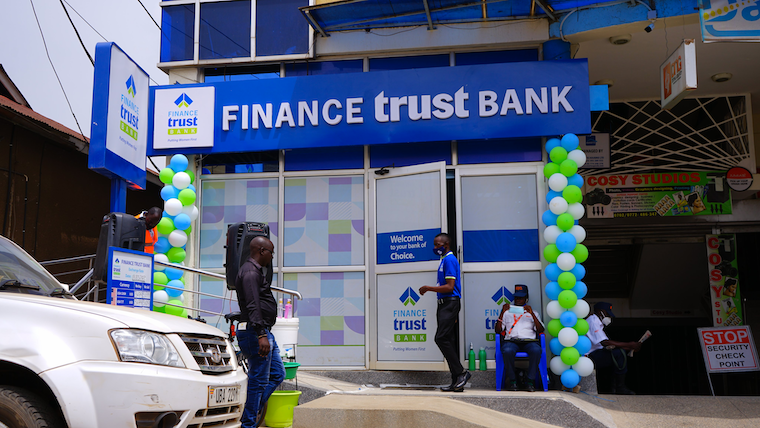
The Bank of Uganda has approved a change in the operating status of Finance Trust Bank Limited, allowing the lender to downgrade from a commercial bank to a credit institution effective April 1, 2026.
In a statement, the central bank said Finance Trust Bank will transition from a Tier I commercial bank licence to a Tier II credit institution licence, a shift that will limit the range of services the institution is permitted to offer under Uganda’s banking laws.
“Finance Trust Bank Limited has been authorised to transition from a Tier I Commercial Bank License to a Tier II Credit Institution License effective 01 April 2026,” the Bank of Uganda said.
The central bank said the lender has been granted a three-month transition period, running from January 1 to March 31, 2026, to align its operations with the requirements of a Tier II licence.
“During this period, it will make adequate arrangements to phase out products and processes that require a Tier I Commercial Bank License,” the statement said, noting that the phased approach is intended to ensure continuity of services and minimise disruption to customers and the wider financial system.
Uganda’s banking sector operates under a tiered licensing framework based on capital strength and permissible activities.
Tier I commercial banks represent the highest category and are allowed to offer a full suite of banking services, including cheque accounts, large corporate lending, foreign exchange operations, and international trade finance.
Tier II credit institutions, by contrast, are primarily focused on deposit-taking and lending to individuals, small traders, farmers and micro, small and medium enterprises (MSMEs). They are restricted from offering services such as cheque clearing, sophisticated trade finance instruments and some cross-border banking products.
The Bank of Uganda said the downgrade was driven by a strategic decision taken by Finance Trust Bank’s board.
“The change of status to a credit institution follows a decision by Finance Trust Bank’s Board of Directors to adopt a strategic shift and reposition the institution to serve its core customer base better,” the central bank said.
Industry analysts say the move reflects a growing trend among smaller banks to align their licences with their business models following the regulator’s tightening of capital requirements.
Despite the downgrade, Finance Trust Bank has posted strong financial results. The lender recorded a 178 per cent increase in profits in 2024, posting earnings of Shs10.3 billion.
Operating as a Tier II institution will allow the bank to concentrate on its traditional niche of serving women entrepreneurs, rural communities and small businesses, while avoiding the higher compliance and capital costs associated with a commercial banking licence.
The Bank of Uganda reassured customers that the institution remains financially stable and adequately capitalised under its new licence.
“Finance Trust Bank is adequately capitalized and meets the minimum capital requirements for a Tier II License,” the central bank said.
_____________________________________
EXPLAINER: What Finance Trust Bank’s Downgrade Means for Customers
Finance Trust Bank customers will continue to access core banking services, including savings accounts, fixed deposits and loans, under the new Tier II credit institution licence.
However, some services associated with commercial banking will no longer be available once the transition takes effect. These include cheque accounts, certain international trade finance products and some foreign exchange services that are restricted to Tier I banks.
The Bank of Uganda says the three-month transition period is designed to allow the bank to properly notify customers, restructure affected accounts and ensure there is no disruption to deposits or loan agreements.
Depositors’ funds remain protected under Uganda’s banking supervision framework, and Finance Trust Bank will continue to be regulated and supervised by the central bank as a licensed credit institution.
The downgrade comes amid broader reforms in Uganda’s banking sector following the Bank of Uganda’s 2024 revision of minimum capital requirements.
Under the new framework, commercial banks are required to maintain a minimum capital base of Shs150 billion, while credit institutions must hold at least Shs25 billion.
Since the reforms took effect, several banks have opted to downgrade to Tier II status, while others have pursued mergers or capital injections to retain their commercial banking licences.
The central bank said the changes are aimed at strengthening the resilience of the financial system and ensuring that institutions operate within sustainable risk and capital levels.
“Bank of Uganda reassures the public that it remains committed to safeguarding the stability and soundness of the financial system,” the statement said.
