

The East African Community (EAC) market, with its combined GDP of around $305 billion and a population nearing 300 million, holds vast potential for regional trade, investment, and integration.
Spanning seven member states—Kenya, Tanzania, Uganda, Rwanda, Burundi, South Sudan, and the recently joined Democratic Republic of Congo—the bloc aims to foster a common market to enable the free movement of goods, services, capital, and people.
However, experts and business leaders are sounding alarms over significant hurdles holding back this vision.
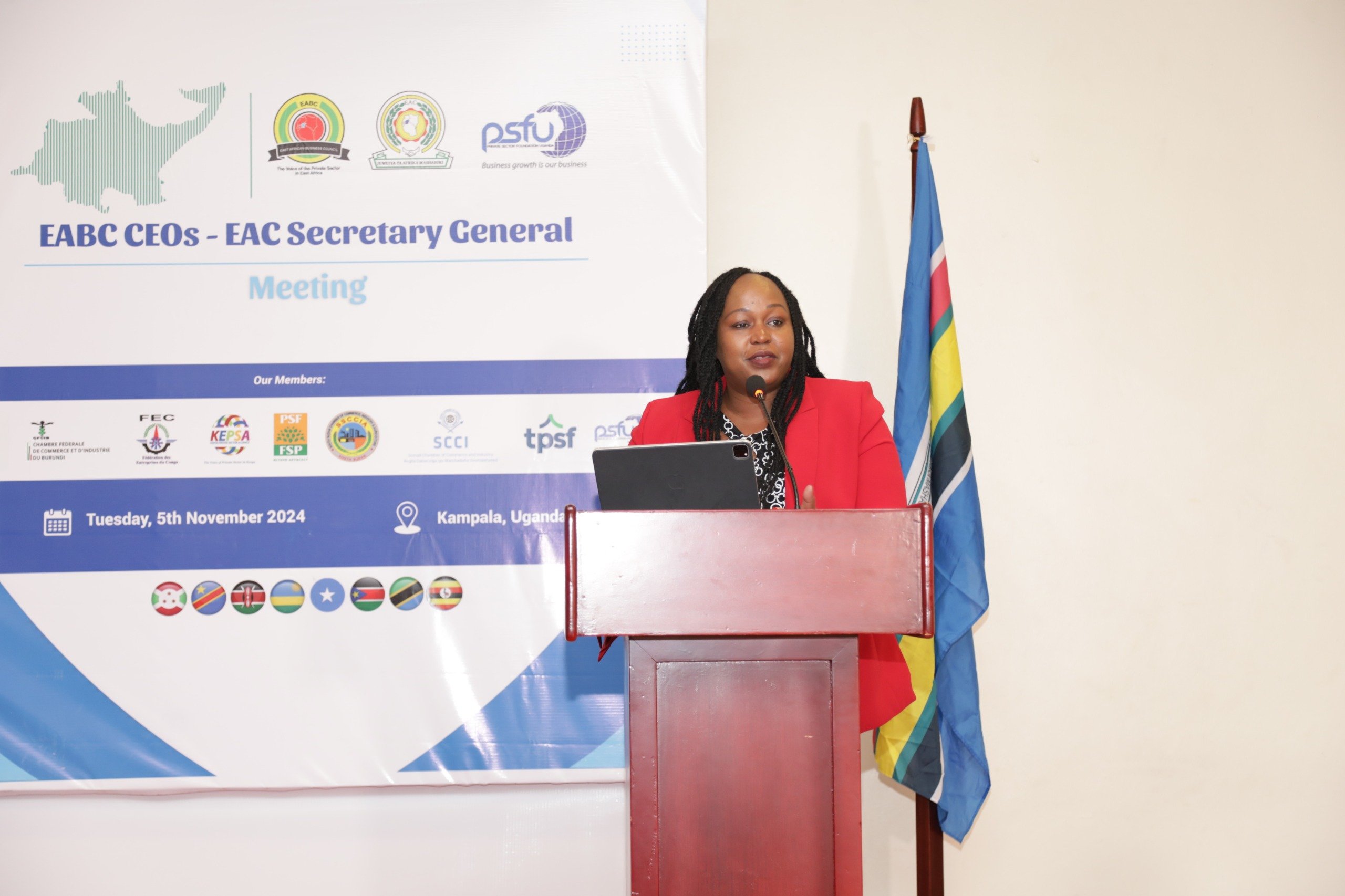
At the recent East African Business Council (EABC) CEOs-EAC Secretary General meeting in Kampala, Uganda, industry leaders expressed concern over toxic politics, bureaucratic inefficiencies, and inconsistent policies.
These obstacles, they warned, threaten the growth of the EAC market and its ability to compete globally.
EAC Secretary Genera Veronica Nduva emphasized the urgency for action, urging leaders to focus on "Africa-to-Africa" cooperation instead of partnerships solely with foreign nations.
"We have heard of Africa-China, Africa-Germany partnerships; when shall we see Africa-to-Africa cooperation?” she questioned, cautioning leaders to avoid past mistakes that led to the EAC’s initial collapse in 1977.
Currently, trade within the EAC remains imbalanced. Kenya dominates with approximately 36% of intra-EAC trade, followed by Tanzania at 22%, and Uganda at 20%.
Smaller economies, such as Rwanda and Burundi, hold shares of around 10% and 5%, respectively, while the DR Congo, despite significant potential, contributes only 3%.
Kenya's advanced infrastructure, manufacturing base, and economic diversity have positioned it as the regional hub, creating calls for policy harmonization and enhanced infrastructure development across the bloc.
Rebecca Kadaga, Uganda’s First Deputy Prime Minister and Minister for East African Community Affairs, highlighted bureaucratic bottlenecks as a major setback to true integration.
She questioned the need for passports between EAC countries, such as between Uganda and Tanzania, despite the bloc’s commitment to free movement.
“I wonder, and I keep wondering, why you still need a passport to travel to Tanzania when we are supposed to be one,” she remarked.
Secretary General Nduva underscored the significance of infrastructure projects like the Standard Gauge Railway (SGR) extension from Naivasha, Kenya, to Kampala, Uganda, as a step toward reducing trade costs and increasing transport efficiency.
“Projects like the SGR will not only lower trade costs but also open up markets within the region, boosting competitiveness,” she said, while stressing that infrastructure must be matched with streamlined policies to ease cross-border business.
Adrian Njau, Acting Executive Director of the EABC, called on member states to reduce bureaucratic hurdles and excessive red tape.
“Our focus is to make sure that EAC trade and investments are enhanced by removing unnecessary barriers,” he stated, urging governments to support the private sector's growth and cross-border expansion.
As the EAC strives for deeper integration, leaders and experts agree that political commitment and a collective will to streamline policies are essential to realizing the bloc’s economic promise.
