
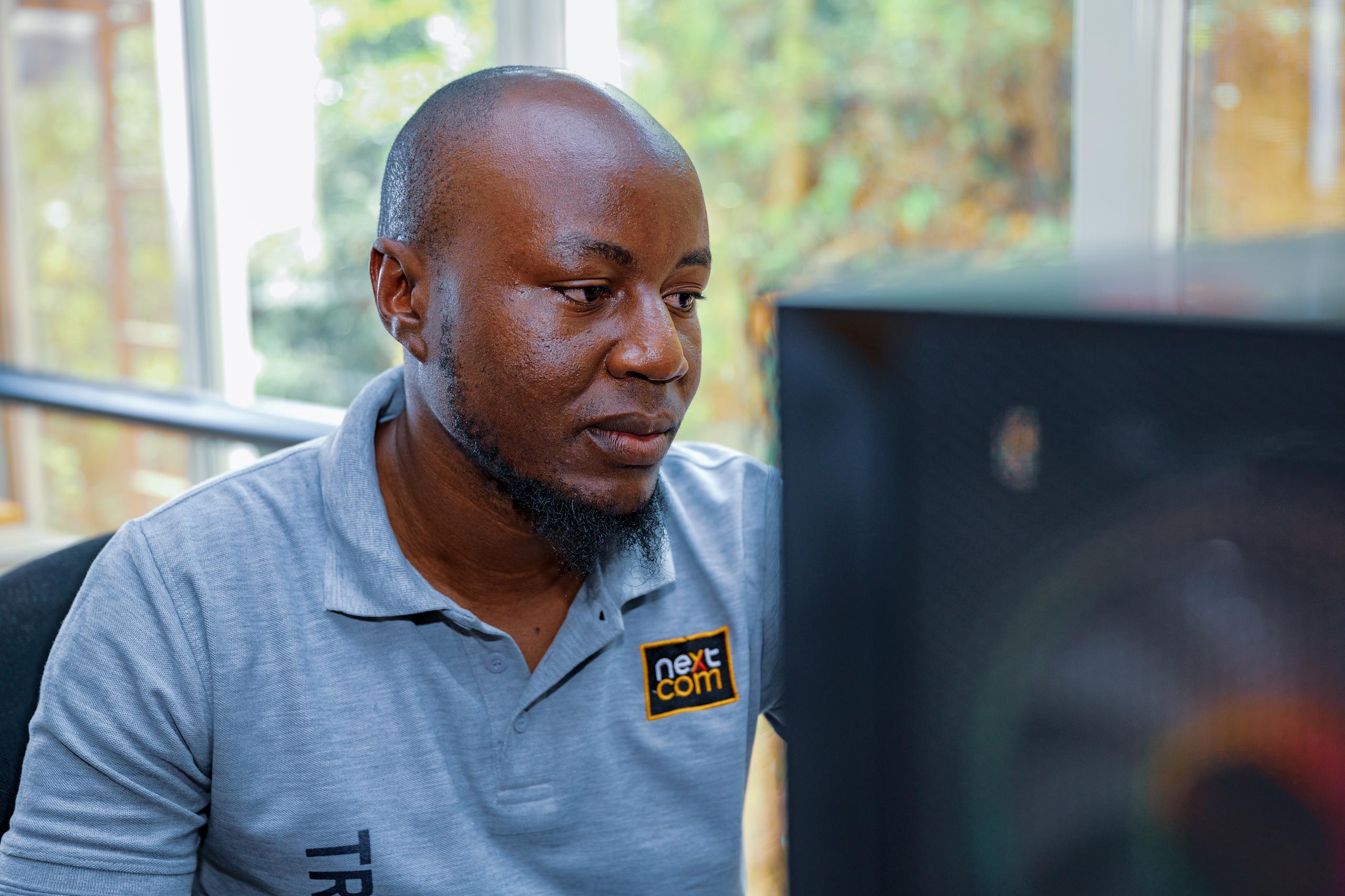
Patrick Lubwama knew how to design, but before joining Next Media, he struggled to turn that skill into a stable income. He picked up small freelance jobs here and there, but the work was inconsistent.
Some months were manageable, others brought nothing at all.
Tired of uncertainty, he decided to apply for a chance at something bigger. He submitted his work, answered the questions, and was eventually accepted.
That was in November 2020, when he joined NexCom to work on commercial advertisements. It was a reality check. He believed he understood motion graphics until he encountered the company’s standards. His work kept coming back marked with corrections.
“Change this. Fix that,” became a familiar instruction. It was humbling, but also formative.
In January 2021, he was moved into the Newsroom at a critical time, during the election period. The environment was intense, defined by breaking news, live broadcasts and constant deadlines. There was no room for hesitation.
At one point, the pressure overwhelmed him. He briefly questioned whether he belonged in such a fast-paced environment.
But he stayed.
Within the newsroom, senior colleagues noticed his potential and quietly entrusted him with more responsibility. That trust became a turning point in his growth, even when he doubted himself.
Then came a mistake that stayed with him. An error in graphics he had worked on went on air. It was small, but visible to millions. The experience changed his approach permanently. From that moment, he learned to review everything multiple times before release.
The real turning point came during the 2021 election coverage. He worked on live graphics that ran throughout the night on television. Watching his work broadcast seamlessly gave him a new sense of confidence.
“That was when I knew I could do this. I belong here,” he reflects.
The newsroom environment reshaped his working style. He learned to balance speed with accuracy, understanding that in news production, timing is everything. Perfection delayed is often opportunity lost.
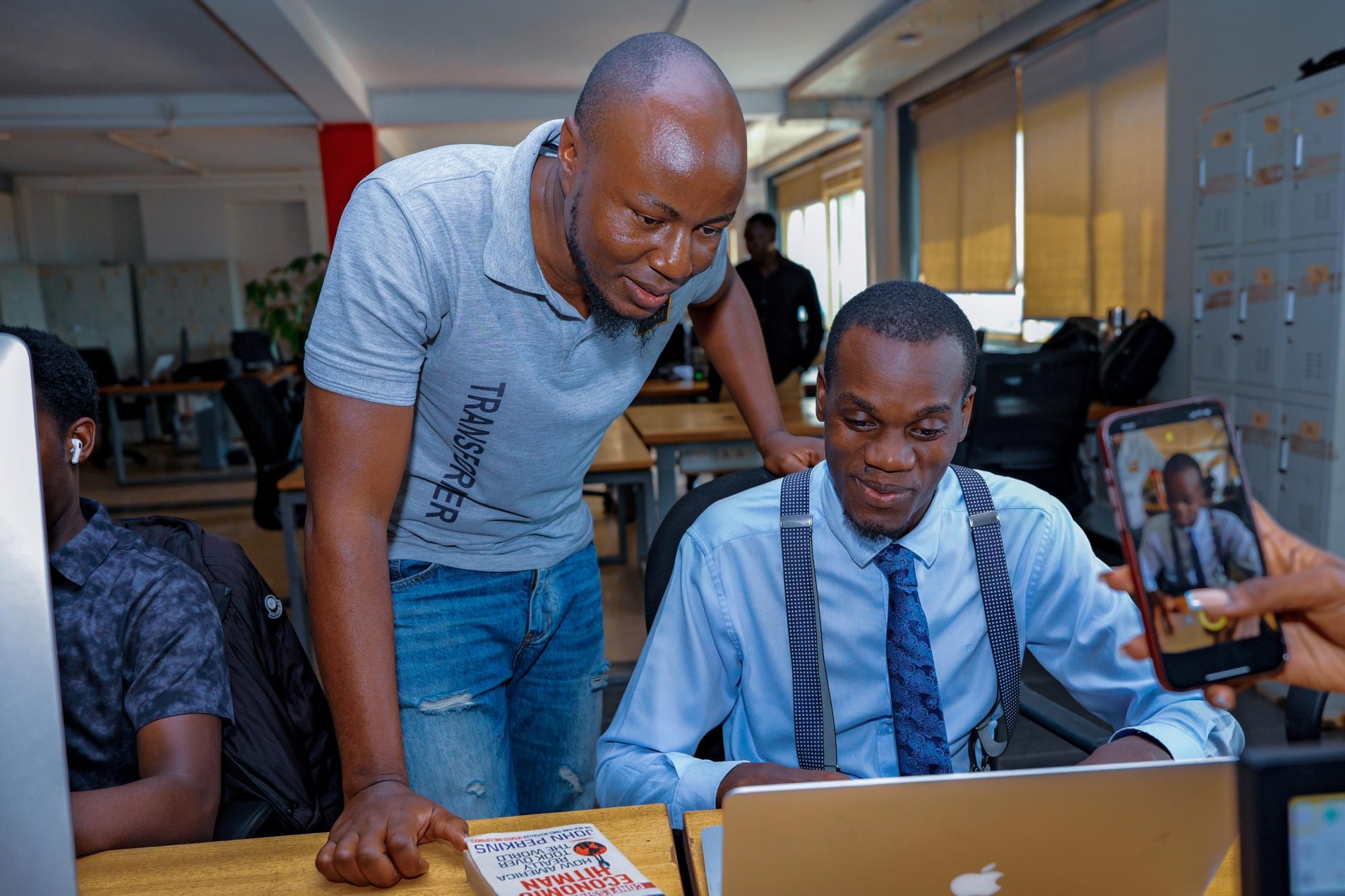
Today, his life looks very different. What was once an unpredictable freelance income has become a steady salary. He can plan ahead, support his family and save.
His mother, proud of his journey, tells people, “My son works on TV,” even if she does not fully understand motion graphics. To her, the moving visuals on screen during news bulletins are proof of his success.
Looking back, Patrick says he would advise his younger self to stay the course. “It is going to be hard at first, but stay. You will learn a lot.”
He also challenges a belief he once held—that lacking a degree meant he was not good enough for a company like Next Media. His experience proved otherwise.
“It is not about the papers you have. It is about what you can do,” he says.
The defining moment for him came when he was trusted to handle a major task alone, and nothing needed correction afterward. That, he says, was when he stopped just learning and started contributing as a full member of the team.
Growth came at a cost: long nights, constant learning, unlearning and relearning. But he says that is what it takes to improve.
Today, he is also paying it forward. When new colleagues struggle with motion graphics, especially timing and motion design, he helps them find their footing.
He summarizes his journey simply: “Next Media changed my life by giving me a chance to become a professional.”
