
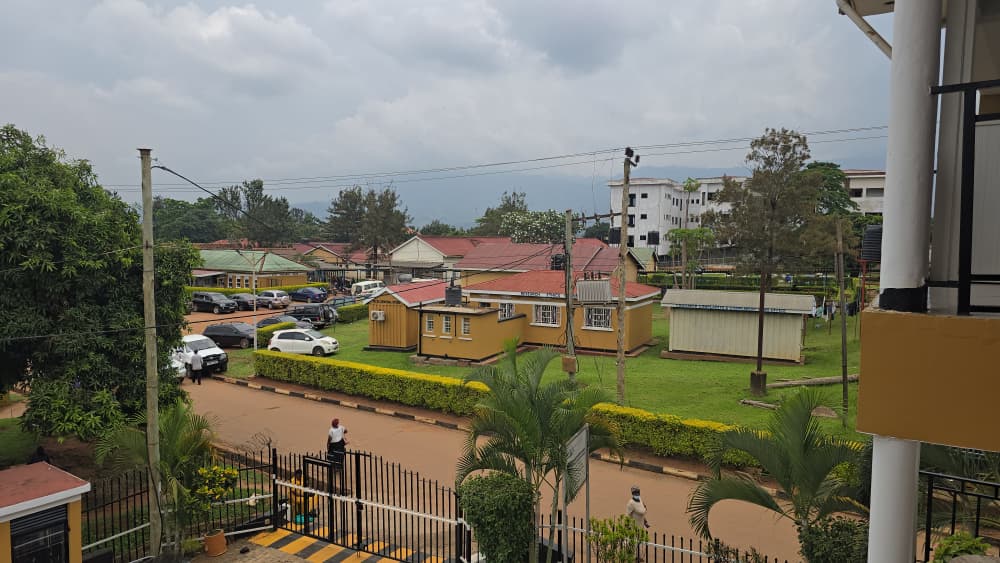
For many families in Mbale City and the surrounding region, the pain of losing a loved one does not end at death. It continues at the mortuary—where grief, they say, is increasingly being measured in money.
Residents accuse public mortuary authorities of withholding bodies and demanding exorbitant fees before release, turning moments of mourning into financial distress.
The issue came into sharp focus during a recent public accountability forum organised by Mbale Regional Referral Hospital at Nakaloke Playground, where residents openly shared their experiences.
Many described what they called a disturbing and long-standing practice that exploits families at their most vulnerable.
Several participants claimed that bodies of patients who die at the hospital are immediately transferred to the mortuary, where relatives are required to pay significant sums before accessing them for burial.
For grieving families already struggling with funeral expenses, the charges only deepen the pain.
“It feels like punishment,” one resident said. “You are grieving, then you are forced to look for money you didn’t plan for.”
In response, some families say they have adopted desperate measures to avoid mortuary fees.
Residents describe a growing culture where attendants suppress their grief inside hospital wards to avoid attracting attention from staff. Others reportedly sneak bodies out of the facility before they can be transferred.
Some families, they say, quietly carry away the deceased on motorcycles—disguising the body as a living passenger—to evade detection.
This practice, though extreme, is said to have persisted for years.
Nathan Isenget Okea confirmed receiving multiple reports of such incidents.
“As soon as a patient dies, families panic,” he said. “They try to hide and whisk away their dead before hospital authorities notice.”
“People don’t cry immediately anymore,” one resident shared. “They wait, because crying may mean the body is taken away and you will be asked for money,” added another resident.
In many African traditions, mourning is a communal and emotional process, making such secrecy a stark cultural shift driven by fear of cost.
Hospital authorities, however, maintain that mortuary services are officially free.
Dr Stephen Obbo, director of Mbale Regional Referral Hospital, insists no fees are charged for mortuary services.
A mortuary attendant echoed this position but pointed to the presence of middlemen.
“There are brokers who mislead families, claiming they can provide quick transport to help them avoid mortuary costs,” he said. “We do not charge, understand the struggles people face—some even transport bodies on motorcycles because they cannot afford vehicles.”
The situation is even more complex at the Mbale City mortuary, where accident victims, victims of suspicious deaths, and those resulting from criminal attacks are often taken for postmortem.
Residents say this process frequently comes with unexpected charges before bodies are released.
“We had just lost our relative,” one resident recounted. “Before burial plans, we were told to pay money to access the body. It was overwhelming.”
The issue is particularly sensitive for Muslim families, who are required to bury their dead within 24 hours.
Dr. Moses Mugonyi, Mbale City Health Officer, says mortuary services are officially free as the facility is funded by the government through the city council.
Mugonyi further asserted that city officials are deployed to deliver free services, adding that the facility receives supplies from National Medical Stores.
“We strongly condemn any form of extortion and are working to eliminate it.”
However, the city health officer acknowledged that the mortuary is under strain, receiving at least 10 bodies daily and serving a wide catchment area across Eastern Uganda.
With only three of six refrigeration units functional, the facility is overstretched.
“Because of these challenges, we are sometimes forced to temporarily bury bodies to create space,” Mugonyi revealed.
SP Dr. Banabas Rubanza, the lead police surgeon attached to the facility, maintains that postmortem services are officially free, as the government provides facilitation for each case.
“Postmortem is completely free because government pays for each case,” he explained. “But sometimes the funds delay, and some doctors end up charging to cover transport and operational costs.”
He also highlighted broader systemic challenges. Police units often lack fuel to transport bodies, yet they receive cases from distant districts such as Busia and Soroti—areas without resident police surgeons.
Despite official assurances, authorities acknowledge that some individuals exploit these gaps.
“They are not supposed to pay money because it is a government facility,” Rubanza said.
Yet he admits that in practice, some charges—particularly for consumables like formalin, cleaning materials, and electricity—are passed on to relatives, often at inflated rates by morticians. He noted that the facility faces frequent shortages of essential supplies such as disinfectants and preservation chemicals.
For families, the difference between official policy and lived experience remains stark.
On paper, services are free. In reality, many say they are forced to pay.
And in moments of grief, few have the strength—or time—to challenge the system.
