
By Oweyegha-Afunaduula
Poet William Shakespeare said: “The world is a stage where we come, play our different roles and then leave.”
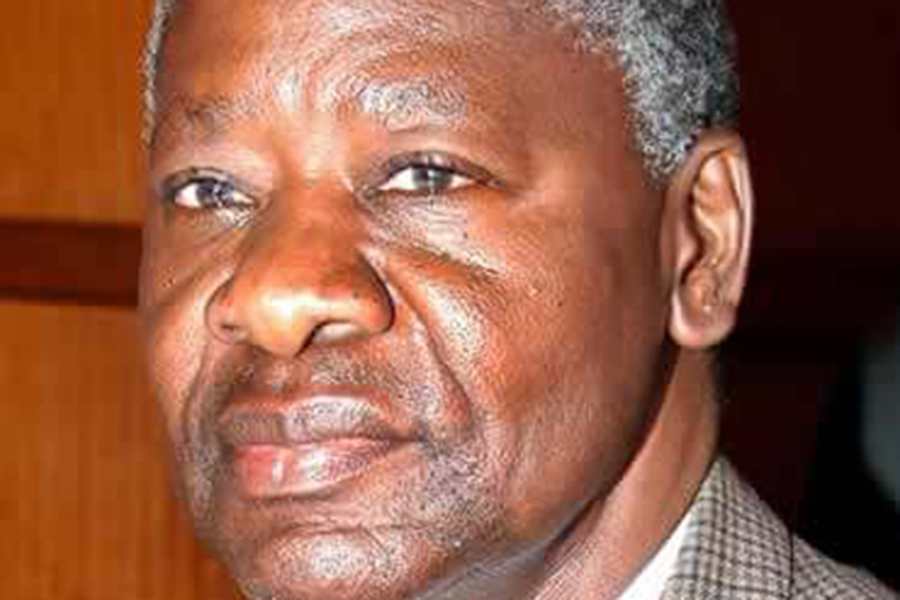
This tribute is dedicated to Sabastian Ngobi, who has recently left the stage after playing a pivotal role in my life from the day we first met in 1972 until his passing.
Sabastian Ngobi lived a life of service, leadership and humanity. He held many roles over the decades. He was Headmaster of Ruiru High School in Ruiru, Kenya, for many years, where he created employment opportunities for numerous Ugandans and Rwandese refugees during the 1980s.
At one point, 45 Ugandan and Rwandan teachers were serving at the school because of him, among them Dr Anthony Isabirye and Dr Herbert Lubita, both now in South Africa.
Many combatants of the Luweero struggle — including Eriya Kategaya — benefited from Sabastian Ngobi’s open-handedness during his time at Ruiru High School.
When he returned to Uganda in the early 1990s, he first worked as a Personnel Officer in the now-defunct Lint Marketing Board.
He was later appointed Deputy Academic Registrar of Makerere University under Dr Hyuha Mukwanason, and subsequently became the substantive Academic Registrar. After leaving that office, he served as Human Resources Manager at Makerere University.
Upon his retirement from Makerere, he joined the Uganda National Examinations Board (UNEB) as Director, Human Resources and Technology, a position he held until his death.
Sabastian Ngobi was a man of insight, wisdom, experience and exceptional integrity — corruption-free and deeply humane in everything he pursued. Uganda has lost a remarkably useful citizen at a time his clear sense and sober judgement were still desperately needed.
To me, he was more than a friend. He was a guardian in real life, especially after I retired from academia. He was also a symbolic father to me because he bore the name Ngobi, which my own father, Charles Afunaduula Ovuma Ngobi Isabirye (1923–2007), also carried.
Until his death, I addressed him as Mzee, and whenever I faced difficulties, he was always available with wisdom and guidance.
Ngobi is a name traditionally given to children of the princesses of the Ngobi Clan of Busoga.
Although he was a Catholic and I am a Protestant, religion was never a barrier in our decades-long relationship. My own parents were of different religious orientations — my mother, Stephanie Ester Naigaga Nawamwena Kyabwe Wabiseatyo (1932–2016), was Catholic, while my father was Protestant — so I easily embraced diversity and unity, and so did Sabastian Ngobi.
I first met him in July 1972 in Jinja, aboard the Akamba Bus that transported students from Uganda to the University of Dar es Salaam via Nairobi.
The bus was full of young men and women heading to begin their undergraduate studies. The group included Muhimbura, Rwatangabo, Ms Jjuko, Ms Namakula, Ms Gutta, Kakembo, Lutalo, Ms Rusooke, Asaba, Rugumayo, Lumuli, Davies Bagambiire, Okumu Wengi, Paul Gwaira, John Balirwa, Fred Mufumba and Olwitingol. Charles Kawagga, my best friend from Busoga College Mwiri (1966–1971), came to see us off.
Ngobi was coming from Namilyango College — a strongly Catholic institution — while I was coming from Busoga College Mwiri — a strongly Protestant school. Yet on the bus we became instant friends. I already knew Gwaira, Chemisto, Olwitingol, Mufumba and Balirwa from our school days at Mwiri Primary School and Busoga College Mwiri. I also knew Davies Bagambiire because our fathers had been close friends.
During the journey, I developed severe nausea and vomited repeatedly. Although all the Ugandan students sympathised, it was Sabastian Ngobi and Davies Bagambiire who stayed closest to me. When we arrived at the University of Dar es Salaam, they immediately took me to the University Hospital, where I spent the night.
Ngobi and I were allocated to Hall 2, one of the six halls of residence. We often sat in front of the hall watching the female students walking to and from Hall 3. Although we searched with hope, none of us — Ngobi, Bagambiire or myself — left the university with future wives, unlike our elder colleague Henry Makmot.
He continued to care for me throughout our university days. I suffered bouts of malaria regularly, and he never hesitated to take me to the hospital, where I was sometimes admitted for a day or two. Bagambiire also checked on me frequently.
During holidays, Ngobi and I occasionally travelled to Mombasa to visit Lt. Bob Kagaata Namiti. While there, we always linked up with the late Martin Musumba, my long-term friend and village-mate from Nawaka, who was then Manager of Uganda TransOcean Ltd. Musumba ensured our stays in Mombasa were always lively.
Let me conclude by highlighting specific areas of my life in which Sabastian Ngobi played a central role:
- My education at the University of Nairobi:
He funded the revision of my Master’s thesis before I graduated in 1986.
- Care for my family (1983–1986):
While he was Headmaster of Ruiru High School, he hosted my wife, two children and me after I left Jinja Senior Secondary School in 1985. His home became our home as I waited for my MSc viva and corrected my thesis at his expense.
- My employment in Kenya:
He played a key role in my recruitment by the Kenya Teachers Service Commission, which posted me to Kanunga High School in Kiambu (1986–1989).
- My wedding in 2016:
He was the chief guest at my wedding at Bulawa Church of Uganda, Nawaka, delivering a memorable speech and supporting the event financially.
- My eye surgery at Mengo Eye Clinic (February 2021):
He supported me financially during the removal of cataracts from my eyes.
- My prostate surgery in September 2025:
He played a central role in my hospitalisation and surgery at Uro-Care Hospital in Nansana.
I will miss Sabastian Ngobi deeply.
Professor Oweyegha-Afunaduula is a conservation biologist invested in the Centre for Critical Thinking and Alternative Analysis
