

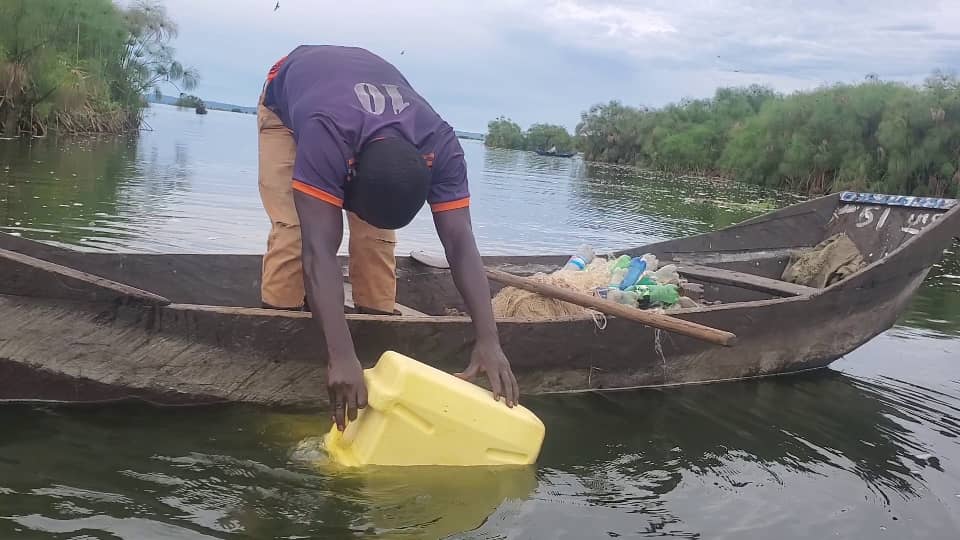
For generations, Lake Wamala has sustained thousands in central Uganda, offering water for fishing, farming, and daily household use.
But today, this lifeline is turning lethal, as pollution steadily poisons the lake and threatens the health and livelihoods of entire communities.
From Butebi to Banda, villagers say they are grappling with an unfolding crisis that has already compromised their most basic needs.
“The water is dirty and dangerous. We have no choice but to use it, even when we know it’s contaminated,” said Rosemary Namatovu, a resident of Mawanga village.
What once served as a source of drinking and cooking water is now laden with waste and a pungent smell.
Locals report visible pollution and suspect the presence of harmful pathogens, describing a situation that leaves them caught between thirst and illness.
The problem is not limited to households. Schools across the region are increasingly dealing with outbreaks of waterborne diseases.
At Busubizi Demonstration Primary School, teacher Simon Oyel says the children are suffering.
“Children are falling sick far too often. We’ve tried to teach them basic hygiene, but what can they do when the only water they have access to is open to animals too?” he asked.
While residents struggle, local authorities are constrained. Catherine Nalweyiso Tusubira, the speaker of Mityana District, admitted that budget shortfalls have hampered their response.
“We recognize the crisis, but with limited resources, there’s only so much we can do. We need national attention and external support,” she said.
With no piped water systems in place, thousands remain dependent on the lake, even as its toxicity deepens. Leaders warn of a looming health disaster if nothing is done.
Yet amid the growing despair, grassroots efforts are offering a measure of relief. Dr. Ssekikubo Jackson, Mityana’s Municipal Health Officer and operations manager at 25:35 Water, a local non-profit, is coordinating efforts to install boreholes and provide alternative sources of safe water.
So far, more than 100 boreholes have been drilled in targeted areas, reducing some villages’ reliance on the polluted lake.
Cato, a co-founder of 25:35 Water, says their mission is driven by urgency.
“Clean water is not a luxury, it’s a right. We’re doing what we can, but the scale of need is still overwhelming,” he said.
Dr. Ssekikubo is calling for more partners to come on board.
“We can’t wait until the situation worsens. These communities are on the brink. If we act now, we can prevent disease, protect children, and restore dignity.”
Back in the villages, families continue to fetch water from a lake they no longer trust, clinging to the hope that help will reach them—before another child falls ill, before another community is pushed further to the edge.