
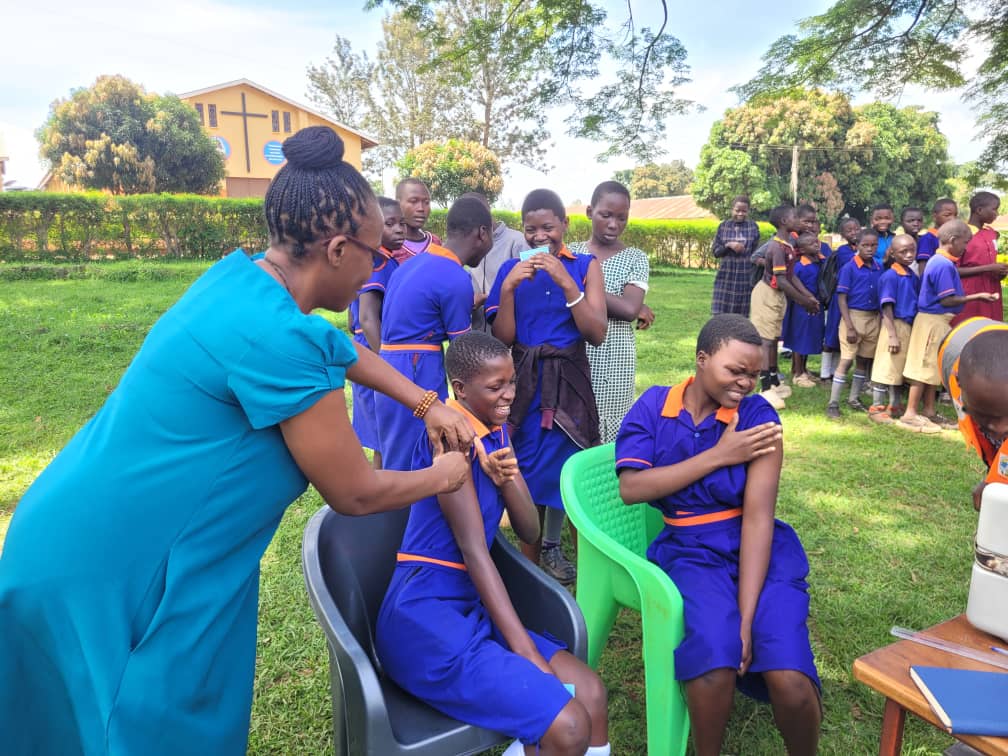
Health authorities in Kayunga District have stepped up Integrated Child Health Days (ICHDs) through school and community outreach programmes aimed at boosting immunisation coverage among children.
According to Olive Busingye, the District Health Assistant, ICHDs are periodic nationwide campaigns designed to bring essential health services closer to communities, particularly targeting children who are unvaccinated or under-immunised.
She said the outreach strategy is implemented in accessible locations such as schools, markets, and villages to ensure that more children can be reached without the usual barriers faced by caregivers, including distance and lack of information.
“School-based outreach ensures that no child is left behind. It allows health workers to access large numbers of children in one place and provide immunisation alongside other services,” she said.
ICHDs are implemented as accelerated campaigns to strengthen routine immunisation by increasing both access and frequency of services.
The programme also delivers a broader package that includes vitamin A supplementation, deworming, nutrition screening, and general health education.
Health officials say the integrated approach helps close immunisation gaps, particularly among hard-to-reach populations, while also improving overall child health and survival outcomes.
Busingye noted that school-based interventions remain particularly effective because they reach children within the recommended age brackets in a structured environment.
She also revealed that the district has previously faced resistance from some community members due to misinformation about immunisation programmes.
“We have been having resistance against vaccination of young children, probably due to negative information circulating out there. That is why the Ministry of Health introduced Community Awareness, Sensitisation and Treatment alongside Integrated Child Health Days,” she said.
“Through CAST, we are trying to create awareness about vaccination for preventable diseases,” she added.
According to health officials, schools remain a critical entry point for immunisation campaigns because they host a large proportion of the target population, especially children under 15 years.
They say school outreach also supports vaccination against conditions such as intestinal worm infestations, malnutrition-related complications, and other preventable diseases, while reinforcing nutrition supplementation programmes.
Officials further highlighted efforts to expand cervical cancer vaccination for girls aged around 10 years, noting that some eligible children have previously missed out on immunisation.
“We are seeing cancer cases increasing, so we are trying to prevent vaccine-preventable diseases,” Busingye said.
Health officials in Kayunga District say they remain committed to ensuring that all eligible children are reached and fully immunised across the district through sustained outreach and sensitisation efforts.
