
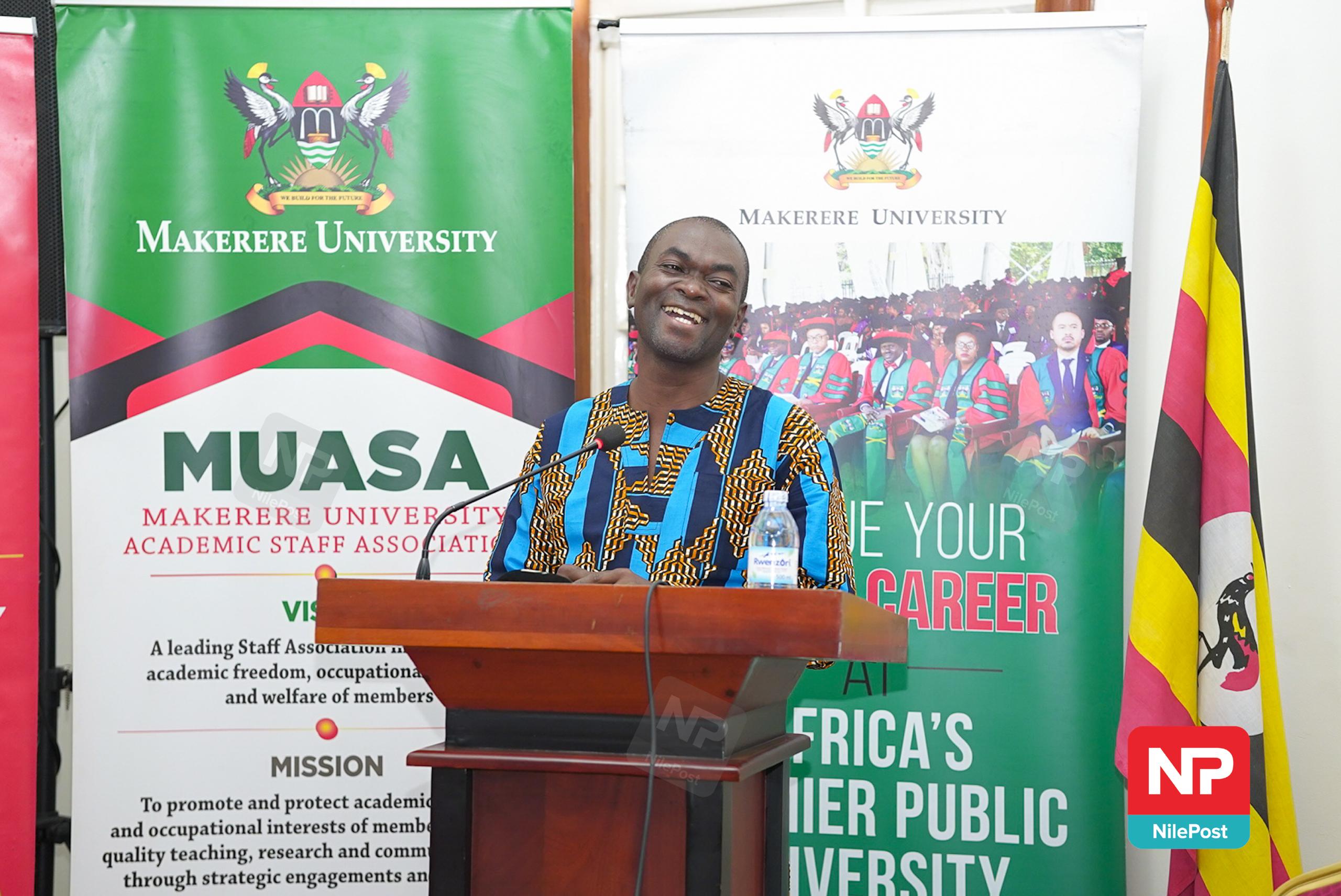
KAMPALA — The Makerere University Academic Staff Association (MUASA) has launched a new platform to scrutinise Uganda's national budget, with its chairperson, Jude Ssempebwa, saying the initiative seeks to ensure that public spending is subjected to rigorous, evidence-based analysis by the country's leading academics.
Speaking at the inaugural MUASA National Budget Breakfast Meeting this week, Dr Ssempebwa said the association intends to create a nonpartisan forum where experts from different disciplines can assess the country's budget against national development priorities, the Sustainable Development Goals and international best practices.
"The objective of this meeting is to promote appreciation and critique of the national budget through the lenses of the National Development Plan, the Strategic Development Goals and an internationally comparative perspective," Ssempebwa said.
He said the discussions would contribute to improving budget performance, stakeholder participation and the quality of future budget processes.
The meeting brought together senior academics, policymakers and financial sector leaders to reflect on Uganda's 2026/27 national budget and whether government spending aligns with the country's long-term development ambitions.
Ssempebwa said the budget had generated widespread public debate since it was presented by the Minister of Finance on June 11, with many Ugandans questioning whether it adequately reflects national priorities.
Among the concerns raised, he cited the absence of funding to enhance salaries for senior lecturers, lecturers and assistant lecturers, an issue that has remained unresolved despite repeated appeals by university staff.
He said the discussions surrounding the budget had taken place across Parliament, boardrooms, public gatherings and social media, but argued that universities possess unique expertise capable of enriching public discourse.
"Members of MUASA are experts in these things. Moreover, they are nonpartisan and dispassionate," Ssempebwa said.
He added that academic staff, backed by years of research, policy experience and academic freedom, should play a greater role in informing national decisions on issues ranging from budgeting and public finance to health, agriculture, human rights, technology and regional integration.
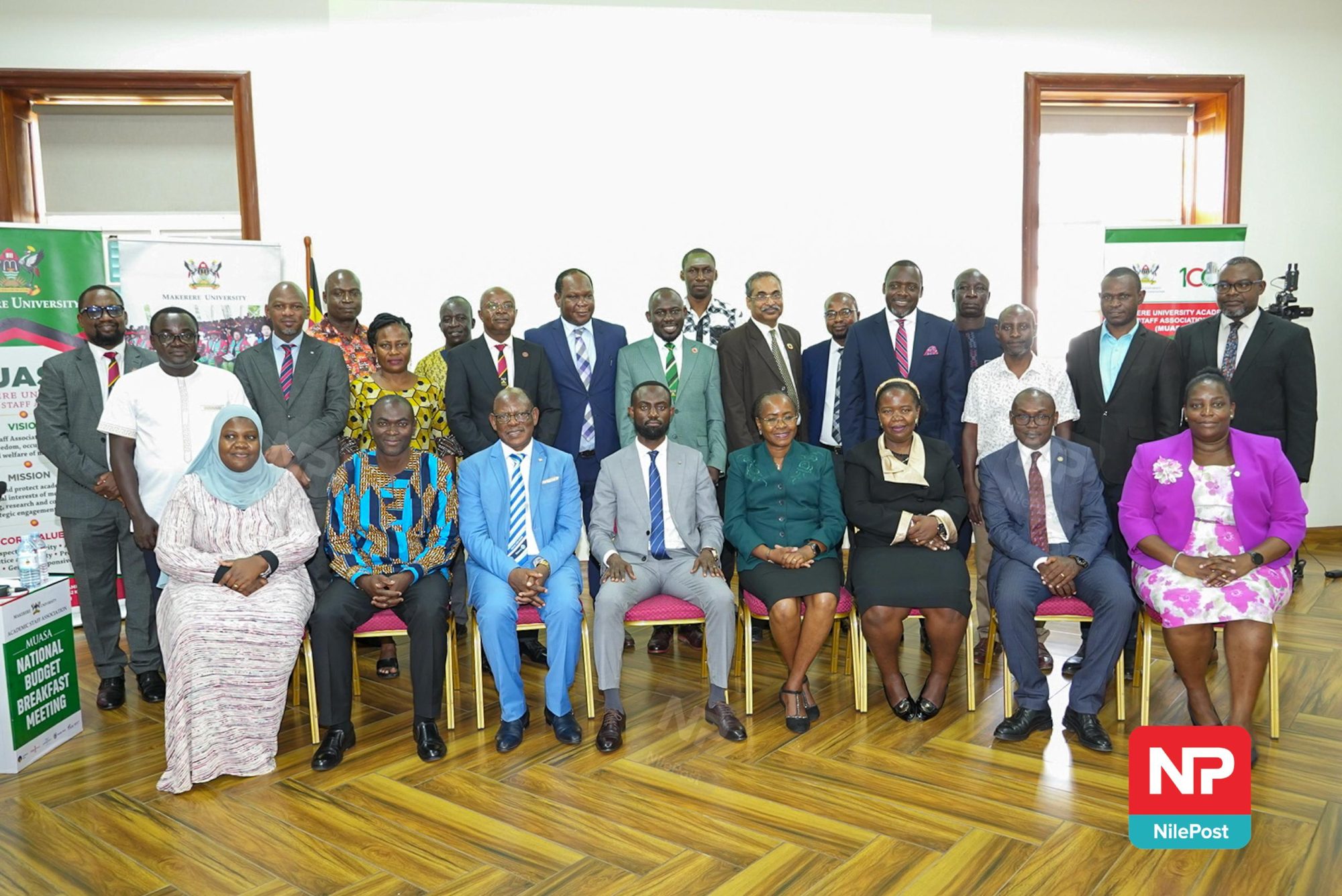
Ssempebwa said the Executive Committee of MUASA intends to organise similar policy platforms in future to amplify the voices of scholars on matters of national importance.
He also appealed to the Ministry of Public Service to approve Makerere University's new staffing structure and provide salary enhancement for categories of academic staff that remain excluded.
According to Ssempebwa, the proposed structure was specifically designed to strengthen the university's transformation into a research-led institution capable of supporting Uganda's development agenda.
Makerere University Vice Chancellor Professor Barnabas Nawangwe welcomed the initiative, describing it as a return to the university's historic role as a national forum for intellectual debate.
He recalled a period when Makerere regularly hosted vigorous public discussions on national issues but said those engagements gradually diminished as academic staff became preoccupied with difficult working conditions.
"What MUASA is doing now is testimony to the much improved working conditions. People can now concentrate on debating issues that will develop their country," Nawangwe said.
He encouraged academics to extend the discussions beyond annual budgets to include wider questions affecting Uganda's economy, agriculture, exports and national development.
As an example, he questioned whether ongoing nationwide promotion of coffee growing had been sufficiently informed by scientific research.
"We have a lot of expertise at Makerere University in all fields. Have we studied and concluded that coffee can grow everywhere, or are we simply going to make farmers spend their energy and perhaps get nothing out of it?" he asked.
Nawangwe urged government to make greater use of the university's research capacity when designing and implementing public policy.
At the same time, he commended the Ministry of Finance for its continued support to Makerere University, saying increased funding had enabled the institution to undertake important reforms.
However, he argued that Uganda would struggle to achieve its economic transformation ambitions without significantly increasing investment in higher education and research.
He cited global recommendations calling for Africa to produce one million PhDs over the next decade to accelerate economic development and reduce poverty.
Nawangwe said Makerere possesses the academic capacity to contribute substantially towards that target but remains constrained by an outdated staffing structure that limits promotion of qualified academics.
He appealed to the Ministry of Public Service to approve the university's revised establishment, saying it had already been endorsed by the university council and benchmarked against leading institutions internationally.
"We have built so much capacity, but as a country we are not making good use of it," he said.
He described education, particularly higher education, as Uganda's foremost national priority, arguing that improvements in health, agriculture, trade and other sectors depend on a well-educated population.
Delivering remarks on behalf of Bank of Uganda Deputy Governor Professor Augustus Nuwagaba, Executive Director for Risk and Strategy Andrew Philip Wabulya said Uganda's budget must respond to emerging domestic and global realities, including the country's youthful population, climate change, geopolitical instability and technological change.
He noted that more than 60 percent of Uganda's population is below the age of 30, presenting both a significant employment challenge and a major economic opportunity if the country invests appropriately in education and skills development.
Wabulya also highlighted the impact of global conflicts, changing trade policies and inflationary pressures on Uganda's economy, saying these factors have increased borrowing costs and placed greater pressure on domestic financing.
He argued that future budgets should prioritise investment in economic infrastructure, human capital, agriculture, manufacturing and value addition while ensuring prudent management of revenues from natural resources such as oil and gold.
He further urged increased investment in climate-resilient agriculture, green financing and artificial intelligence, saying emerging technologies have the potential to improve productivity across multiple sectors of the economy.
According to Wabulya, Uganda's budget should also strengthen partnerships between government and the private sector while expanding access to affordable financing for young people, women and other vulnerable groups.
He said programmes such as the Parish Development Model and GROW were intended to promote greater economic inclusion by supporting household incomes, entrepreneurship and investment.
Wabulya challenged policymakers to continually assess whether national budgets are realistic, support private sector growth, create jobs and can be effectively implemented within existing institutional frameworks.
He concluded that sustainable economic transformation requires budgets anchored in productivity, inclusivity and responsible fiscal management.
The inaugural MUASA National Budget Breakfast Meeting signals a renewed effort by Makerere University's academic staff to place scholarly analysis at the centre of Uganda's policy debates, with organisers expressing hope that the forum will become a regular platform for shaping national conversations on public finance and development.
