
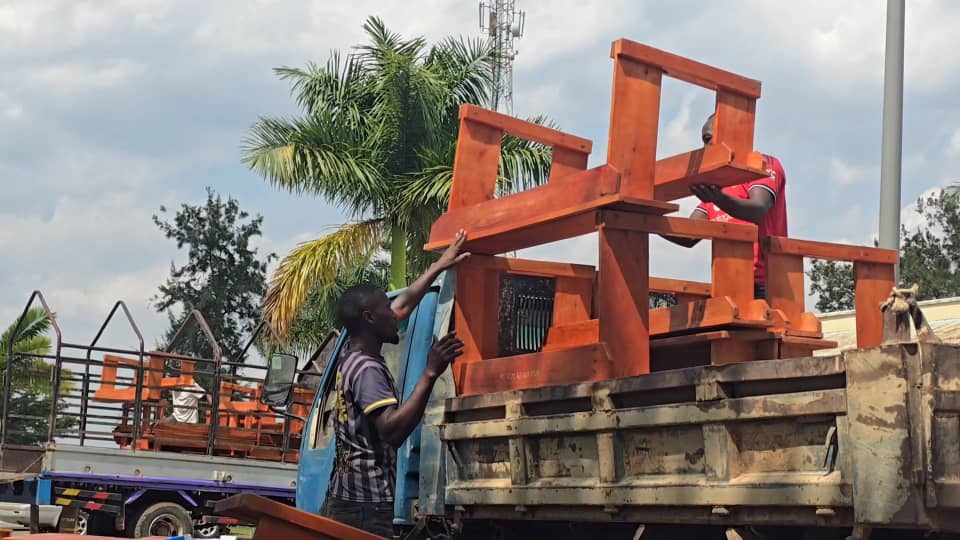
Learning conditions in Ntungamo District are set to improve after local authorities distributed 612 three-seater desks to 34 government primary schools, in a move aimed at easing a long-standing shortage that had forced many pupils to sit on floors, tarpaulins and overcrowded desks.
Standfirst: The distribution of 612 desks to 34 government primary schools in Ntungamo District marks the first phase of a wider intervention to address chronic furniture shortages, improve classroom comfort, and boost learning outcomes amid rising enrolment and limited resources.
A large number of the district’s 242 government primary schools have for years grappled with inadequate furniture, leaving learners studying in uncomfortable conditions that teachers say have affected concentration and academic performance.
The district has now embarked on a phased intervention to address the challenge, beginning with schools most affected.
“We are giving out a total of 612 three-seater desks to 34 schools in the district. We are now addressing the challenge of some of our learners sitting on the floor or sharing overcrowded desks,” said Ntungamo Chief Administrative Officer Fedelis Kizza.
According to district leaders, the allocation was guided by need, with priority given to schools where pupils lacked adequate seating facilities.
“We chose schools based on the fact that many pupils were sitting on the floor and the schools had insufficient desks. Some even attributed poor performance to the lack of furniture,” said Ntungamo District Speaker Bernard Mukasa Mupenda.
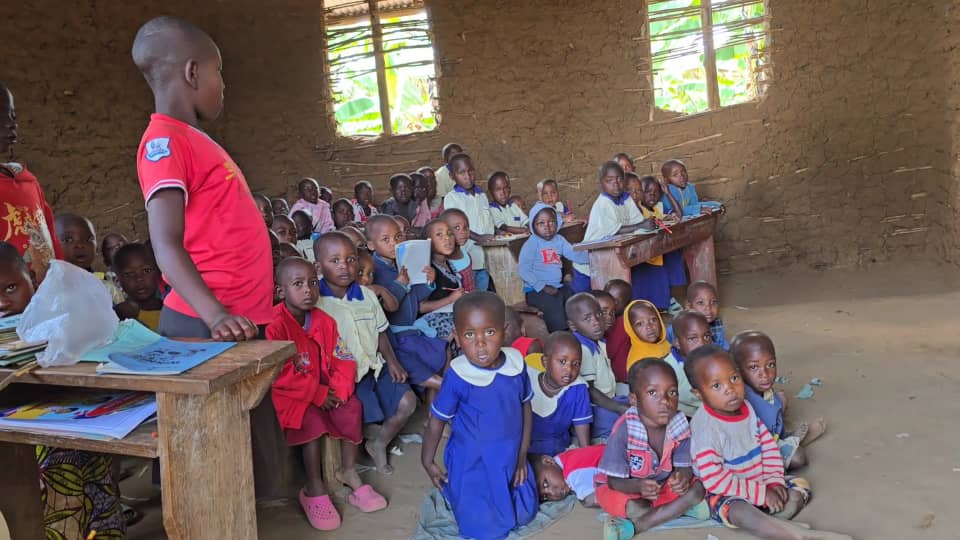
He said district leaders resolved through the Education and Health Committee to mobilise resources for desk procurement after receiving repeated appeals from schools.
The desks were procured using savings from the district’s capitation grants, reflecting a deliberate effort to improve learning conditions despite limited resources.
“The Shs182 million used to procure this furniture was saved from capitation grants,” Kizza explained.
He noted that demand for furniture remains high due to increasing enrolment, particularly in lower primary classes.
“Many schools still have limited furniture. When we supply desks, enrolment continues to increase, especially in the lower classes. Within two to three years, we hope to have covered all government schools in the district,” he added.
District leaders have also warned contractors against compromising standards, saying quality assurance remains a priority.
“The desks were inspected and some were rejected because they did not meet the required standards. We directed the contractor to go back and make the necessary corrections according to the specifications provided,” said Deputy LCV Chairperson Asuman Kigongo.
Beyond furniture, the district is investing in sanitation infrastructure to create a more conducive learning environment.
“Through the efforts of the district leadership and government, we shall be constructing 13 latrine blocks, each costing about Shs35 million,” Kigongo said.
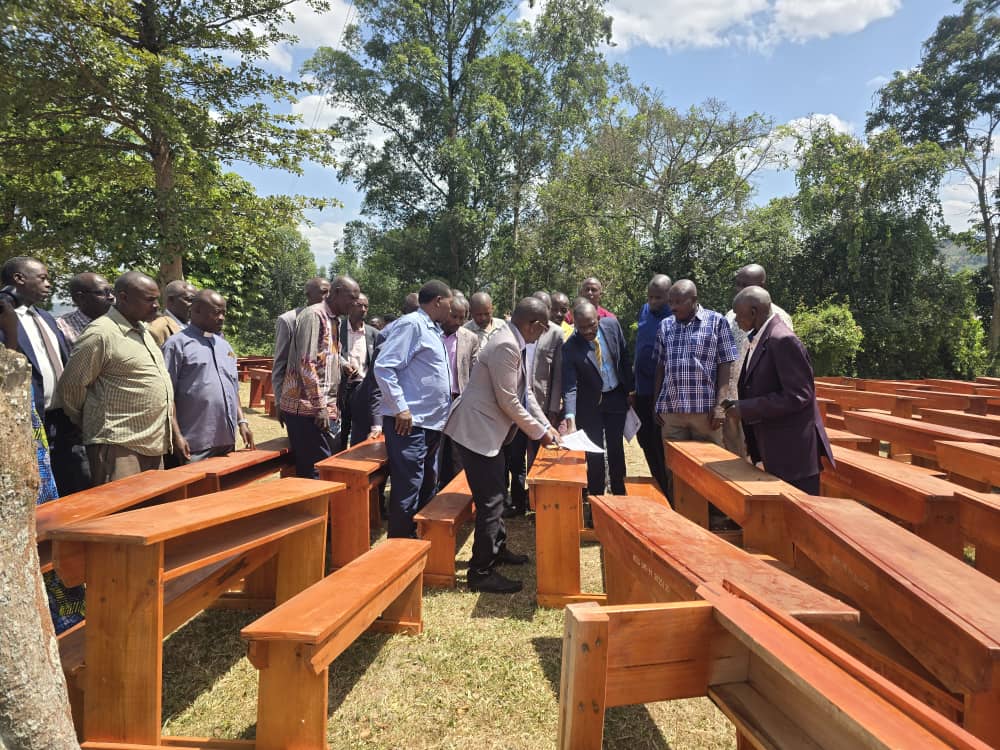
He urged school administrators, parents and foundation bodies to safeguard the newly acquired property to ensure it serves learners for many years.
The district says the combined investment in desks, classrooms and sanitation facilities is expected to improve the learning environment and contribute to better educational outcomes across government schools in Ntungamo District.
