
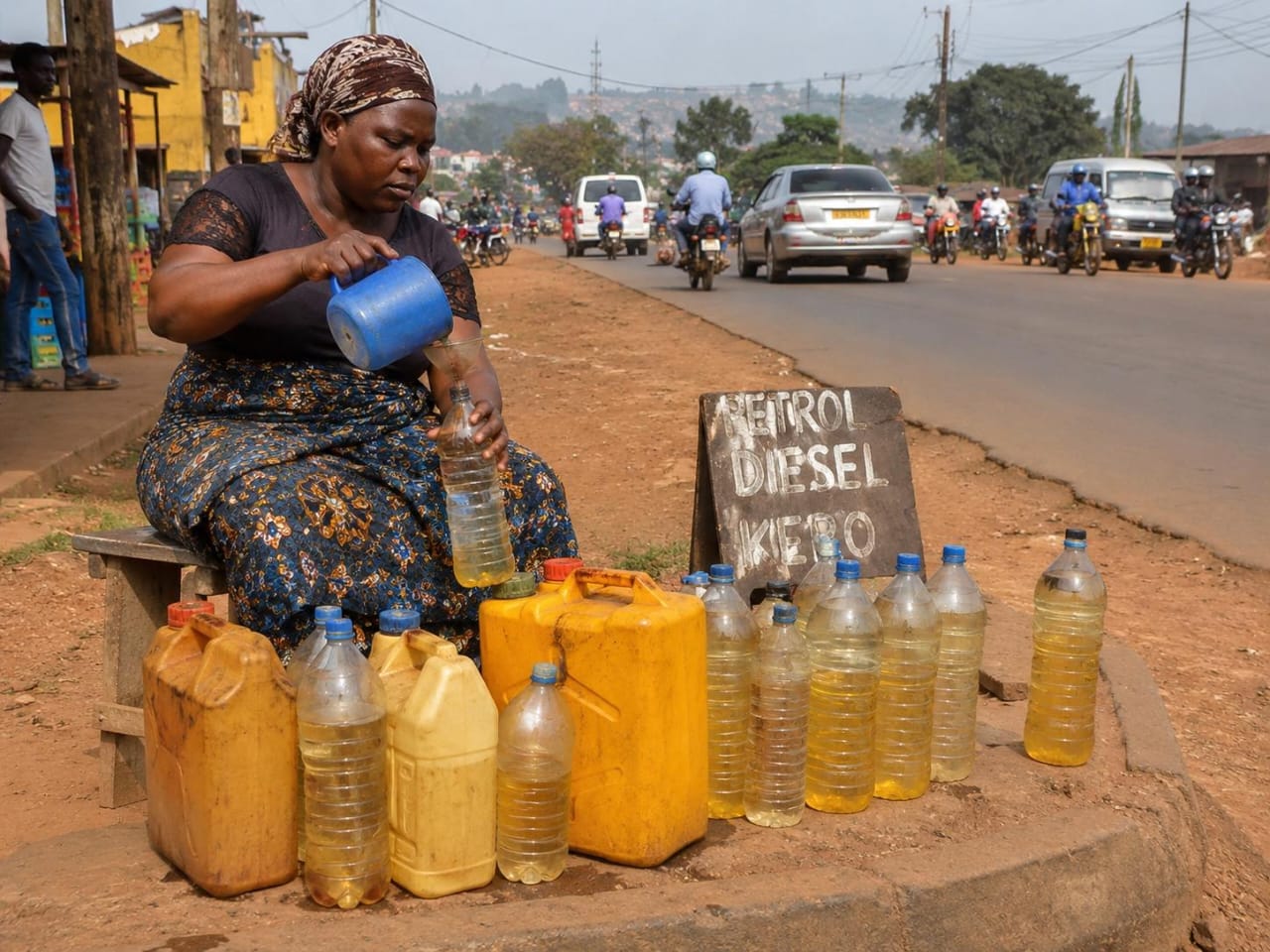
MASAKA — The Uganda National Bureau of Standards (UNBS) has warned the public against the growing practice of selling fuel along roadsides using jerrycans and plastic bottles, saying the practice poses serious safety risks.
The warning was issued during a stakeholders’ meeting in Masaka where officials from UNBS and the Ministry of Energy and Mineral Development engaged fuel station operators and local leaders on fuel quality standards and safe petroleum handling.
UNBS Deputy Executive Director Daniel Richard Makayi Nangalama said the bureau regularly monitors petroleum products entering the country and those sold at licensed fuel stations to ensure they meet required standards.
“UNBS carries out regular inspections and testing to ensure that fuel sold in Uganda meets the required standards. However, we cannot succeed alone. We need local leaders and the public to work with us by reporting suspected cases of adulterated fuel,” Nangalama said.
He cautioned the public against buying or selling fuel from unlicensed roadside outlets, saying such practices expose communities to dangers.
“Selling fuel in jerrycans and plastic bottles along the roadside is extremely risky. It exposes people to fire hazards, environmental pollution and financial losses. Fuel should only be purchased from licensed filling stations,” he said.
During the meeting, Kimanya-Kabonera Bodaboda Riders Chairperson Ibrahim Kiyimba raised concerns over the circulation of substandard fuel, saying many motorcycle riders and generator owners have suffered losses after purchasing poor-quality products.
“Many motorcycle riders and generator owners have suffered losses after buying poor-quality fuel. We believe some unscrupulous dealers are adulterating fuel before selling it to unsuspecting consumers,” Kiyimba said.
Officials from the Ministry of Energy and Mineral Development also encouraged Ugandans to embrace clean cooking energy as part of efforts to reduce environmental degradation.
The ministry’s Commissioner, Rev. Justaf Frank Tukwasibwe, said government is promoting liquefied petroleum gas (LPG) because it is becoming more affordable and offers a cleaner alternative to charcoal and firewood.
“We are encouraging households to shift from charcoal and firewood to gas in order to reduce deforestation and conserve the environment. Government partnered with Stabex to provide free gas cylinders, while beneficiaries only pay for the gas refill,” Tukwasibwe said.
Representatives from Stabex Petroleum urged beneficiaries under the government-supported LPG programme not to sell the cylinders provided to them, saying they are intended to help families transition to cleaner and safer cooking energy.
The meeting was part of ongoing efforts by UNBS and the Ministry of Energy and Mineral Development to improve fuel quality compliance, enhance consumer safety and promote the adoption of clean energy across Uganda.
