
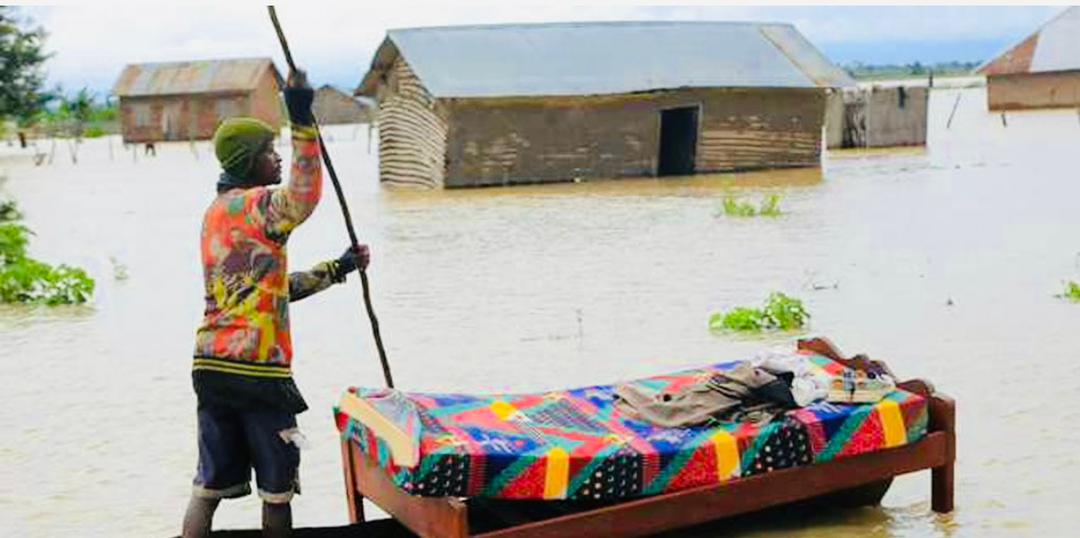
Reuters - With typhoons tearing across Southeast Asia this week while areas of Jamaica and Brazil are still clearing debris from damaging storms, delegates at Brazil's COP30 summit began grappling with how best to help the vulnerable withstand worsening weather and other climate extremes.
The topic of "adaptation" has grown more important as countries fail to rein in climate-warming emissions enough to prevent extreme warming linked to increasingly frequent weather disasters across the planet.
A UN report last month said developing countries alone would need up to $310 billion every year by 2035 to prepare.
The Reuters Daily Briefing newsletter provides all the news you need to start your day. Sign up here.
Where that money will come from is unclear. Ten of the world's development banks, under pressure to free more cash for climate action, said on Monday they would continue to support the need.
"Lives, well-being and jobs cannot be sustained where homes, schools, farms and businesses are under threat from flooding, drought, or other climate extremes," the banks said in a statement.
Last year, they channeled more than $26 billion to low- and middle-income economies for adaptation.
Separately, the director of a multipartner UN fund told Reuters it would soon announce a new impact bond aimed at raising $200 million by the end of 2026.
Advertisement · Scroll to continue
"The whole bond idea started exactly one year ago at the previous COP in Baku," said Markus Repnik, who leads the Systematic Observations Financing Facility backed by the World Meteorological Organisation, UN Development Programme and U.N. Environment Fund.
"We were getting the sense that things are going to change significantly from an international perspective.”
The fund, which also works to plug gaps in weather data for developing countries, hopes for country donations this week during COP30.
On Monday, Germany and Spain pledged $100 million to a different effort, the multilateral Climate Investment Funds (CIF), which is financing projects to boost climate resilience in developing countries.
The organization's chief praised Brazil for featuring the issue as a COP30 focus, after years of seeing the issue slide down U.N. climate summit agendas.
But a Hungarian company says it has found a way to turn it into road-ready concrete, replacing much of the stone normally used in the mix.
"We're really thrilled that, for the first time, adaptation is Day 1 and Day 2 of the COP," CIF Chief Executive Tariye Gbadegesin told Reuters.
Vietnam estimated initial costs from Typhoon Kalmaegi at nearly $300 million, a month after Typhoon Bualoi delivered $436 million in property damages.
The Philippines is still tallying damages from Kalmaegi and the deadly Super Typhoon Fung-wong that hit this week.
Jamaica is looking at up to $7 billion in damages, or about a third of its GDP, from last month's Hurricane Melissa, according to preliminary government estimates.
Beyond storms, there is damage from flooding, extreme heat, drought and wildfires. More adaptation efforts are to be announced at COP30, from funding air conditioners and fans for people suffering extreme heat to AI mapping of soil conditions to improve crop yields.
Outside of national protections, about 86 million refugees - or three-quarters of the world's total population displaced by conflict - are also exposed to extreme climate hazards, according to a UNHCR report on Monday.
UN climate chief Simon Stiell urged countries to agree on how to track progress to accelerate change in water, sanitation, health and other areas.
"We now need to agree on the indicators that will help speed up implementation, to unleash its potential," he said.
Attracting private money to the cause can be tough. Resiliency projects are less likely to deliver a high return on investment than renewable energy projects that would help bring down greenhouse gas emissions.
A September report by multi-stakeholder Zurich Climate Resilience Alliance said public funding remains crucial. Private finance now makes up just 3% of adaptation funding, which could rise to 15% with supportive policies, it said.
"We need resources that flow directly to local partners and communities who are already leading the response — rebuilding homes, restoring livelihoods, and protecting health systems from climate shocks," said David Nicholson, chief climate officer at ZCRA member Mercy Corps.
