
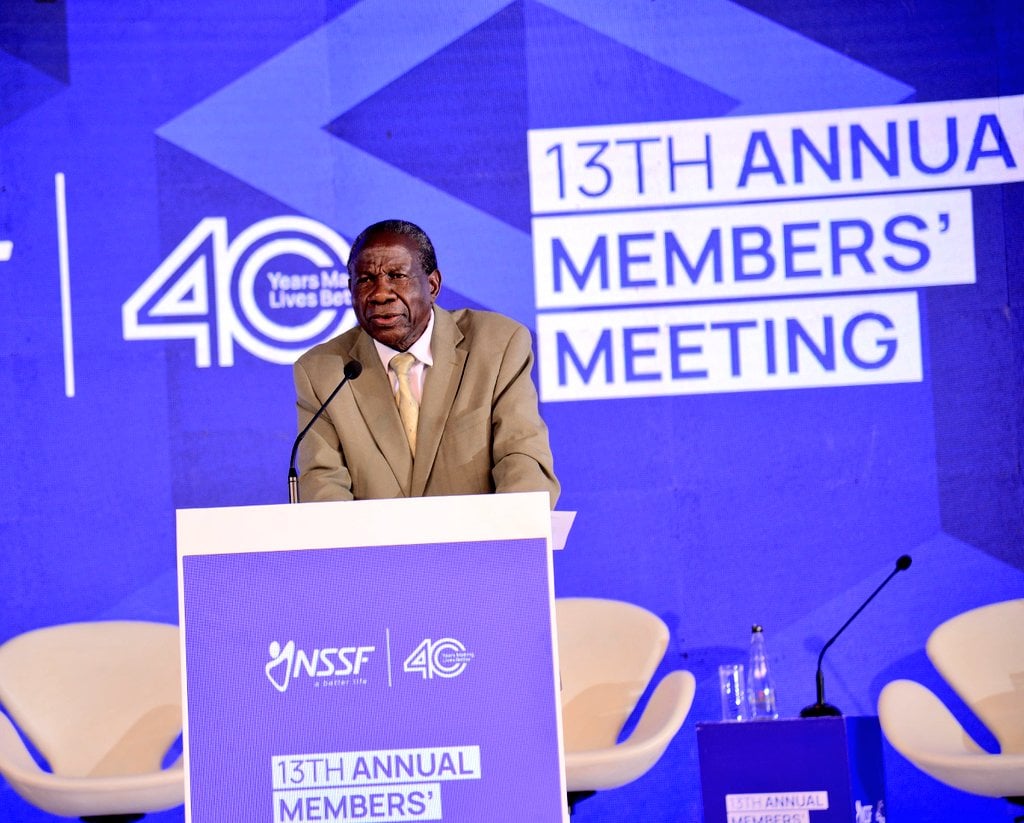
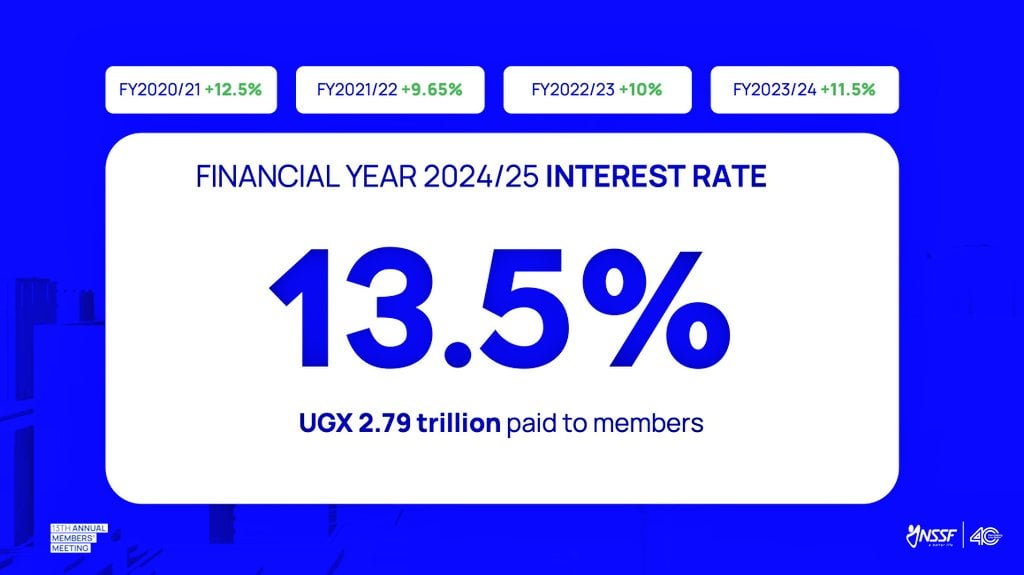
The National Social Security Fund (NSSF) has declared a 13.5 percent interest rate for savers for the financial year 2024/2025, underscoring its strong investment performance and strategic management.
The announcement, made on Monday during the Fund’s Annual General Meeting in Kampala, comes as NSSF closes its Vision 2025 strategy and ushers in an ambitious new growth agenda.
Performance Milestones
NSSF’s assets under management grew by 17.5 percent to Shs 26 trillion, powered by a 10.4 percent increase in member contributions and an 11 percent rise in total revenue. The Fund credited this performance to a diversified portfolio and stronger compliance by employers.
Breakdown of revenue streams shows:
Interest Income: Shs 2.88 trillion, up from Shs 2.34 trillion
Dividend Income: Shs 238.14 billion, up from Shs 175 billion
Real Estate Income: Shs 16.64 billion, up from Shs 13.24 billion
The 13.5 percent payout is the highest in seven years, translating into more than Shs 2.5 trillion credited to member accounts. Last year, NSSF declared 11.5 percent.
Looking to Vision 2035
As NSSF transitions to its next strategic plan, Vision 2035, the Fund has set out bold targets:
Expand Coverage: Extend social security to at least half of Uganda’s working population, up from the current 23 percent.
Grow Assets: Increase assets under management to Shs 50 trillion by 2035.
Boost Engagement: Achieve 95 percent customer satisfaction and staff engagement levels.
The Fund is also banking on innovation to widen access. Its voluntary savings product, Smartlife Flexi, has attracted over Shs 27 billion in contributions within ten months, reflecting appetite for flexible retirement products.
Efficiency Drive
NSSF emphasised its commitment to prudent cost management, reporting an improvement in its cost-to-income ratio from 9.7 percent to 7.9 percent. Officials said this efficiency would allow the Fund to sustain competitive returns while supporting expansion into underserved sectors.
With Uganda’s labour force largely informal and many workers excluded from retirement benefits, the Fund’s new targets signal a decisive shift towards inclusion.
