
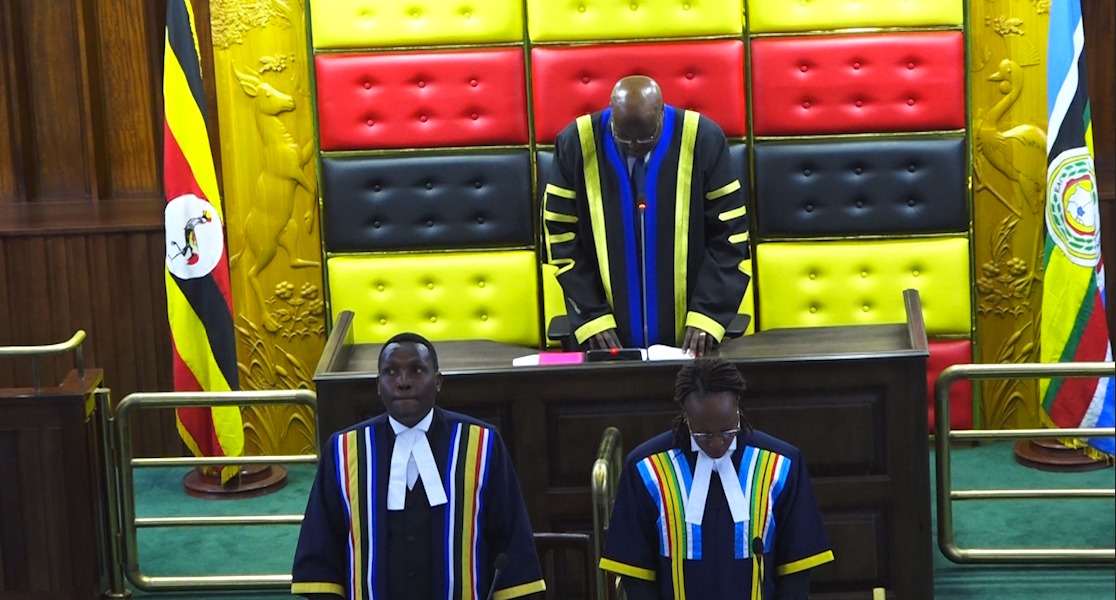
The East African Legislative Assembly (EALA), sitting in Kampala, has adopted a motion calling on all partner states to fast-track the adoption and full implementation of regional industrialisation and value-addition frameworks aimed at reducing the export of raw materials.
Legislators said the region’s abundant raw materials and affordable labour force should be leveraged to build strong industrial value chains capable of competing on the international market.
The motion was moved by Aisha Nyiramana of Rwanda under Articles 49(2)(d), 59(1), 79, 80 and 81 of the EAC Treaty and Article 44 of the Protocol on the Establishment of the East African Common Market.
Nyiramana told the Assembly, chaired by Joseph Ntakirutimana of Burundi, that Article 80 of the Treaty commits partner states to promote industrial research and development, strengthen joint industrial institutions, and drive value addition and product diversification across the region.
She reminded the House that at the 16th Summit in 2016 and the 18th Summit in 2017, East African Heads of State urged partner states to ban exports of raw hides and skins, and directed the EAC Council to develop modalities for promoting regional motor-vehicle assembly.
The directives also called for vertical integration of textile and leather industries to build competitive domestic sectors.
Nyiramana added that the Council of Ministers has already adopted the East African Community Industrialisation Policy (2012–2032) and the EAC Industrialisation Strategy (2021–2031), both of which aim to transform the region into a globally competitive and sustainable industrial hub through enhanced local value addition, technological advancement, and regional value chains.
During debate, several legislators urged partner states to cultivate a spirit of economic nationalism and support locally manufactured products.
“Even here, when you look at us, honourable speaker, men are wearing suits and ladies are wearing dresses, and very few of these items are made in East Africa. When you go to a shop, your first priority will be a suit from Italy, and if they tell you it is made in Uganda, you become suspicious of the quality,” said Futuma Ndanguza.
Kenyan representative David Ole Sankok said the region has all the prerequisites needed to industrialise at scale, citing vast land, natural resources, and an available labour force.
“This motion will jump-start our region, and I want to tell honourable members that we have whatever it takes in terms of land, electricity, tropical climate, raw materials such as timber, coal, abundant water, underground resources, and cheap labour,” he said.
EALA Secretariat statistics show that raw material exports under the African Continental Free Trade Area (AfCFTA) remain high. The figures stand at:
- DRC: $342.8 million
- Tanzania: $594 million
- Kenya: $705 million
- Rwanda: $36.1 million
- Uganda: $178.2 million
The region’s total exports to AfCFTA markets are estimated at $1.9 billion, with raw materials still making up a substantial share—an issue EALA says must be addressed urgently through coordinated industrialisation and value-addition efforts.
