
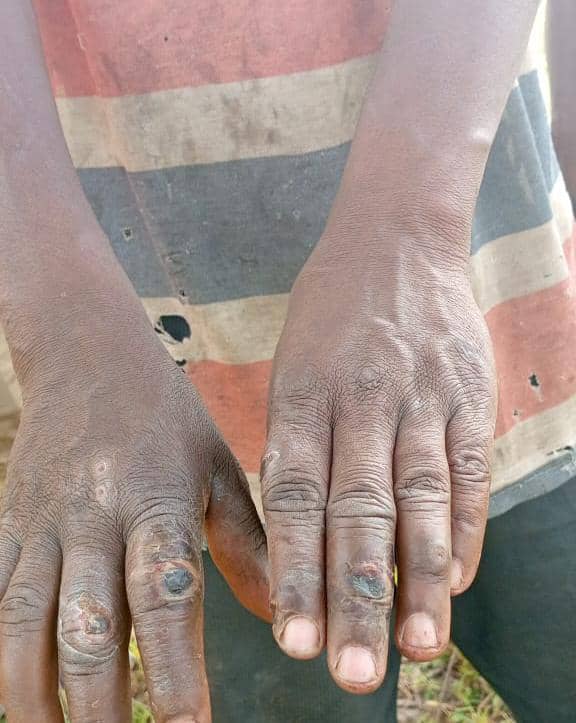
Health authorities in Kitagwenda District have confirmed an outbreak of anthrax after three people tested positive from a cluster of ten suspected cases reported earlier this week.
According to District Health Officer Dr. Irene Kahimakazi, the suspected cases were first reported at Ntara Health Centre IV on April 2, 2026, after patients presented with a range of symptoms.
“We received alerts from the community involving 10 suspected cases who presented with symptoms such as skin ulcers on the hands and legs, headache, general body weakness, nausea, vomiting, abdominal pain, eschar, and cough,” she said.
Laboratory results later confirmed three of the cases as anthrax.
Dr. Kahimakazi noted that all confirmed patients are male, aged between 17 and 52 years, with a median age of 36. She added that investigations linked the infections to the handling and slaughtering of dead animals across six farms in Buhanda Sub-county.
“All the cases are connected to a common exposure—handling carcasses of animals that had died under unclear circumstances,” she explained.
Some patients were also found with swollen lymph nodes and breathing difficulties, indicating varying severity of the infection.
Authorities have since heightened surveillance and response efforts in the area to contain the outbreak. Residents are being urged to avoid handling or consuming meat from animals that die suddenly and to immediately report such incidents to veterinary or health officials.
Anthrax is a serious bacterial infection caused by Bacillus anthracis, which occurs naturally in soil. It primarily affects livestock and wild animals but can be transmitted to humans through contact with infected animals or contaminated animal products such as meat, hides, or wool.
District health teams have also rolled out community sensitization campaigns to raise awareness and prevent further spread as monitoring continues.
