
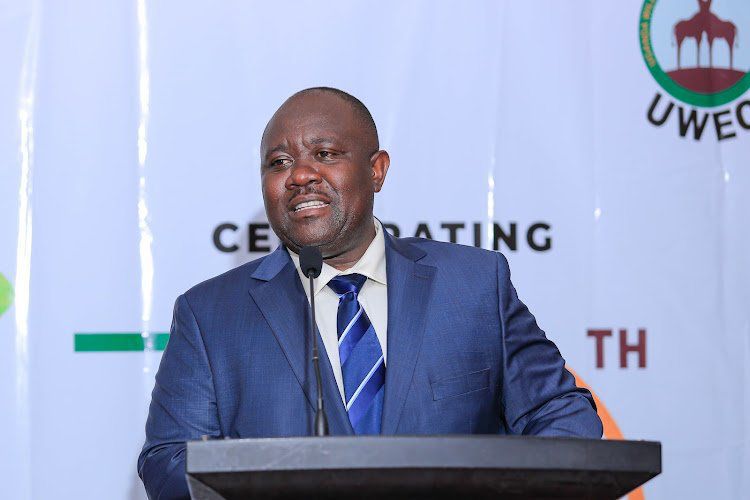
Uganda’s growing human population and expanding settlements are placing mounting pressure on wildlife habitats, forcing communities closer to protected areas and escalating human–wildlife conflict, Uganda Wildlife Authority (UWA) Executive Director Dr James Musinguzi has said.
Speaking during NBS Morning Breeze on Thursday, Musinguzi noted that while Uganda’s population continues to rise, the country’s landmass remains fixed, resulting in increased competition for space and the gradual encroachment on wildlife habitats and critical migration corridors.
“Our population is growing, but the landmass is not. That pressure is pushing communities closer to protected areas. People have built houses and gardens right next to protected areas, and in some cases directly into wildlife corridors,” Musinguzi said.
He revealed that about 60 percent of Uganda’s wildlife is found outside gazetted protected areas, a reality that, he said, demands conservation strategies that extend beyond national parks and game reserves.
“Conservation in Uganda goes beyond park boundaries. This means that we must work closely with communities, because they live side by side with wildlife,” he said.
Musinguzi pointed out that several elephant migration routes that once stretched as far as South Sudan have been blocked over time, largely due to expanding human settlements and infrastructure development.
The disruption of these traditional corridors, he explained, has significantly contributed to the increase in human–wildlife conflict being experienced across the country.
“The conflict we see today is a result of blocked wildlife corridors and expanding human settlements,” he said.
Emphasising a people-centred approach to conservation, Musinguzi stressed that wildlife protection efforts cannot succeed without the active involvement and cooperation of communities living near conservation areas.
“Conservation cannot succeed without communities. We must conserve with the people, not against them. At the heart of conservation is education, because communities are the first to face the impact of human–wildlife conflict,” he said.
He explained that UWA runs community sensitisation programmes that focus on seasonality, appropriate crops to plant near protected areas, and periods when wildlife is most likely to stray into human settlements, with the aim of reducing conflict and loss of livelihoods.
On mitigation measures, Musinguzi highlighted electric fencing as one of the most effective tools in reducing human–wildlife conflict, noting that in areas where fencing has been fully completed, incidents have virtually stopped.
“Electric fencing has proven highly effective. Where the fence is complete, human–wildlife conflict has stopped,” he said.
According to UWA, about 231 kilometres of electric fencing have so far been constructed countrywide, out of an estimated 800 to 1,000 kilometres required to adequately secure wildlife boundaries and protect communities.
However, Musinguzi cautioned that incomplete fencing remains a major challenge, particularly because of the intelligence and adaptability of elephants.
“Elephants are intelligent animals. They follow the fence until they find uncovered areas, which is why completing the fencing is critical,” he said.
He called for sustained government funding, private sector partnerships, and donor support to expand conservation infrastructure and strengthen community engagement, arguing that protecting wildlife while safeguarding local livelihoods is essential for Uganda’s long-term environmental and economic sustainability.
