
Agriculture stakeholders have called for stronger collaboration among policymakers, researchers, farmers, and other players in the food value chain to improve food security, nutrition, and food safety in Uganda.
The call was made during a stakeholder engagement on nutrition-sensitive agriculture organised by the Sasakawa Africa Association (SAA) in Kampala, where participants discussed practical approaches to ensuring Ugandans have access to safe and nutritious food.
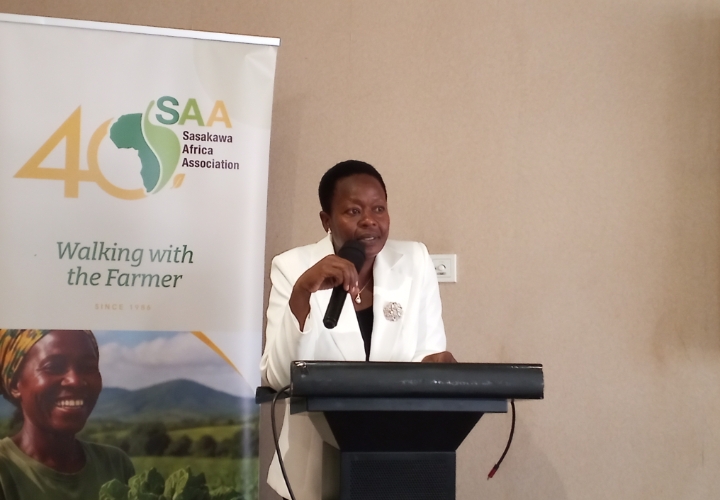
Otuke District Woman Member of Parliament, Suzan Abeja, said addressing Uganda’s food and nutrition challenges requires a coordinated approach involving multiple sectors.
She noted that although agriculture remains a key pillar of Uganda’s economy, with millions of households depending on farming, many communities continue to face challenges related to poor nutrition, food insecurity, and contamination of food products, particularly through aflatoxins.
“More than half of Ugandan households depend on agriculture, with farmers being our unsung heroes. They wake up early every day and work under difficult conditions to produce food that not only feeds the nation but also contributes significantly to Uganda’s economy,” Abeja said.
She said many households focus on eating enough food to overcome hunger without paying sufficient attention to the nutritional value of their diets.
“No single individual, institution, or sector can overcome these challenges alone. Farmers need access to technology, quality seed, and extension services, while health workers rely on the availability of safe and nutritious food to fight malnutrition,” she said.
Abeja urged farmers, traders, processors, transporters, and other stakeholders to ensure that food produced in Uganda is not only available but also safe and nutritious.
Jackline Namusalizi, Technical Coordinator for Nutrition-Sensitive Agriculture at Sasakawa Africa Association, said the engagement was aimed at identifying practical solutions for improving the nutritional value of agricultural production.
She said Uganda has made progress in increasing agricultural productivity but needs to place greater emphasis on the nutritional quality of food produced.
“We have made significant progress in increasing crop yields, but we have not paid enough attention to the nutritional component of agriculture. We cannot achieve this alone, which is why partnerships are essential,” Namusalizi said.
She revealed that SAA has established nutrition model homes in different parts of Uganda where households are trained in better nutrition practices, food preservation, and safe post-harvest handling.
Namusalizi identified poor post-harvest management as a major contributor to aflatoxin contamination and said the organisation is increasing awareness on preventing contamination from production to consumption.
She reaffirmed SAA’s commitment to working with the Ministry of Agriculture and other government institutions to promote nutrition-sensitive agriculture and improve food safety.
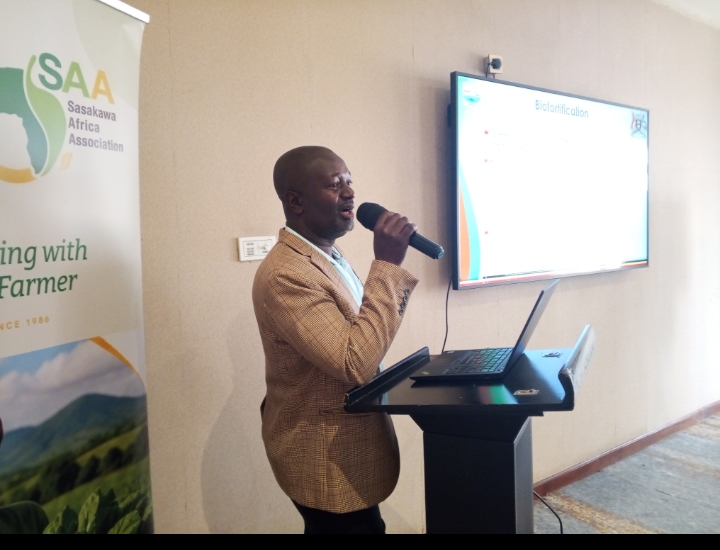
Researchers from the National Agricultural Research Organisation (NARO) also showcased innovations aimed at improving nutrition and strengthening food security.
Moses Matovu, a NARO researcher, said the institution has developed improved crop varieties designed to address nutritional deficiencies, including iron-rich and zinc-rich beans, Pro-vitamin A sweet potatoes, and Pro-vitamin A maize.
“In Uganda, we may not necessarily lack food, but much of what we consume is dominated by carbohydrates. We need to diversify our diets with more nutritious foods,” Matovu said.
He also highlighted the development of black rice under NARO’s cereals programme at the National Crops Resources Research Institute in collaboration with the Japanese government.
According to Matovu, black rice contains antioxidants and offers additional nutritional benefits that can support healthier diets.
“This is not the ordinary rice people are used to. It is black in colour and highly nutritious. A small serving provides significant nutritional value. If we embrace these innovations without focusing on colour, we can live healthier lives and reduce dependence on medication,” he said.
On food safety, Matovu said aflatoxin contamination remains a major challenge affecting Uganda’s grain sector and limiting export opportunities.
He said government, through investment in agricultural research and innovation, has developed a Ugandan strain of Aflasafe aimed at reducing aflatoxin levels in cereals.
“If all goes according to plan, government will soon begin distributing Aflasafe to farmers. This locally developed technology will significantly reduce aflatoxin contamination, improve grain quality, boost cereal exports, increase farmers’ incomes, and generate more revenue for the country,” Matovu said.
Stakeholders said improving Uganda’s food systems will require continued investment in agricultural innovation, farmer support services, and public awareness on nutrition and food safety.
