
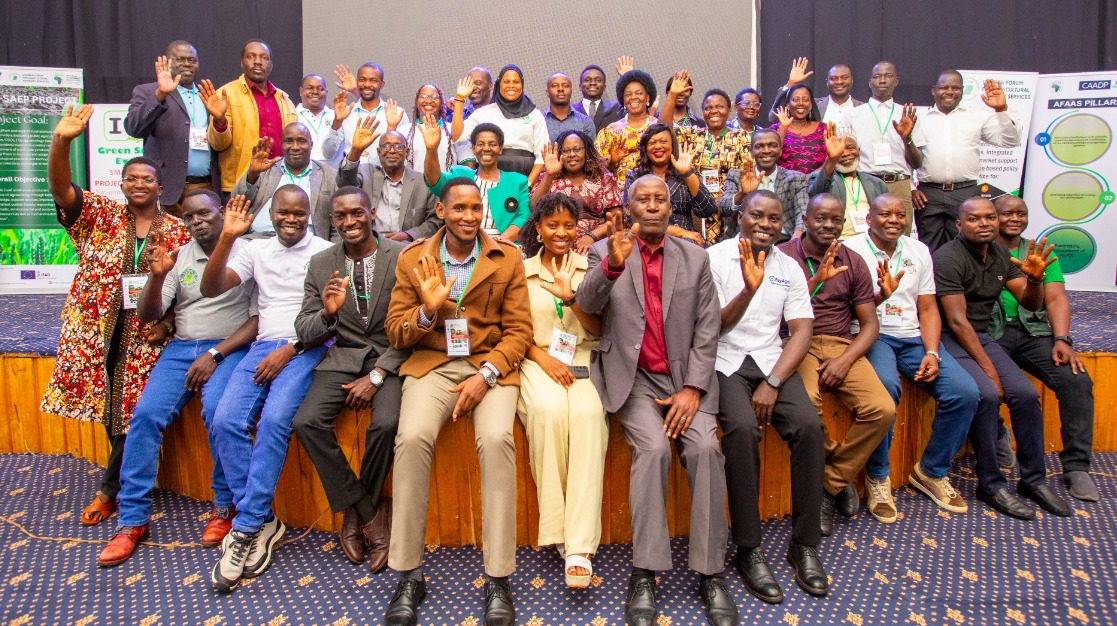
Stakeholders in Uganda's agriculture sector have called for greater coordination and streamlined operations among extension service providers to improve support to farmers across the country.
The call was made during the closing ceremony of the Uganda National Agricultural Extension Week 2026 (UGNAEW2026), held under the theme: “Unlocking Uganda's Agricultural Potential: Multi-actor Agricultural Extension and Advisory Services for Resilient, Digital and Market-Oriented Agri-Food Ecosystems.”
The event was organised by the Uganda Forum for Agricultural Advisory Services in partnership with the African Forum for Agricultural Advisory Services and the Ministry of Agriculture, Animal Industry and Fisheries, among others.
Speaking at the event, Beatrice Luzobe, Chief Executive Officer of UFAAS, said strengthening and amplifying the role of extension service providers is key to ensuring that farmers at the grassroots benefit.
She noted that the imbalance between the number of extension workers and farmers remains a major challenge, although Uganda’s ratio is comparatively better than in some other countries.
“The issue of fewer extension workers versus farmers is not new and is not unique to Uganda. In our case, one extension worker serves about 1,000 farmers, while in some countries it is as high as 1 to 10,000,” Luzobe said.
She emphasized the need to adopt digital solutions, including encouraging farmers to form groups, to make it easier for extension workers to reach them effectively.
Luzobe also renewed calls for the professionalisation of extension workers, stressing that gaps in the system continue to limit farmers’ access to essential advisory services.
“We have a responsibility to push this agenda from the African Union level down to the country level. Professionalisation should have happened earlier, but it is something we must continue to pursue,” she added.
Stakeholders further highlighted the need for a legal and institutional framework to regulate and strengthen agricultural extension, noting that the government is working towards developing relevant legislation.
Tonny Ojok, Technical Program Manager for Livelihoods and Economic Empowerment at World Vision, said the forum provided an opportunity for partners to strengthen collaboration and design strategic interventions.
“World Vision works closely with farmers and provides last-mile linkage to advisory services. This platform has been important for learning and exploring future co-creation with UFAAS,” Ojok said.
He added that the engagement brought together key stakeholders, including government, development partners, and local governments, to develop strategies for strengthening extension services at the field level.
Meanwhile, Lilian Lihasi, Executive Director of AFAAS, commended UFAAS for convening the forum, noting that it provided a platform to address persistent challenges in the sector.
“We can no longer work in silos. Partners must collaborate to strengthen extension services,” Lihasi said.
She pointed to the signing of memoranda of understanding between UFAAS and key partners as a step towards improved coordination.
Lihasi warned that without strong extension and advisory services, transformation of the agri-food system will remain unattainable.
“Without extension services, there is no transformation in the agri-food system, which is critical for a sector that feeds millions,” she said.
The week-long event brought together policymakers, development partners, and practitioners to explore solutions aimed at improving agricultural productivity, resilience, and market access for farmers.
