

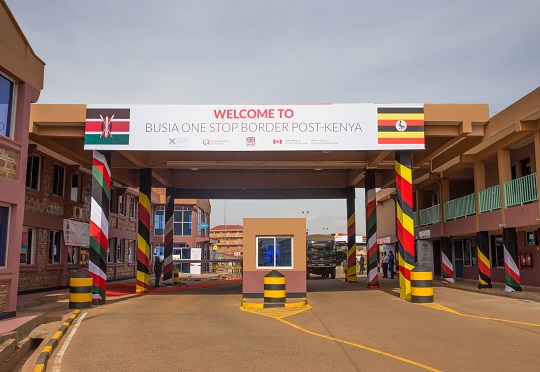
The latest EAC Quarterly Statistics bulletin has painted a picture of a rapidly evolving regional economy in which countries are increasingly competing for export markets and investment opportunities.
While Uganda remains one of the region's leading economies, the latest figures show that trade growth across the bloc is being driven largely by mineral-rich exports destined for major global markets.
China emerged as the EAC's largest trading partner during the first quarter of 2026. Exports to China increased from US$5.9 billion (Shs22.2 trillion) in Q1 2025 to US$8.6 billion (Shs32.3 trillion) in Q1 2026.
The increase was largely supported by exports of copper and other mineral products.
Imports from China also rose sharply to US$6.8 billion (Shs25.6 trillion), underlining the country's importance as both a supplier and buyer within the region.
The United Arab Emirates ranked among the most important destinations for EAC exports. South Africa also remained one of the bloc's leading trade partners and continued to play a major role in regional commerce.
The EAC's top export destinations included China, the UAE, South Africa, Hong Kong, Mozambique, Switzerland, the United States, the Netherlands, India and Vietnam.
For Uganda, these rankings indicate the growing importance of diversifying export markets and strengthening competitiveness.
The report shows that mineral commodities accounted for 44.8 percent of total EAC exports.
Precious metals and stones contributed another 21.6 percent. This means nearly two-thirds of all exports originated from mineral-related products.
Agricultural commodities such as coffee, tea and spices continued to support export earnings, but their relative contribution was lower than that of minerals.
Uganda, traditionally known for coffee exports, therefore faces increasing competition from countries benefiting from rising global demand for minerals and precious metals.
Another notable trend was the decline in trade within the EAC itself. Intra-EAC trade fell by 10.4 percent to US$4.7 billion (Shs17.7 trillion).
Its share of total EAC trade declined from 14.9 percent in 2025 to 10.2 percent in 2026. By contrast, trade with the Southern African Development Community expanded strongly to US$7.0 billion (Shs26.3 trillion).
Africa remained the EAC's largest trading partner overall, accounting for 24.1 percent of total trade.
Trade with African countries increased to US$11.2 billion (Shs42.1 trillion) from US$9.5 billion (Shs35.7 trillion) a year earlier.
The figures suggest that future growth opportunities for Uganda and other EAC economies may increasingly depend on deeper access to continental markets, stronger industrialisation and value addition.
As regional exports continue shifting towards minerals and high-value commodities, competition among EAC Partner States for market share and investment is likely to intensify.
For Uganda, maintaining export growth while expanding industrial production and value-added exports could become increasingly important in sustaining its position within the region's evolving trade landscape.