
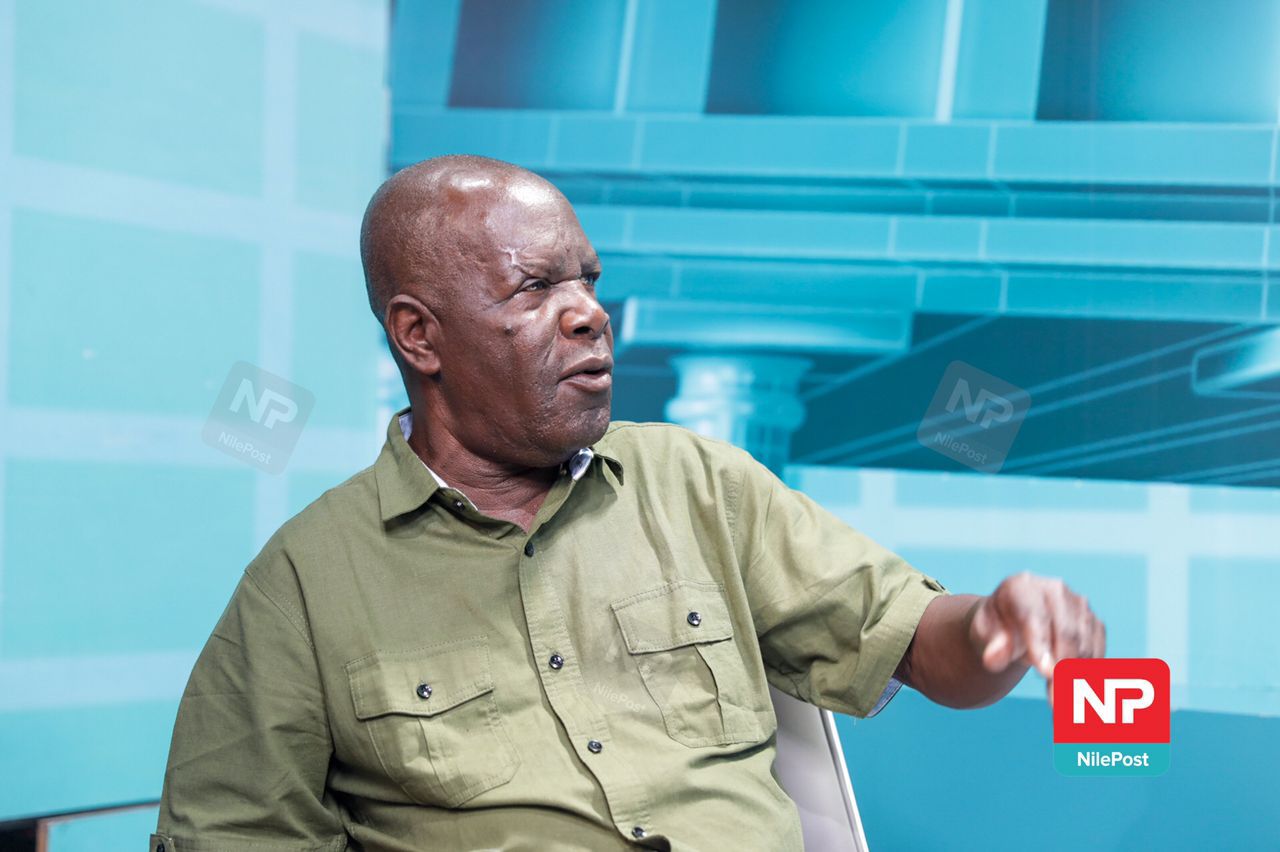
The Member of Parliament–elect for Older Persons in the Eastern Region, Ofwono Opondo, has raised sharp questions about the suitability of Democratic Party President Norbert Mao for the Speakership of the 12th Parliament.
Opondo argues that the Laroo-Pece Member of Parliament–elect’s political and leadership record raises doubts about his ability to effectively lead the legislature.
Speaking during NBS Frontline on Thursday, the former Uganda Media Centre executive director said his remarks were informed by a long personal and political relationship with Mao dating back to their days at Makerere University.
“On this panel, I’ve known Hon. Mao the longest. I went back to Makerere to support his rival Noble Mayombo for Guild Presidency. Since that time, me and him have remained very close,” he said.
Despite that relationship, Opondo warned that Mao could be making a political miscalculation by pursuing the Speakership in the manner he has chosen.
“I saw my friend Mao walking towards a ditch and I don’t want that to happen. I am a founding member of the National Resistance Movement. I know their workings like the back of my hand,” he said.
Opondo argued that if Mao intended to contest for the Speakership while serving as a minister in government, he should have approached the matter more discreetly.
“As a minister in the government, if Mao chose to come for Speakership, he needed to be subtle, not going to the media,” he said.
Opondo also questioned Mao’s political track record, particularly his leadership of the Democratic Party (DP), saying it raises concerns about whether he can effectively preside over Parliament.
“Mao says he is coming to fix Parliament. Tell me one proposal backed by the President that has been taken to Parliament and failed, which Mao is to fix,” he said.
Opondo further pointed to ongoing public concerns about human rights in Uganda, questioning what progress Mao had made on the issue while serving in government.
“All of us have been crying about the abuse of human rights. Has he fixed that so that we can base on that to support his bid for Speakership?” he said.
Opondo also cited internal disputes within the Democratic Party as a sign that Mao’s leadership style is under scrutiny.
“One reason as to why I wouldn’t support Mao’s bid for Speakership is that his leadership style is under question,” he said.
“Are you happy that DP, the oldest party, is unable to win elections? Are you happy that DP cannot hold any other person to account? You have seen the internal wrangles going on in DP. Is that the Speaker you want?”
Opondo emphasized that the ruling party traditionally aligns its parliamentary decisions with resolutions taken by its top leadership structures.
“There is no decision of CEC that the Caucus of NRM has rejected. Secondly, we want to ensure we hold the office of Speaker, Deputy Speaker and other positions such as Minister to the highest standard,” he said.
Opondo’s remarks come as President Museveni, who also serves as the National Chairman of the National Resistance Movement, endorsed incumbent Speaker Anita Among and Deputy Speaker Thomas Tayebwa for retention in the 12th Parliament.
The endorsement followed resolutions passed during the 8th meeting of the 5th Central Executive Committee (CEC) held on February 20, 2026.
The resolutions, signed by President Museveni and NRM Secretary General Richard Todwong, directed that Among and Tayebwa be fronted as the party’s official candidates for the top parliamentary positions in the next term.
According to party officials, the names of the two leaders will now be forwarded to the NRM Parliamentary Caucus for formal adoption as flag bearers when the 12th Parliament convenes.
The early endorsement comes amid heightened political contestation for the Speaker and Deputy Speaker positions, with several Members of Parliament — both within the NRM and from opposition parties — reportedly expressing interest ahead of elections expected during the first sitting of the new Parliament.
Meanwhile, Mao recently confirmed that he will contest for the Speakership after completing nationwide consultations.
Addressing journalists at the Democratic Party headquarters in Kampala, Mao said he had gathered sufficient views and support from across the country to inform his decision to enter the race for the top legislative seat.
Mao described corruption as Uganda’s biggest challenge, arguing that it has become deeply entrenched among individuals in positions of authority.
He said that if entrusted with the Speaker’s office, he would prioritise accountability, transparency and institutional integrity within Parliament.
According to Mao, the legislature must reclaim its oversight role and ensure that public resources are managed responsibly.
However, the Democratic Party leader asked supporters and party members not to actively campaign for him, saying he possesses the qualifications, experience and track record necessary to contest for the position.
Mao also described Uganda as having ended up with what he termed an “accidental Speaker” following the death of former Speaker Jacob Oulanyah in September 2022.
Mao said the current Speaker, Anita Among, assumed office due to unforeseen circumstances rather than as part of a long-term leadership plan for Parliament.
According to Mao, the country now needs what he called a deliberate and well-thought-out choice in the next Speakership race rather than one shaped by circumstance.
Weeks earlier, Mao argued that the cooperation agreement between the Democratic Party and the ruling NRM places him in a favourable position in the Speakership race.
Mao said the NRM’s majority in the incoming Parliament, combined with the DP–NRM partnership, significantly boosts his chances.
He also revealed that several Members of Parliament — including some from outside the Democratic Party — had reached out to him to pledge support and assure him of their votes.
Despite DP currently holding only six seats in Parliament, Mao maintained that his political experience, leadership credentials and alliance with NRM members strengthen his bid.
Some of Mao’s supporters have compared his leadership style to that of the late Jacob Oulanyah, describing him as a conciliatory and unifying figure capable of presiding over Parliament with balance and inclusivity.
Mao also disclosed that he had already begun consultations with President Museveni under the framework of the DP–NRM cooperation agreement, signalling that his approach to the Speakership race is rooted in dialogue, consensus-building and political accommodation rather than confrontation.
Mao is one of at least six candidates who have expressed interest in leading the 12th Parliament.
The Speakership race has now emerged as one of the most closely watched political contests of the year as political parties and Members of Parliament position themselves ahead of the first sitting of the newly constituted legislature.
