
By Badreldeen Khalafallah
With the passing of General Moses Ali at the age of 87, Uganda has lost far more than a politician or a military commander. The nation bids farewell to one of its most influential statesmen, a man whose remarkable journey spanned colonial rule, independence, the Idi Amin era, armed rebellion, national reconciliation, and decades of public service under the National Resistance Movement (NRM).
General Moses Ali's life cannot be defined by a single title. He was a soldier, cabinet minister, rebel leader, peace negotiator, Deputy Prime Minister, and presidential adviser. Through every chapter of Uganda's modern history, he remained a central figure, witnessing, and often shaping, the country's political and military transformation.
Born on April 5, 1939, in Adjumani District, Moses Ali began his career as a teacher before joining the Uganda Army in 1968. Rising through the ranks, he served in senior government positions during Idi Amin's administration. Following the fall of that government in 1979, he went into exile in Sudan before returning to lead the Uganda National Rescue Front (UNRF).
However, history will perhaps remember him most for choosing the path of peace. By signing the 1988 peace agreement with the NRM government, he played a decisive role in restoring stability to the West Nile region and helped lay the foundation for one of Uganda's earliest and most successful post-war reintegration efforts.
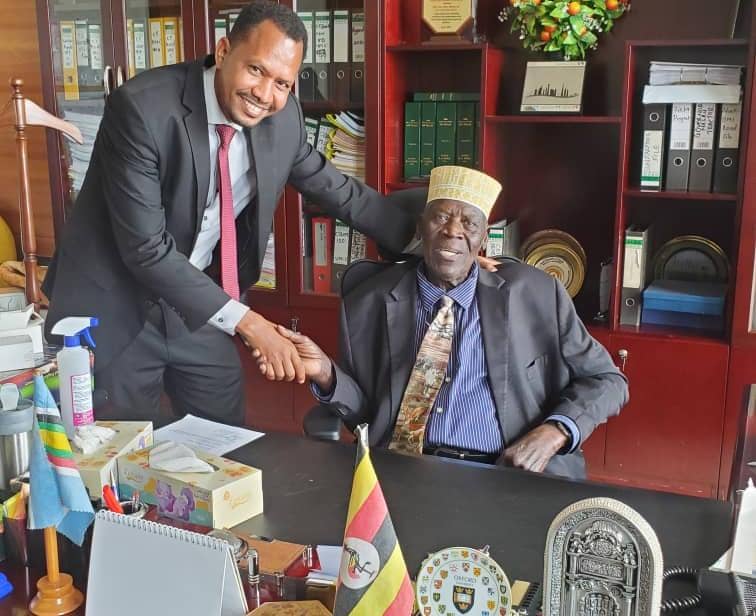
As a journalist based in Uganda, I had the privilege of meeting General Moses Ali in 2022, during a period when his health had already begun to decline. Despite his illness, I encountered a man of remarkable humility, wisdom, and dignity. Our conversation was not centred on power or political office, but on history, identity, and his deep desire for younger generations to understand the invaluable contribution of the Nubian community to Uganda's development.
General Moses Ali was not only a respected national leader, but also one of the most influential figures within Uganda's Nubian community. His commitment to preserving the heritage of his people extended well beyond politics.
Among his most enduring legacies is the book he authored on the history of Nubians in Uganda, a valuable work that documents the community's rich heritage, sacrifices, and contribution to the country's development.
This publication is far more than a historical record. It is a lasting gift to future generations, reminding Ugandans that the story of the Nubian community is an inseparable part of the nation's history and deserves to be recognised, studied, and celebrated.
As journalists, we believe it is both our professional and moral responsibility to ensure that General Moses Ali's book reaches a wider audience. We remain committed to promoting this important work so that all Ugandans, especially members of the Nubian community, can appreciate its historical significance and help preserve this invaluable legacy for generations to come.
Nations do not honour their great leaders merely by mourning their passing. They honour them by preserving their ideas, promoting their work, and ensuring that future generations understand the values they stood for. General Moses Ali leaves behind not only a distinguished political and military career, but also an intellectual and cultural legacy that deserves to endure.
Although General Moses Ali has departed, his contributions to Uganda's peace, national unity, and the recognition of the Nubian community will continue to inspire generations. May he rest in eternal peace, and may his life remain a lasting testament to service, reconciliation, and unwavering dedication to his country.
