
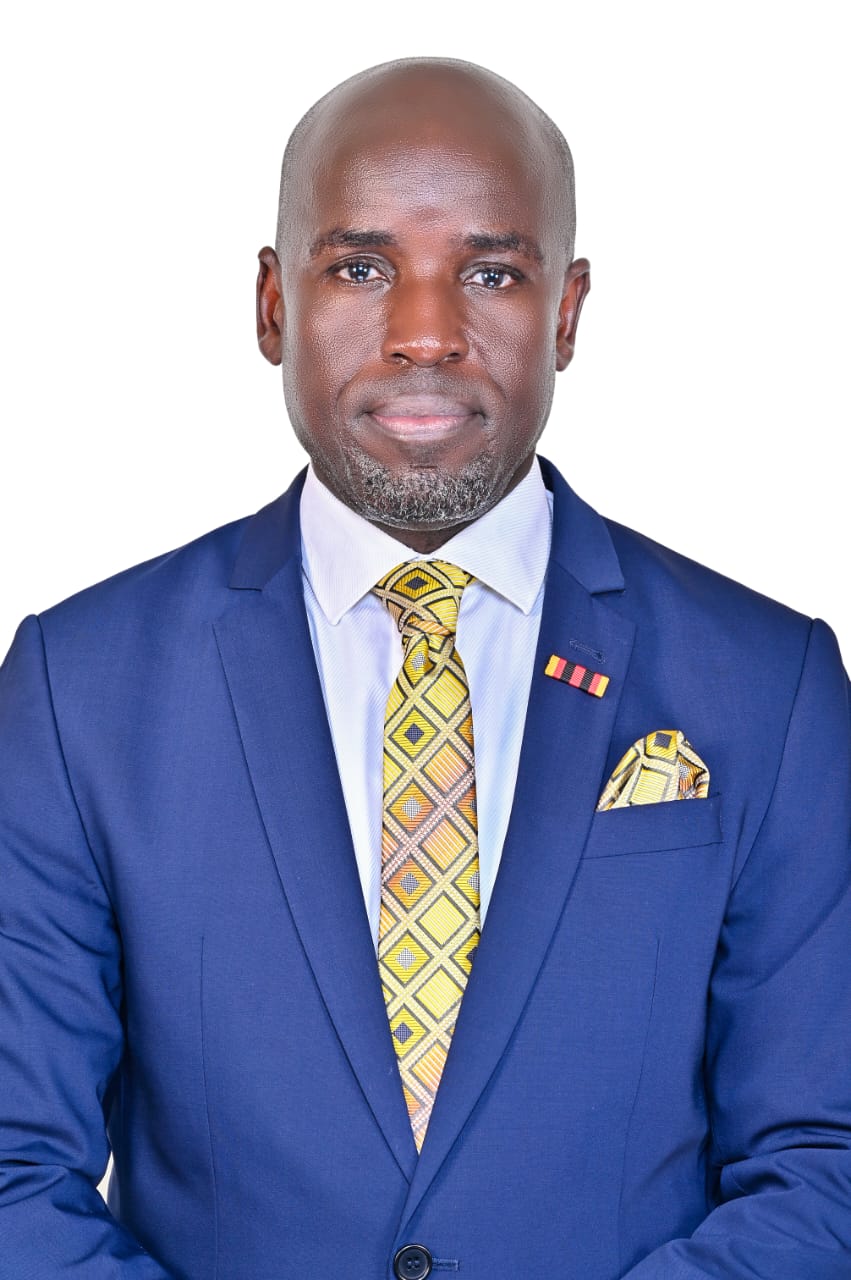
By Ronex Kisembo Tendo
The re-election of Yoweri Kaguta Museveni for a seventh term as President of the Republic of Uganda represents political continuity, particularly the continuation of a historical project whose implications extend beyond Uganda’s borders.
At a time when the international system is increasingly fragmented, economic nationalism is resurging, and the so-called global order reveals its contradictions daily, Africa confronts a simple reality: integration is no longer optional; it is imperative for survival.
It is for this reason that we congratulate President Museveni upon his re-election and extend our best wishes for a peaceful inauguration and a productive 2026–2031 term. Leadership in the present era demands more than rhetoric.
It requires strategic clarity, regional vision, and the ability to position one’s country within the larger continental future that is now struggling to emerge.
Uganda enters this new term having made notable gains in infrastructure expansion, regional diplomacy, security stabilisation, energy development, and industrial growth. Yet the work ahead remains immense. The next phase of leadership must move decisively beyond national consolidation towards deeper East African integration and continental competitiveness.
The future of East Africa will not be determined by speeches about unity. It will be determined by the construction of systems that make unity materially real.
Foremost among these is the long-delayed Standard Gauge Railway connectivity project. The extension of the SGR corridor from Naivasha through Malaba and Kampala, and onward towards Rwanda, South Sudan, and the eastern Democratic Republic of Congo, is an economic and geopolitical necessity.
Trade competitiveness, industrial efficiency, regional mobility, and strategic autonomy all depend on modern infrastructure. Regions that connect internally prosper; those that remain fragmented become dependent corridors for external powers.
Equally urgent is the complete elimination of Non-Tariff Barriers within the East African Community. African integration cannot coexist with endless roadblocks, administrative delays, duplicative customs procedures, and protectionist inefficiencies that punish traders and discourage investment. The promise of a Common Market loses credibility when goods move more easily into Africa than across it.
The same logic applies to telecommunications and airspace. East Africans should not pay exorbitant roaming charges to communicate with neighbours within the same Community.
A unified EAC telecommunications framework and harmonised call rates would transform commerce, education, innovation, and interpersonal connectivity across the region. A unified East African airspace would strengthen tourism, logistics, and continental competitiveness while reducing travel costs for citizens and businesses alike.
Language remains central to the integration project. The growing promotion of Kiswahili across the region is one of the most significant cultural and political developments of our time. A people cannot integrate through translation forever.
Kiswahili offers East Africa, and potentially the continent itself, a neutral linguistic bridge capable of deepening identity, commerce, diplomacy, and social cohesion. Its recent elevation within the African Union signals that the language has moved from cultural expression into strategic policy space. That momentum must be sustained and institutionalised.
Yet integration must ultimately serve ordinary people. Regional unity that does not create jobs, expand opportunity, and improve livelihoods risks becoming an elite conversation detached from social reality. Industrialisation and value addition therefore remain essential.
Uganda and the wider region must move decisively away from exporting raw materials while importing finished products at premium cost. The future lies in agro-processing, manufacturing, mineral beneficiation, pharmaceutical production, and technology-driven industrial ecosystems capable of employing Africa’s rapidly growing youth population.
As President Museveni has often argued, Africa achieved political independence — Uhuru. The next task is Umoja: unity. Peace and security remain the indispensable foundation for all of this. No society industrialises amid instability.
No investor commits capital into disorder. Uganda’s relative stability within a turbulent region has given it strategic importance, but stability must continually evolve alongside inclusion, institutional credibility, and economic opportunity, particularly for younger generations whose patience with promises is finite.
The years ahead will test the seriousness of the East African project. The region must decide whether integration will remain ceremonial or become transformational.
History rarely offers nations unlimited opportunities to reorganise themselves for relevance. East Africa now stands before such a moment.
President Museveni’s seventh mandate arrives with expectations of governance and regional statesmanship. The task ahead is to help shape a more connected, industrialised, self-confident, and integrated East Africa capable of negotiating its future on its own terms.
That is the work history now demands.
