

I join President Yoweri Museveni in paying tribute to the First Lady, Janet Museveni, on her 78th birthday (New Vision, June 24, 2026).
She has reached a significant milestone in what William Shakespeare might call the stages of life.
Why?
“All the world’s a stage, and all the men and women merely players; they have their exits and their entrances, and one man or woman in his or her time plays many parts, his or her acts being seven ages,” William Shakespeare wrote in As You Like It.
He describes these stages as beginning with infancy, followed by the schoolchild, the lover, the soldier, the justice, the “pantaloon,” and finally second childhood and oblivion.
As President Museveni’s tribute and public observation testify, Mama Janet Museveni has, in many ways, played several of these roles in public life, including that of a soldier during Uganda’s liberation struggle. She therefore stands as an example of Shakespeare’s reflection that individuals pass through multiple stages of human experience in one lifetime.
This brings us to the First Lady of Uganda’s early independence era, Miria Kalule Obote, who will turn 90 on July 16, 2026.
Like Janet Museveni, Miria Obote also represents, in a historical sense, what Shakespeare described as the many stages of human life and public service under changing and often difficult circumstances.
Although not widely remembered today, Mama Miria played significant roles during the political and turbulent years of her husband, former President Milton Obote, who led Uganda from independence in 1962 through various periods of national upheaval until his death in October 2005.
We should therefore take a moment to recognise and honour her as a figure who lived through and endured the trials of Uganda’s post-independence political history. Reaching 90 years of age is itself a remarkable milestone in Shakespeare’s “calendar of life.”
Above all, we should offer gratitude for her survival through the many personal and national challenges that accompanied her time as First Lady.
Her son, Jimmy Akena, was recently seen in the media reflecting on the social and human costs of exile experienced by families of former heads of state.
Regardless of political differences, it is important that we commit ourselves as a nation to ensuring that no future leader and their family endure the kind of suffering that befell former President Milton Obote’s family during periods of political instability.
Their family experienced exile, loss, and disruption of education for children. In addition, relatives including Milton Obote’s younger brother Michael Engena and cousin Ben Odur Adoko were killed during turbulent periods of Uganda’s history. These events, among others, form part of a painful national memory.
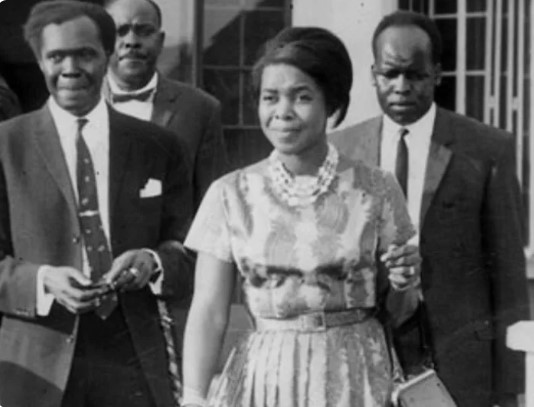
It is worth noting that Milton Obote himself, while a student at Makerere University in 1948, once performed the role of Julius Caesar in a stage play. Ironically, his later political life would place him at the centre of Uganda’s national drama.
As Shakespeare wrote in Julius Caesar:
“Why, man, he doth bestride the narrow world like a Colossus, and we petty men walk under his huge legs…”
This passage reflects how towering political figures often shape the destiny of nations, while ordinary citizens navigate the consequences of their actions.
In remembering both Mama Janet Museveni and Mama Miria Kalule Obote, we are reminded not only of personal milestones but also of the broader human journey—of leadership, endurance, suffering, and survival across generations of Uganda’s history.
Let us therefore celebrate life, reflect on history, and commit to a future where political differences do not erase our shared humanity.
