
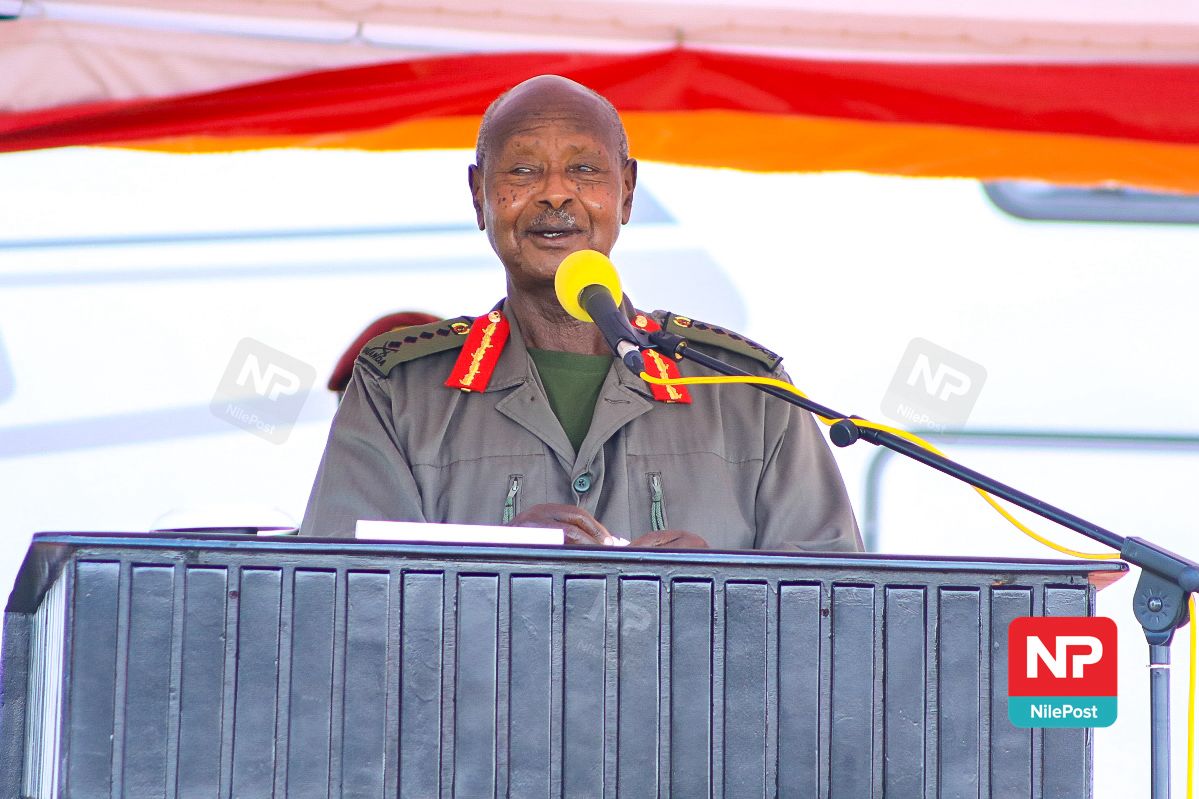
GOMBA — President Museveni has called for an end to Uganda’s reliance on imported military food supplies, saying locally produced goods should replace imports to create jobs and strengthen the country’s industrial base.
The President made the remarks on Wednesday while commissioning the National Enterprise Corporation (NEC) Meat and Beans Processing Plant in Kisozi, Gomba District.
The facility, established through a partnership between NEC and private investor Francis Ragwa, will produce canned beef and beans for the Uganda Peoples’ Defence Forces (UPDF), other security agencies and regional export markets.
Museveni said Uganda has the resources needed to supply its own institutions and should focus on building industries that add value to local raw materials.
He said the country’s challenge is not lack of resources but the failure to organise production systems that link farmers to reliable markets.
“The stimulus for production is the market. Once there is a market, we can organise Ugandans to produce,” Museveni said.
He cited the growth of Uganda’s coffee and dairy sectors as examples of how organised production and guaranteed demand can increase output.
According to NEC Managing Director Lt Gen James Mugira, Uganda spends about $2 million (about Shs7 billion) annually importing canned dry rations for the armed forces, while the UPDF purchases fresh beef worth about Shs42 billion each year.
Mugira said the new plant will help replace imported canned beef, which is currently sourced from countries including Brazil.
“We are engaging the UPDF to start purchasing canned beef from this factory. There is no reason Uganda should continue exporting jobs by importing products that can be manufactured locally,” he said.
The plant has the capacity to slaughter 150 cattle daily, translating into about 39,000 animals annually, creating a guaranteed market for commercial ranchers and organised livestock farmers.
Mugira said the project, whose implementation followed a joint venture agreement signed in September 2019, was delayed by the COVID-19 pandemic but has now become a major step towards industrialisation, value addition and employment creation.
However, he warned that unreliable electricity supply remains a major challenge to industrial competitiveness, revealing that the factory spends between Shs5 million and Shs10 million daily running generators due to frequent power interruptions.
He also called for stronger livestock disease control measures and a nationwide cattle traceability system to enable Uganda to access premium international beef markets.
Ragwa, the private investor, said Uganda has a competitive advantage because of its indigenous Ankole cattle, which he argued should be marketed as a premium product rather than sold as a generic commodity.
He said the factory currently employs more than 150 people and plans to expand into tourism through a steakhouse showcasing Ugandan beef products.
Defence and Veteran Affairs Minister Kiryowa Kiwanuka described the facility as a strategic national asset that supports both military preparedness and economic transformation.
He said the ministry would prioritise purchasing locally manufactured products from the plant, adding that the investment would create opportunities for food scientists, engineers and other professionals while providing a stable market for livestock farmers.
Museveni said Uganda’s cattle population has grown from about three million animals in 1986 to more than 16 million, providing enough raw materials to support large-scale meat processing industries.
He said increasing production requires connecting farmers to industries that can absorb their output.
The President also criticised delays by government agencies in supporting strategic investments, saying institutions responsible for investment promotion should move faster to facilitate projects capable of driving industrial growth.
The NEC Meat and Beans Processing Plant is part of government’s broader import substitution strategy aimed at promoting local manufacturing, reducing foreign exchange outflows and increasing value addition.
