
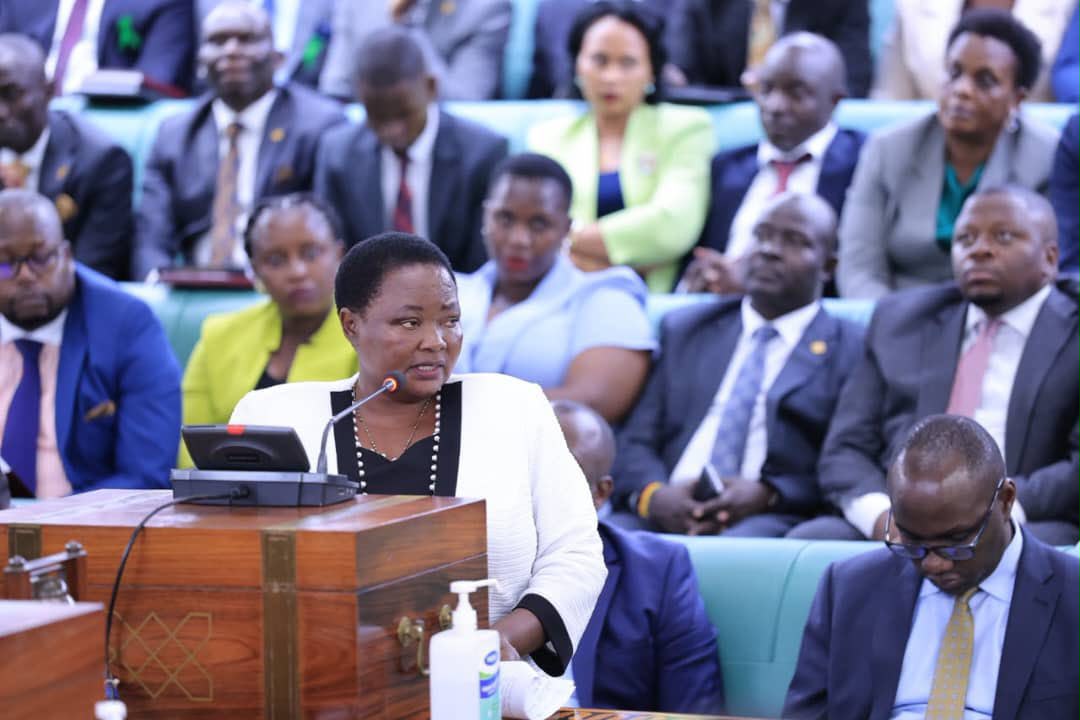
Government has defended the integrity of Uganda's cattle restocking programme, assuring Parliament that beneficiaries are being subjected to a rigorous verification process following concerns that some payments could have gone to ineligible claimants.
Responding to questions on the floor of Parliament, on Wednesday 8th July, Prime Minister Robinah Nabbanja said government had put in place strict verification mechanisms and that those who had received the funds were duly vetted before payment.
Her assurance comes on the backdrop of a comprehensive progress report released by the Office of the Prime Minister (OPM) showing that the programme is steadily advancing towards restoring livelihoods in northern and eastern Uganda, regions that lost millions of livestock during decades of insurgency and cattle rustling.
The cattle restocking programme is one of government's flagship post-conflict recovery interventions targeting households in Acholi, Lango and Teso, three sub-regions whose economies were historically built around livestock before years of insecurity devastated the sector.
For many families, cattle represented far more than household wealth. They provided draft power for cultivation, milk for nutrition, manure for farming, income through sales, and served as a traditional form of savings and social security.
The widespread loss of livestock left thousands of households impoverished, forcing many families to abandon cattle keeping altogether. Government's intervention therefore seeks not merely to replace animals but to rebuild household wealth, restore agricultural productivity and revive local economies.
Unlike previous programmes where government directly procured livestock, the current initiative gives beneficiary households Shs5 million in cash, allowing them to purchase animals of their own choice.
According to information from the OPM, each household is expected to procure approximately three heifers and two bulls, enabling families to establish breeding herds capable of expanding naturally over time.
The programme received an allocation of Shs80 billion during the 2025/26 Financial Year, enough to support 16,000 households across the three sub-regions.
According to the OPM, the initiative forms part of a broader multi-year recovery programme intended to progressively reach more beneficiaries over successive financial years.
Although Acholi, Lango and Teso together are estimated to have around 1.6 million households, government has adopted a phased implementation strategy, beginning with the most vulnerable households before expanding coverage in future years.
In Parliament on Wednesday, Prime Minister Nabbanja dismissed fears that that some payments might have been made to people who were not genuine beneficiaries, explaining that government had established verification procedures before any payments were processed.
The latest implementation figures released by OPM indicate that 16,000 households are targeted under the current financial year's programme and of these 14,921 households have already been approved for payment following verification, while 12,039 households have already received their money. In total government has so far disbursed Shs60.2 billion to beneficiaries.
One notable feature of the programme is the decision to transfer money directly to beneficiaries rather than government purchasing livestock on their behalf. The OPM information explains that the cash-based approach offers several advantages.
Beneficiaries can buy animals that are familiar with local conditions, farmers are able to negotiate directly with livestock sellers, transport costs and losses associated with centralized procurement are reduced, local cattle markets benefit from increased demand and beneficiaries assume ownership and responsibility from the outset, a statement from the OPM reads, adding that the approach is also intended to minimize delays and improve transparency, while giving communities flexibility to purchase healthy animals that suit their production systems.
Economic impact beyond individual families
Although each beneficiary household receives Shs5 million, the programme's impact extends well beyond individual recipients.
Economists note that increased cattle ownership stimulates multiple sectors of rural economies.
“As herds grow, households begin producing milk for home consumption and commercial sale. More animals create demand for veterinary services, livestock medicines, pasture management, cattle markets and transport services,” Emma Isabirye, a researcher states.
The programme is also expected to improve crop production because oxen provide animal traction for cultivation while manure enhances soil fertility.
For many households, cattle also serve as financial assets that can be sold to meet school fees, medical expenses or invest in other income-generating activities.
In this way, government views cattle restocking as an investment in long-term rural economic transformation rather than simply a social assistance programme.
The broader recovery agenda
The cattle restocking initiative is only one component of government's wider affirmative action programme for communities recovering from conflict and historical disadvantage. During the recent briefing, the Office of the Prime Minister also announced progress on several complementary initiatives, including the second phase of the Development Response to Displacement Impacts Project (DRDIP II), aimed at strengthening livelihoods in refugee-hosting and surrounding communities.
The other is the forthcoming Northern Uganda Social Action Fund IV (NUSAF IV), which will continue supporting household incomes and community infrastructure and the ongoing affirmative action projects across Teso, Northern Uganda, Busoga, Bunyoro and the Luwero-Rwenzori region.
Together, these programmes seek to reduce poverty, improve resilience and accelerate inclusive development in regions that continue to bear the effects of past conflicts and displacement.
Government has already signalled its intention to sustain the momentum.
According to the Office of the OPM, Shs100 billion has been earmarked for the cattle restocking programme in the next financial year, reflecting government's commitment to expand the intervention and reach more households across Acholi, Lango and Teso.
While questions over beneficiary selection underscore the importance of accountability, the programme's latest progress report indicates that implementation is advancing steadily.
With more than 12,000 households already funded and verification continuing for the remaining beneficiaries, government maintains that the initiative is delivering on its objective of rebuilding livestock-based livelihoods in some of Uganda's most historically affected regions.
If the programme maintains its current trajectory, officials believe it could become one of the country's most significant post-conflict economic recovery interventions, restoring not only cattle, but also the productive capacity and resilience of thousands of rural households.
