
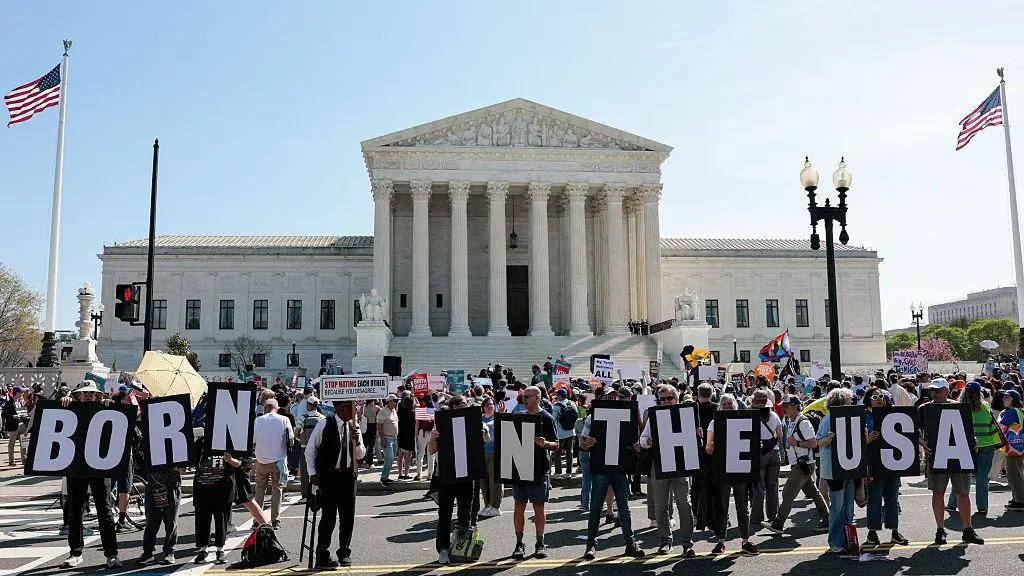
The United States Supreme Court has blocked President Donald Trump’s attempt to end birthright citizenship, ruling in a 6–3 decision that the policy violates the US Constitution.
The court upheld a long-standing interpretation of the 14th Amendment, which guarantees citizenship to all people born or naturalised in the United States and subject to its jurisdiction.
Trump had issued an executive order seeking to deny automatic citizenship to children born in the US to undocumented migrants and people on temporary visas. The ruling effectively invalidates that move.
Writing for the majority, Chief Justice John Roberts said the constitutional language is clear and rooted in the post–Civil War era, when the 14th Amendment was adopted to secure citizenship rights for formerly enslaved people born in the United States.
“All persons born or naturalised in the United States and subject to the jurisdiction thereof, are citizens of the United States,” Roberts wrote, adding that the principle remains binding today.
The court rejected arguments advanced by Trump’s legal team that undocumented migrants are not fully “subject” to US jurisdiction, saying the Constitution does not support that interpretation.
The decision is seen as a major setback for Trump, who personally attended oral arguments in April and has publicly defended the executive order. He has yet to issue a formal response following the ruling.
Legal analysts say the judgment leaves little room for reversal unless the US Constitution is amended, a rare and lengthy process achieved only 27 times in American history.
The ruling also came amid other decisions by the court, including allowing states to ban transgender athletes from participating in women’s school sports and striking down restrictions on campaign spending coordination.
The case has reignited political debate in the United States over immigration policy, constitutional interpretation and presidential authority, with opponents of the executive order arguing it conflicted directly with the 14th Amendment.
