
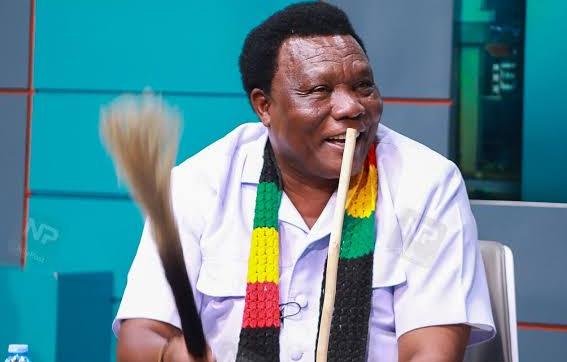
Bubulo East Member of Parliament John Musila has claimed that visiting traditional shrines is a common practice among Ugandan politicians, saying many lawmakers and senior political figures secretly seek spiritual intervention ahead of elections.
Speaking during an interview on Sanyuka Television, Musila said politicians across the political divide consult traditional shrines in search of leadership, protection and electoral victory.
"It's not only MPs who visit shrines. Politicians also go there. Don't let anyone lie to you otherwise. We go there to seek leadership and political victory. Many MPs and even top politicians visit shrines," Musila said.
He added that the practice is more widespread than publicly acknowledged.
"Take me to any well-known shrine, and I will prove to you that politicians visit those places. Even during the last election, I visited a shrine," he said.
His remarks have reignited debate about the role of traditional beliefs in Uganda’s political culture.
Uganda has a long history of traditional spiritual practices that predate Christianity and Islam. Despite being a predominantly Christian and Muslim country, belief in traditional spirituality remains influential in some communities, including in politics where allegations of shrine visits have persisted for decades, particularly during election seasons.
Claims involving witchcraft and traditional spiritual practices have repeatedly surfaced in public discourse, though most remain unverified. Over the years, politicians and public officials have both accused rivals of engaging in such practices and, in some cases, admitted taking protective spiritual measures.
Recently, Speaker of Parliament Jacob Oboth-Oboth reportedly alleged that individuals had attempted to harm him through witchcraft, adding to ongoing public discussion about the intersection of politics, religion and traditional beliefs.
Musila’s comments come amid renewed debate about how traditional beliefs continue to intersect with Uganda’s modern political processes.
