
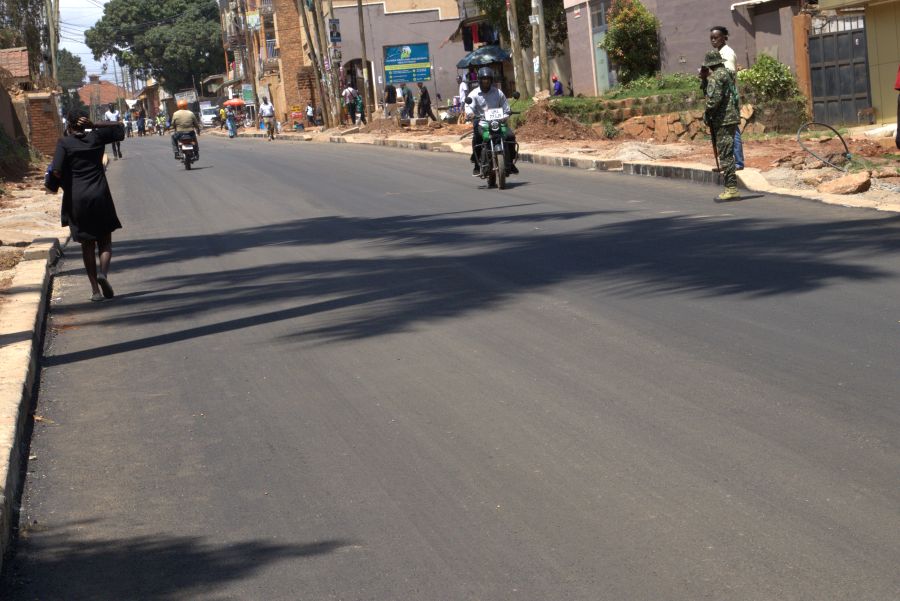
Uganda’s long-standing ambition to use infrastructure as the backbone of economic transformation is facing renewed scrutiny as delays in road construction projects continue to mount, raising questions about efficiency, delivery timelines, and economic impact.
For decades, government has prioritised road infrastructure under its development agenda, arguing that improved transport networks would reduce the cost of doing business, connect farmers to markets, attract investment, and accelerate national growth.
However, persistent delays in implementation are now challenging whether those goals can be fully realised on schedule.
The issue was recently discussed on NBS Morning Breeze, where host Tracey Kansiime engaged Budadiri East MP and economist Julius Nakiyi alongside the Ministry of Works and Transport Senior Manager for Communications Allan Ssempebwa on the progress and challenges affecting key road projects.
At the centre of the discussion was a fundamental concern: whether delays in road delivery are undermining the very economic transformation these projects are meant to support.
Infrastructure remains one of government’s largest public investments, with roads playing a critical role in moving goods and services, linking production zones to markets, and improving access to essential services.
In a landlocked country like Uganda, where more than 90 percent of cargo is transported by road, the sector is particularly central to trade and economic productivity.
Ssempebwa noted that government remains committed to expanding and upgrading the national road network despite financial and operational constraints. He explained that infrastructure delivery involves multiple stages, including feasibility studies, procurement, environmental assessments, and land acquisition processes that often slow down project execution.
While these processes are not always visible to the public, he said they significantly influence how quickly projects move from planning to completion.
Nakiyi, however, argued that the economic cost of delays is substantial. He said prolonged construction timelines keep transport costs high for businesses, limit market access for farmers, and reduce competitiveness for investors.
He stressed that the focus should go beyond how many roads are being built to whether they are delivered on time and when they are most needed.
For economists, such delays create opportunity costs, where expected benefits such as increased trade, reduced travel time, improved productivity, and job creation are postponed.
In some cases, extended timelines also increase project costs, putting additional pressure on public finances and reducing the overall return on investment.
The discussion also highlighted land acquisition and compensation as one of the biggest bottlenecks affecting infrastructure delivery. According to Ssempebwa, disputes over land ownership, valuation disagreements, court cases, and budget limitations continue to delay projects even before construction begins.
While government has attempted reforms to streamline compensation processes, the challenge remains widespread across several road projects. For communities, delays often create uncertainty and frustration, while for government they translate into higher costs and extended project timelines.
Beyond construction challenges, Nakiyi emphasised that infrastructure alone cannot drive economic transformation. He argued that roads must be integrated into broader development strategies that strengthen agriculture, manufacturing, tourism, and trade.
“A road has value when it connects production to markets and creates economic opportunities for citizens,” he observed.
The argument reflects a growing policy debate about the need to align infrastructure investment with productive sectors of the economy to maximise impact.
Uganda’s infrastructure programme remains ambitious, with government continuing to pursue major road projects aimed at improving regional connectivity and supporting industrialisation. However, the debate highlighted a growing consensus that delivery timelines are just as important as project design.
While government points to ongoing progress, economists and critics argue that efficiency, accountability, and timely completion must be prioritised if infrastructure is to deliver its intended economic dividends.
For many stakeholders, the real measure of success lies not in the number of roads planned or launched, but in how quickly those roads are completed and the economic opportunities they unlock.
As Uganda seeks to strengthen its position within the East African economy, the effectiveness of its infrastructure agenda will increasingly be judged not by ambition alone, but by execution.
The country’s infrastructure gamble ultimately hinges on whether roads can be delivered fast enough to match the urgency of its economic transformation goals.
