
Uganda’s political landscape has continued to evolve since the adoption of a multi-party system in 2005, which marked the return of competitive party politics after nearly two decades under the Movement system introduced after 1986.
Today, Uganda has at least 27 registered political parties, with the National Resistance Movement (NRM) remaining the dominant force in Parliament, holding more than 300 seats in the 12th Parliament.
Within this multiparty framework, the Inter-Party Organisation for Dialogue (IPOD) was established in 2009 as a platform for dialogue among political parties with parliamentary representation.
It was formed with support from the Netherlands Institute for Multiparty Democracy (NIMD), at the request of government, with a mandate centred on dialogue, conflict resolution and cooperation among parties.
Founding members included the Democratic Party (DP), Uganda People’s Congress (UPC), Forum for Democratic Change (FDC) and the National Resistance Movement (NRM).
IPOD gained statutory recognition in 2025 following amendments to the Political Parties and Organisations Act, enabling eligible parties within the platform to receive state funding through the Electoral Commission.
That year, Sh11.25 billion was allocated to IPOD member parties, with distribution based on parliamentary strength.
The absence of the National Unity Platform (NUP) from the arrangement has remained a point of political debate, particularly because its participation would have qualified it for an estimated Sh1.02 billion in party funding under the current formula.
The party initially declined to join IPOD but later indicated interest and formally submitted an application for admission.
However, according to IPOD council deliberations held on June 12, 2026, the application was found to be incomplete and procedurally insufficient.
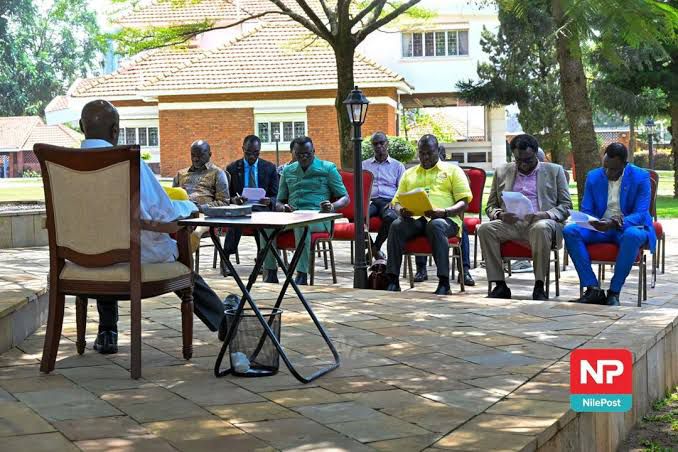
The council, which is composed of secretary generals of member political parties, cited two main concerns.
First, officials said NUP’s letter of interest lacked sufficient detail outlining the party’s motivations and formal commitment to the framework, describing it as “vague” and requiring clarification before further consideration.
Second, the council pointed to a clause in IPOD’s memorandum of understanding requiring the physical presence of a party president during admission processes.
The provision, they said, does not allow representation by delegates, meaning that NUP president Robert Kyagulanyi Ssentamu would be required to attend in person for the process to proceed.
IPOD officials indicated that while the requirement is central to the organisation’s internal procedures, any exemption would require approval from the summit of party leaders, though such a waiver is considered unlikely.
At the same meeting, the council approved the application of the Alliance for National Transformation (ANT), led by Mugisha Muntu, and forwarded it for final approval by the IPOD summit. Officials said ANT’s submission met the required standards and did not raise procedural concerns.
The IPOD secretariat, led by Executive Director Dr Lawrence Sserwambala, confirmed that discussions with NUP are ongoing, with feedback already communicated to the party on areas requiring clarification.
The developments highlight the continuing complexities surrounding political party cooperation in Uganda, particularly as funding, representation and dialogue frameworks become increasingly formalised under the law.
While supporters of IPOD argue that the structure strengthens dialogue and institutional stability, critics say the admission process risks becoming entangled in procedural and political considerations that slow broader participation.
For now, NUP’s entry into the platform remains unresolved, pending further clarification and compliance with the organisation’s internal requirements.
