
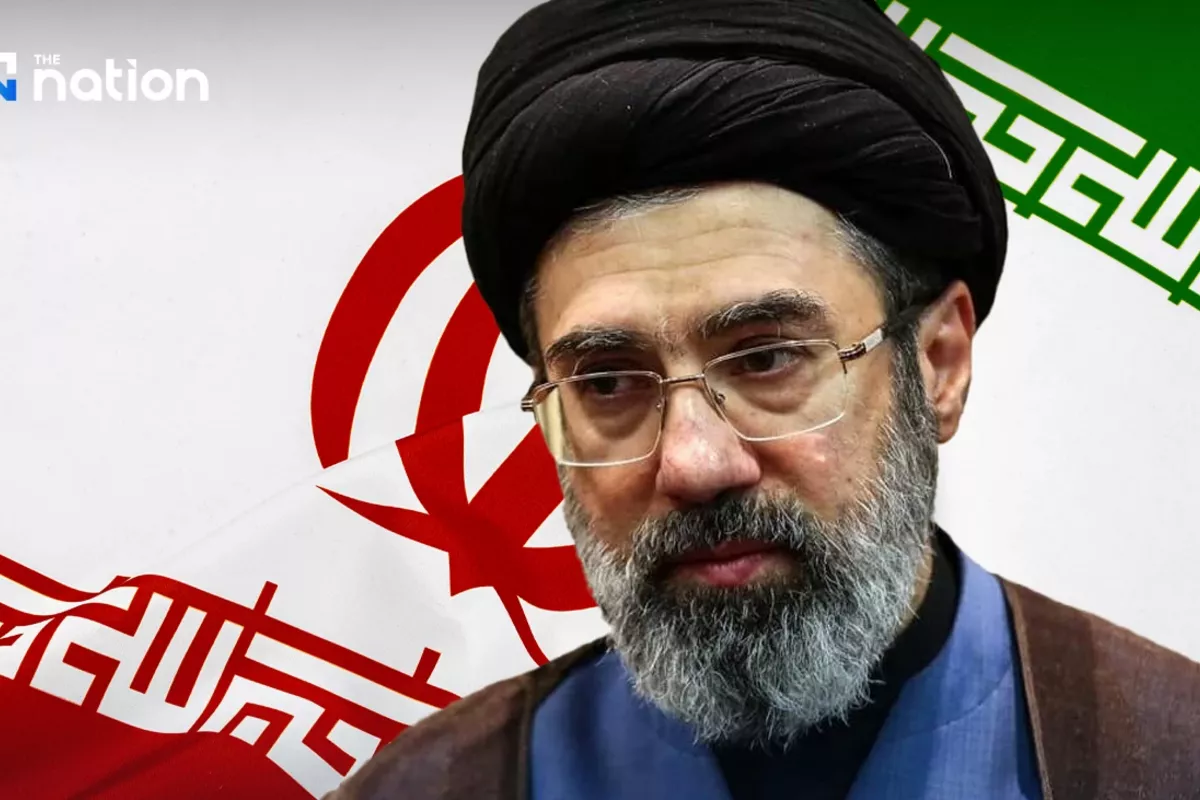
Iran's Supreme Leader, Seyyed Mojtaba Khamenei, has publicly disclosed that he was initially opposed to the memorandum of understanding (MoU) signed this week between Iran and the United States, saying he only authorised the agreement after receiving guarantees from the Iranian leadership that national interests would remain protected.
In a nationally televised address, his first since assuming the leadership of the Islamic Republic following the death of his father, Ayatollah Ali Khamenei, on February 28, the new supreme leader said he had reservations about the negotiations but ultimately deferred to the elected government.
"In principle, I had a different view," Khamenei said.
"However, because of the commitment that the honourable president, as head of the Supreme National Security Council, gave me on behalf of himself and the other members regarding the safeguarding of the rights of the Iranian nation and the Resistance Front, and because he explicitly accepted responsibility for it, I issued permission for it."
The remarks provide a rare glimpse into deliberations within Iran's leadership and underline the political sensitivity surrounding the agreement, which has been presented as a major step toward ending months of military confrontation between Iran and the United States.
Khamenei emphasized that approval of the memorandum should not be interpreted as acceptance of Washington's positions, warning that Tehran would resist any attempts to impose additional conditions during the next phase of negotiations.
"He also stated clearly that if the American side seeks to make excessive demands, they will not submit to them," Khamenei said of assurances reportedly given by Iranian President Masoud Pezeshkian.
The agreement, signed by President Pezeshkian and US President Donald Trump, establishes a 60-day negotiating period aimed at producing a comprehensive settlement covering Iran's nuclear programme, sanctions, regional security arrangements and economic reconstruction.
The memorandum contains 14 broad provisions that seek to de-escalate tensions and restore normal economic activity following months of conflict that disrupted shipping routes, energy markets and regional stability.
Among the immediate measures announced under the agreement is the reopening of the Strait of Hormuz, one of the world's most strategically important maritime corridors through which a significant portion of global oil exports pass.
The US has also lifted its naval blockade on Iran.
In a statement, the US Central Command (CENTCOM) confirmed that all maritime blockade enforcement operations against Iran had ceased.
"All US military blockade enforcement efforts have ceased," the statement said, adding that American forces were no longer impeding vessels entering or leaving Iranian ports in the Gulf.
CENTCOM said US naval assets would remain in the region to monitor compliance with the agreement and ensure that all parties fulfil their obligations.
US Vice President JD Vance confirmed that the memorandum had officially entered into force, triggering the 60-day negotiation period.
Vance defended the agreement against critics in Washington, insisting that Iran would not receive financial benefits or sanctions relief unless it complied with the conditions set out in the memorandum.
On the Iranian side, President Pezeshkian portrayed the agreement as a diplomatic victory, arguing that Tehran had secured negotiations without sacrificing its principles.
"This agreement shows that Iran has not traded its dignity," Pezeshkian said after signing the memorandum.
One of the most significant elements of the framework is a proposed $300 billion reconstruction and investment programme intended to revive Iran's economy, which has endured years of sanctions, restricted trade and wartime disruptions.
The memorandum also envisages renewed international investment, expanded energy exports and gradual economic normalization if both sides successfully conclude a final agreement.
Despite the optimism surrounding the breakthrough, significant challenges remain.
The two countries remain divided over the future of Iran's nuclear activities, the scope of sanctions relief, regional security arrangements and the role of Iran's allies across the Middle East.
Khamenei's cautious endorsement reflects those unresolved tensions. While allowing the process to move forward, he made clear that Iran's leadership would judge the agreement by its implementation rather than its promises.
"From this moment, we, meaning you, the proud nation, and this humble servant, will be awaiting the fulfillment of the stated conditions," he said.
His comments underscore both the opportunity and fragility of the current diplomatic opening as Tehran and Washington embark on what could become the most consequential negotiations between the two countries in decades.
