
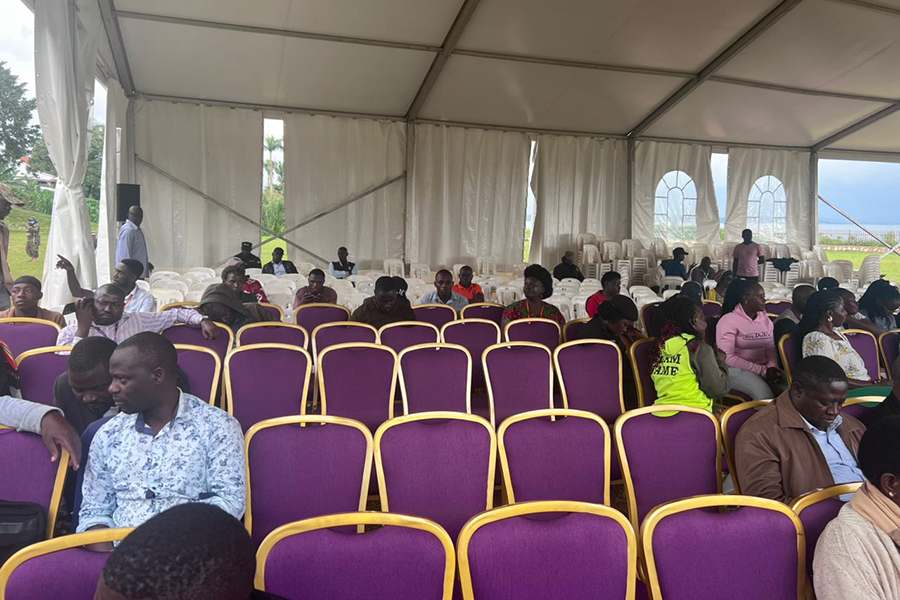
On the morning of Monday 13, a large crowd gathered at the Ggaba Community Playground to witness the public trial of Christopher Okello Onyum, who is accused of murdering four pre-kindergarten children.
Two large LED screens were mounted at the front of a makeshift courtroom, complete with a main tent and smaller structures, setting the stage for what was described as a first-of-its-kind public trial in the area.
In the lead-up to the proceedings, public debate had been dominated by concerns over the decision to hold a public trial.
Critics argued that the directive for a “mobile court” was driven more by emotion than by established judicial principles, following the President’s instruction for an open hearing arrangement.
Legal commentators also raised questions about potential executive influence over judicial processes, describing the arrangement as controversial and unprecedented.
When proceedings began, defence lawyer Richard Kambuga was tasked with cross-examining the first witnesses, the parents of the victims.
However, sections of the audience responded with hostility, with some members ridiculing the defence team.
To many in the crowd, the accused did not deserve a fair hearing, and even his legal representatives were met with open resentment.
Court officials later warned that disruptions would not be tolerated. The court registrar cautioned that anyone interfering with proceedings risked arrest for contempt of court, adding that plainclothes officers had been deployed within the audience to maintain order.
At that point, an open court designed to engage the public was also attempting to restrain the very emotions it had attracted.
By the end of the first day, after five witnesses had testified, the crowd appeared visibly fatigued. By Wednesday, attendance had noticeably declined.
The LED screens that had initially been installed were no longer in place, further signalling reduced public turnout.
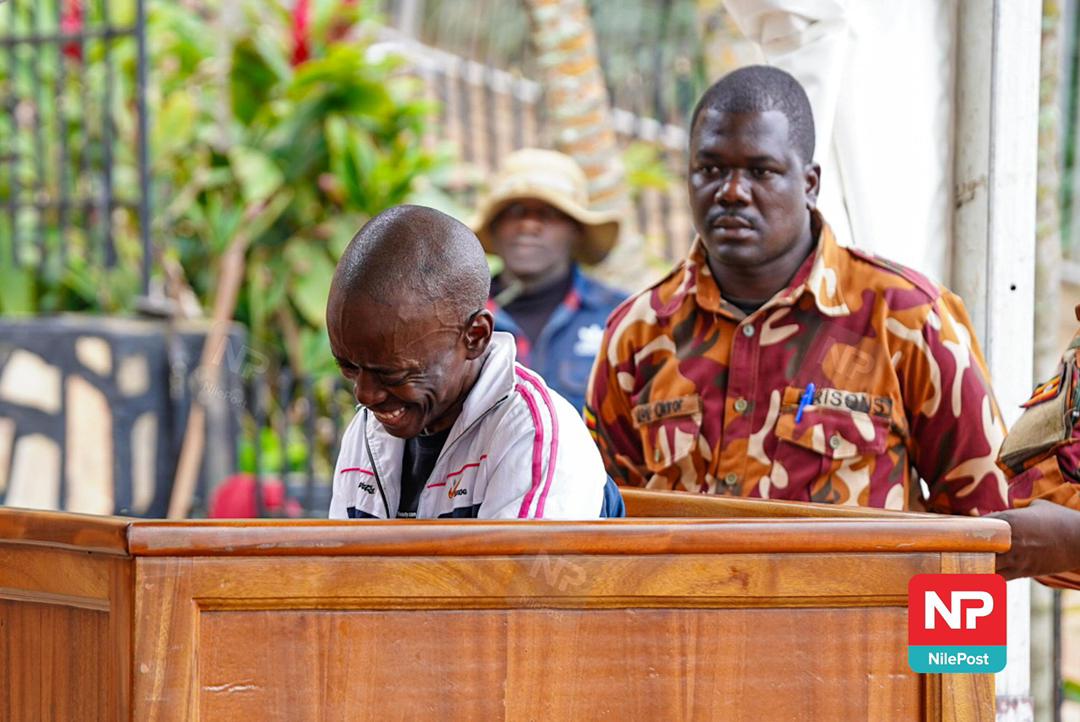
Midway through Wednesday’s proceedings, during the testimony of the seventh witness—a car hire operator who had rented a vehicle to the accused—the session was abruptly disrupted when Okello himself refused to continue.
The interruption further agitated members of the public, prompting increased security presence to prevent escalation.
By Thursday morning, attendance had dropped significantly, with empty seats outnumbering occupied ones at the mobile court setup. Some seating arrangements from earlier in the week had been stacked at the back of the venue.
This decline has raised questions about whether public interest in the trial is waning or whether the initial turnout was driven more by curiosity and emotion than sustained engagement.
It also raises broader concerns about the mobile court experiment: can it maintain legitimacy and public engagement if the defence phase unfolds before a near-empty audience? And was the decision to stage a public trial a miscalculation with significant logistical and financial implications?
For now, those questions remain open.
