
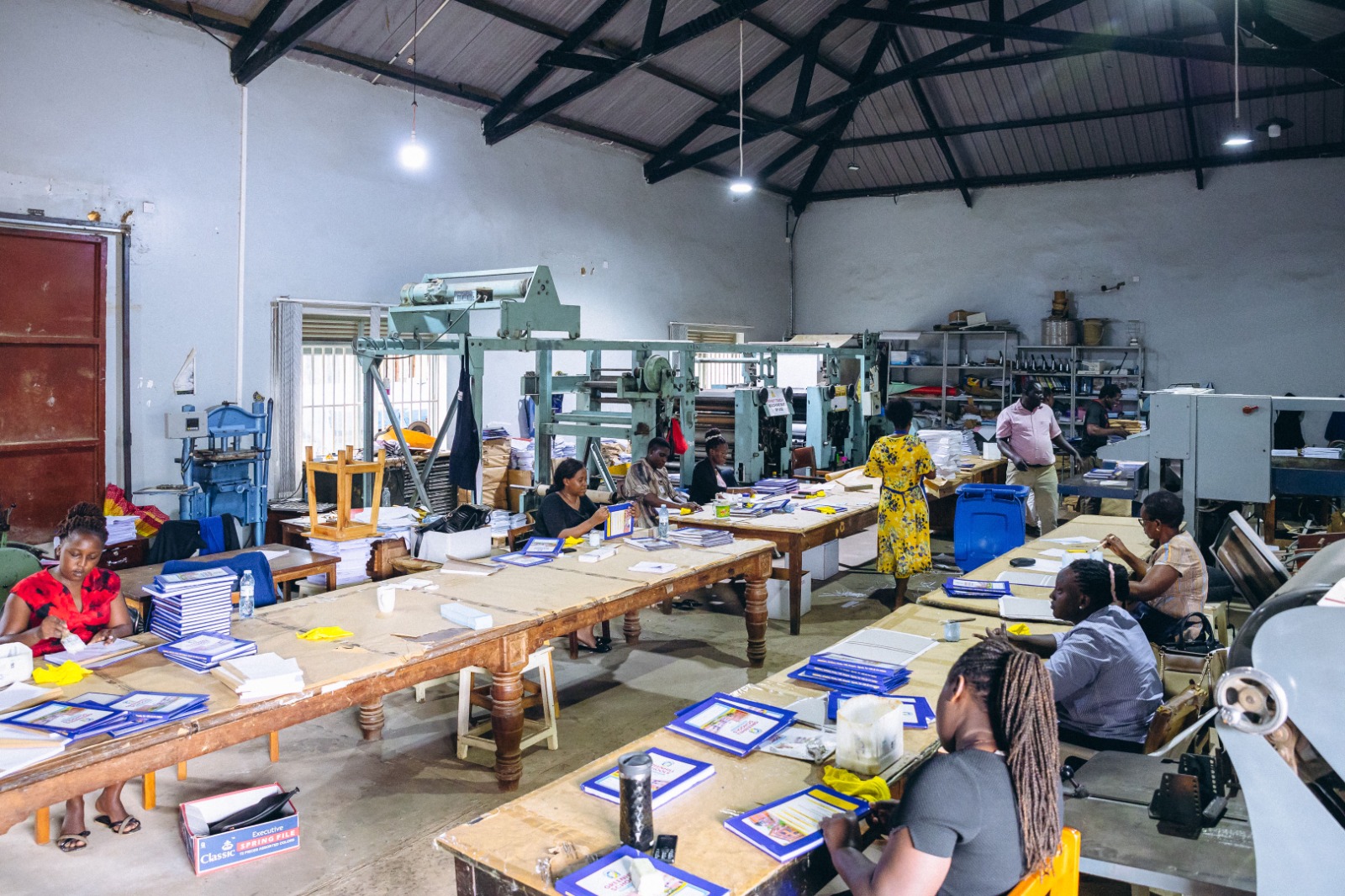
The Uganda Printing and Publishing Corporation (UPPC) Print School has launched a revamped, technology-driven curriculum designed to bridge the gap between traditional craftsmanship and the digital economy.
The strategic expansion introduces a suite of high-demand certifications in Artificial Intelligence (AI), Cyber Security, and Data Analysis, marking a significant evolution for the state-owned institution. By integrating these emerging technologies with its core industrial printing expertise, the school is positioning itself as a hub for the creative and technical workforce of the future.
Mr. Caleb Kutamba, the principal of the UPPC Print School, says the institution is tackling the regional youth unemployment crisis by turning its production floor into a live classroom. This hands-on approach has seen more than 100 technicians graduate in the past year alone.
The school is already absorbing its own talent, with several high-performing graduates retained to work within UPPC’s commercial printing and publishing wings. Others have successfully transitioned into the private sector, benefiting from the school’s dual-focus on technical proficiency and real-world excellence.
The updated catalog features comprehensive modules in Desktop Publishing (DTP), where learners master industry-standard tools such as Adobe InDesign, Photoshop, and Illustrator.
Other key offerings include digital printing which is specialized course focusing on color management, file preparation, and workflow optimization, technical engineering which is training in computer repair and maintenance, alongside offset machine techniques and post-press processes and foundational literacy which contains ssential computer applications and digital tools for professional environments.

To ensure flexibility for working professionals and students nationwide, the school operates campuses in Entebbe and at Airways House in Kampala. The Entebbe branch features daily evening practical sessions, while the Kampala campus specifically hosts evening and weekend sessions to accommodate various schedules.
Academic intakes occur three times a year in January, April, and August, said Mr. Kutamba. “Programs are categorized into intensive one-month short courses and six-month professional apprenticeships, all assessed by the Directorate of Industrial Training (DIT)”.
Kutamba notes that the curriculum is designed to be future-ready, combining technical skills with an entrepreneurial mindset. Students also gain access to a digital Cloud Library and video-led practical lessons, ensuring a hybrid learning experience that meets international standards.
He noted that prospective students can now enroll for the upcoming intake to gain the specialized skills required to navigate a competitive and rapidly evolving global job market.
