
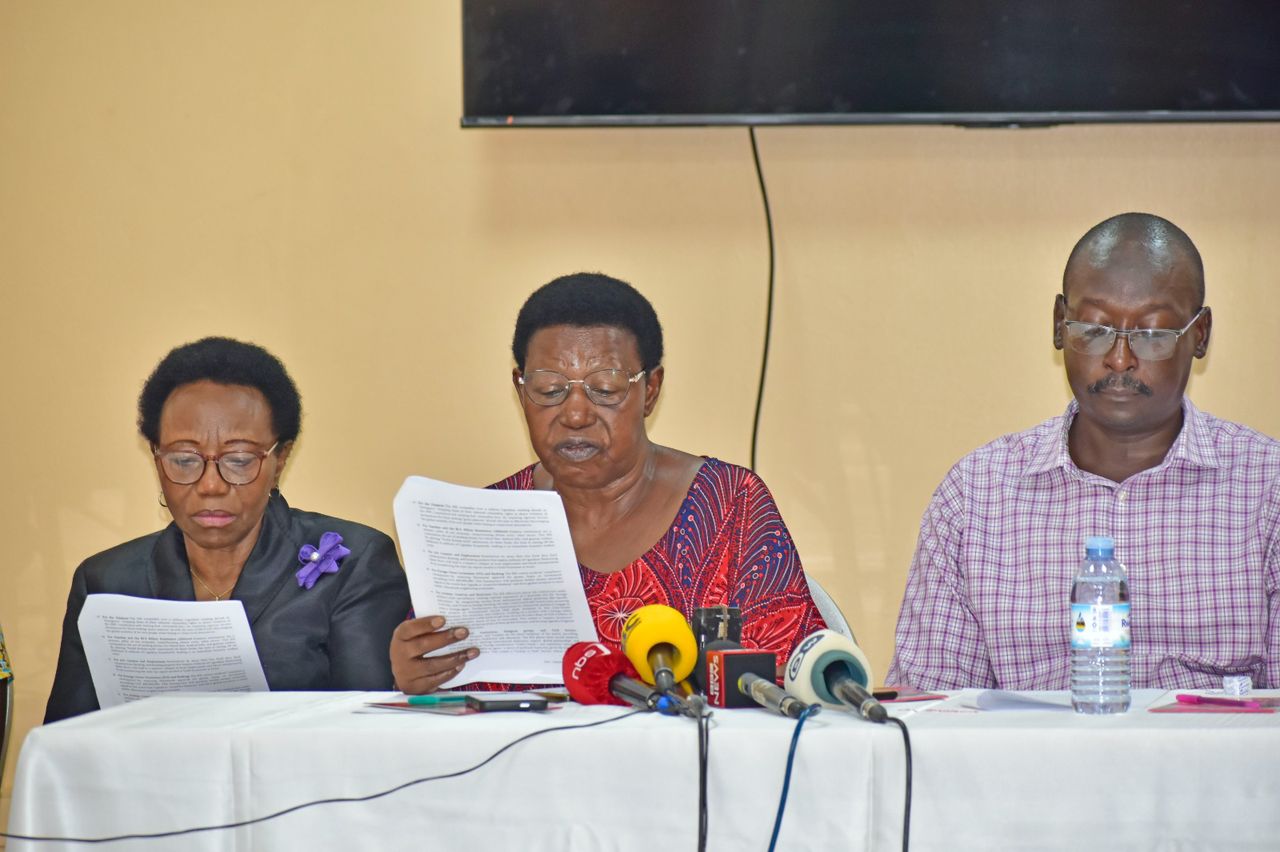
A coalition of Ugandan citizens and civil society actors has called for the immediate withdrawal of the proposed Protection of Sovereignty Bill, 2026, warning that it poses a significant threat to constitutional rights, economic stability, and democratic governance.
In a joint press statement read by Charles Kazooba, Executive Director of the Centre for African Affairs and Diplomatic Studies, the group described the draft law as a “dangerous legislative overreach” that undermines existing legal frameworks and concentrates excessive power in the executive.
The statement argued that Uganda already has sufficient laws, including the Anti-Money Laundering Act and Anti-Terrorism Act, to address foreign interference, rendering the proposed legislation unnecessary.
“The Bill adds no value; instead, it seeks to overturn the spirit of the Constitution by shifting power away from the people,” the statement read.
The coalition raised alarm over provisions they say could effectively strip millions of Ugandans in the diaspora of their citizenship rights. They cited clauses that define a “foreigner” to include individuals residing outside Uganda, warning that this could contradict protections under the 1995 Constitution of Uganda.
They also criticised clauses granting the Minister for Internal Affairs powers to create new offences and adjust penalties without parliamentary approval, arguing that this undermines legislative oversight.
The statement further highlighted concerns over privacy, pointing to provisions that would allow security officers to conduct warrantless inspections of premises suspected of hosting “foreign agent” activities.
“This is a direct assault on the right to privacy,” the group said.
On the economic front, the coalition warned that the Bill could deter foreign investment and disrupt remittance flows by requiring entities with foreign funding to register as “foreign agents.” They argued this could stifle business growth and discourage international partnerships.
They also cautioned that restrictions on diaspora remittances—estimated to be a major contributor to household incomes—could trigger a welfare crisis and reduce employment opportunities linked to remittance-funded projects.
The group said the proposed law would have far-reaching implications across sectors, including the private sector, creative industry, and faith-based organisations.
They warned that artists and creatives earning income from international platforms risk being labelled foreign agents, potentially exposing them to severe penalties. Religious institutions and civil society organisations, many of which rely on foreign support, could also face increased scrutiny and operational constraints.
The statement further raised concerns about stringent penalties in the Bill, including prison terms of up to 20 years and fines of up to Shs4 billion, describing them as disproportionate and inconsistent with international standards.
The coalition urged the government to withdraw the Bill in its entirety and called on Parliament to reject any provisions that criminalise remittances and restrict fundamental freedoms.
They also appealed to the media, private sector, and development partners to scrutinise the proposed law and raise awareness about its potential impact.
“To protect the stability and future of our nation, this Bill must be rejected,” the statement concluded.
The proposed Protection of Sovereignty Bill, 2026, has yet to be formally tabled before Parliament but is already drawing sharp debate among stakeholders over its potential implications for governance and economic policy.
