
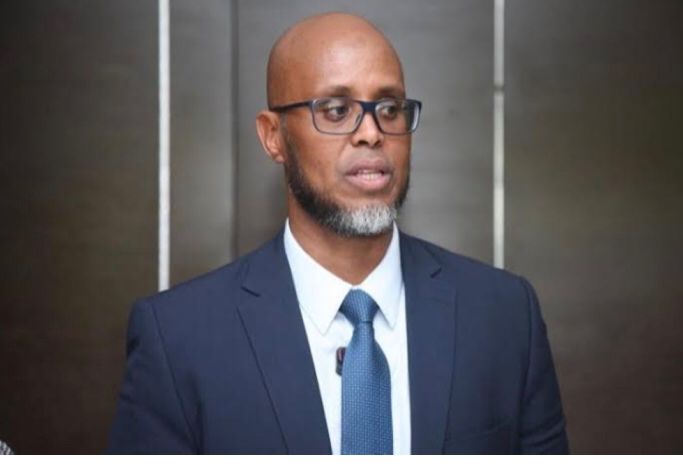
Ahmed Farah has been appointed Executive Director of the East African Business Council (EABC), taking the helm of the region’s apex private-sector lobby at a time when businesses are pushing for faster action on intra-regional trade reforms.
The appointment was announced by EABC Executive Board Chairperson John Lual Akol Akol, who said the position was widely advertised and attracted a large pool of highly qualified applicants from across the region.
“On behalf of the EABC Executive Board, I am pleased to announce that Mr Ahmed Farah emerged as the top candidate among all applicants and has been duly appointed as the substantive Executive Director of the East African Business Council,” Mr Akol said.
He described Mr Farah as a distinguished trade policy expert and former Country Director at TradeMark Africa (TMA), bringing exceptional technical expertise and leadership capacity to the role.
A Kenyan national, Mr Farah is a seasoned trade and investment policy specialist with more than 20 years of experience across East Africa and other African markets.
During his tenure at TMA, he managed programmes focused on trade facilitation, corridor performance, customs modernisation and enhancing private-sector competitiveness key pillars in efforts to lower poverty the cost of doing business within the region.
He previously served as Chief Executive Officer of the Kenya National Chamber of Commerce and Industry (KNCCI), where he spearheaded private-sector advocacy and business membership growth initiatives.
In addition, he held senior advisory roles at Deloitte East Africa and PwC, gaining extensive exposure to corporate advisory, regulatory reform and public–private dialogue processes.
“Mr Farah brings a proven track record in regional integration, donor relations, fundraising, and facilitating public private dialogue within complex EAC regulatory environments,” Mr Akol added.
Mr Farah assumes office at a critical time for the East African Community (EAC), as businesses intensify calls for the removal of persistent non-tariff barriers, high logistics and trade costs, and uneven implementation of common market commitments.
The council has repeatedly flagged delays at border points, shifting regulatory requirements and inconsistent application of agreed trade rules as key obstacles constraining cross-border commerce. With intra-regional trade still below its potential, private-sector players are urging partner states to fully operationalise customs harmonisation frameworks and mutual recognition agreements.
As Executive Director, Mr Farah will oversee implementation of the EABC strategic plan, manage relations with national focal points and engage closely with the EAC Secretariat and other regional organs. He is also expected to prioritise resource mobilisation and policy advocacy at ministerial and Heads of State levels to ensure private-sector concerns remain central to the regional integration agenda.
Mr Farah replaces Adrian Njau, who has served as Acting Executive Director since John Bosco Kalisa resigned in July 2024.
Established in 1997, the EABC represents private-sector associations and companies across EAC partner states Kenya, the Democratic Republic of Congo, Tanzania, Rwanda, Burundi, Uganda, Somalia and South Sudan. The council serves as a conduit between business and regional policymakers, championing reforms aimed at unlocking trade and investment across East Africa.
End
